MISIÓN DE OBSERVACIÓN ELECTORAL
Biometría para las elecciones Nacionales de 2014
The electoral observation mission, MOE, conducted an analysis of the implementation of the biometric system in the 2014 national elections, specifically in the Senate, Chamber of Representatives, and President elections.
2014 · 4 pages
Sign in to readA free account is required to download.
Abstract
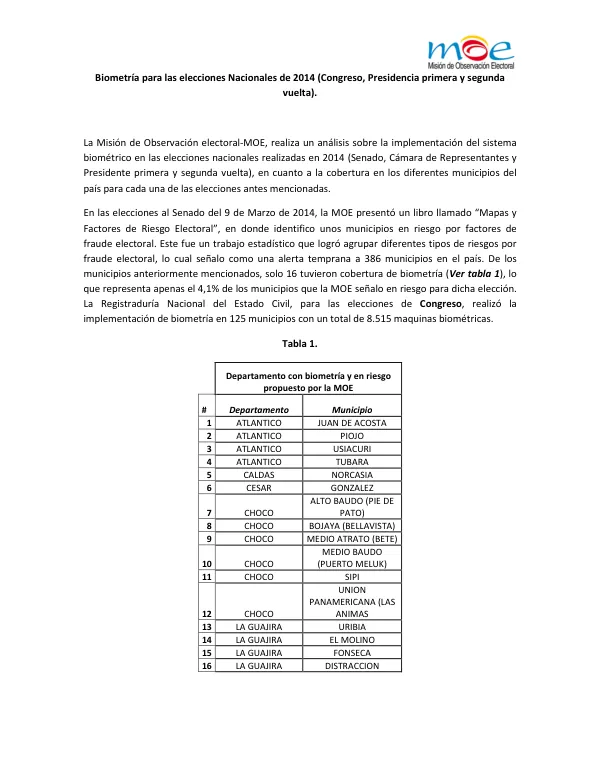
The MOE identified municipalities at risk of electoral fraud and presented a report called "Mapas y Factores de Riesgo Electoral," which highlighted 386 municipalities in the country as being at risk. The report identified 16 municipalities in 4 departments that had biometric coverage, representing only 4.1% of the municipalities identified as being at risk for the Senate election. The National Electoral Registry implemented biometric systems in 125 municipalities with a total of 8,515 biometric machines for the Chamber of Representatives election. For the presidential election's first round, the MOE recommended 118 municipalities in 18 departments for biometric implementation. The National Electoral Registry implemented 3,750 biometric machines in 14 departments, covering 24 municipalities. The MOE also recommended biometric implementation in 38 municipalities for the presidential election's second round, but only 11% of these municipalities had biometric systems in place. The MOE's analysis highlighted the need for biometric implementation in municipalities with high-risk electoral fraud indicators. The National Electoral Registry's decision to implement biometric systems in certain municipalities was based on the MOE's recommendations. The biometric systems were implemented in various departments, including Antioquia, Bogotá, Boyacá, Cauca, Córdoba, Cundinamarca, Magdalena, Meta, Norte de Santander, Quindío, Risaralda, Santander, Sucre, and Tolima. The implementation of biometric systems in these municipalities aimed to prevent electoral fraud and ensure the integrity of the electoral process. The MOE's analysis and recommendations played a crucial role in informing the National Electoral Registry's decision to implement biometric systems in certain municipalities. The biometric systems were implemented in various municipalities, including Cucuta, Pereira, Bucaramanga, and Sincelejo, among others. The MOE's report highlighted the importance of biometric implementation in municipalities with high-risk electoral fraud indicators. The National Electoral Registry's decision to implement biometric systems in certain municipalities was based on the MOE's recommendations. The biometric systems were implemented in various departments, including Cundinamarca, Magdalena, Meta, Norte de Santander, Quindío, Risaralda, Santander, Sucre, and Tolima.
Related documents