UNITED NATIONS ENVIRONMENTAL PROGRAMME , NAIROBI
Botswana Climate Change Technical Review Committee Training Workshop Final Report
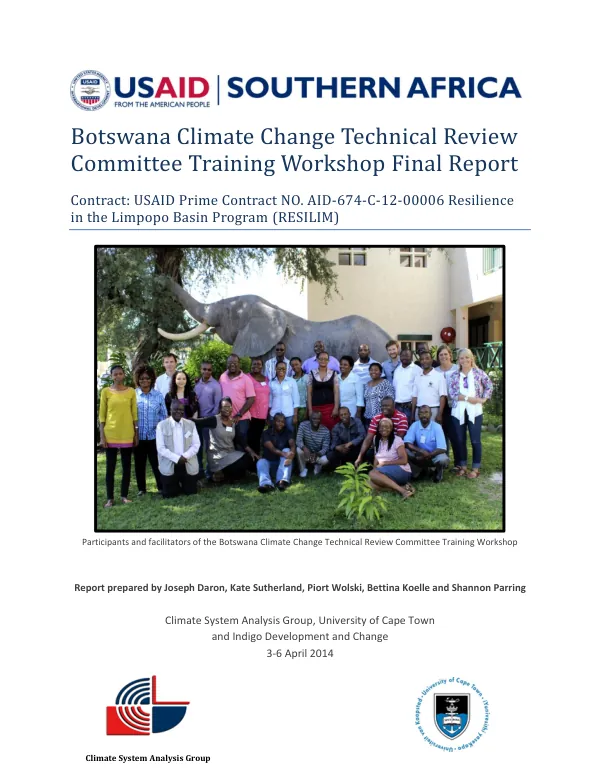
The Botswana Climate Change Technical Review Committee Training Workshop was conducted from 3-6 April 2014, with the primary objective of developing and supporting a three-day training and capacity-building workshop for the members of the Technical Reference Committee (TRC).
2014 · 22 pages
Sign in to readA free account is required to download.
Abstract
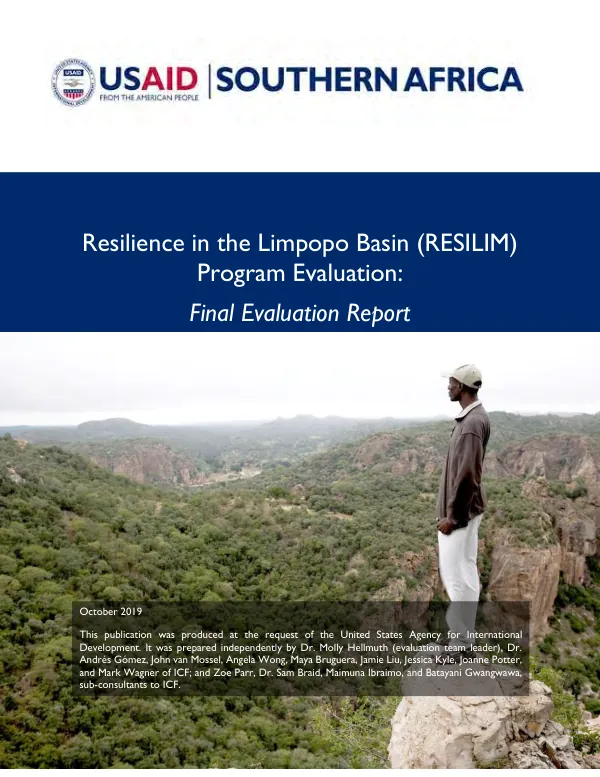
The TRC is appointed by the Government of Botswana to oversee the formulation of the National Climate Change Policy Strategy and Action Plan. The workshop aimed to enhance the TRC's understanding of social, ecological, and climate vulnerabilities, climate processes, and factors. The workshop was a collaborative effort between the Climate System Analysis Group (CSAG) and climate change adaptation experts from Indigo Development & Change, with funding from the USAID's Resilience in the Limpopo Basin Program (RESILIM). The training sessions covered theoretical concepts in climate science and adaptation, with a focus on practical examples of how climate change and responses to climate change can increase resilience and improve livelihoods. The participants engaged in interactive sessions, including presentations, exercises, and discussions around central themes related to climate change adaptation in Botswana. The workshop also included a one-day training session conducted by OneWorld Sustainable Investments, which presented the key findings of the Risk and Vulnerability (R&V) Mapping for the Limpopo River Basin (LRB) and engaged with the Botswana Climate Policy TRC around some of the country's key climate issues and potential policy mechanisms to address them. Through the workshop, the existing level of knowledge of participants regarding climate science, the drivers of climate change, and critical interpretation of climate information was improved. The TRC felt that the balance of presentations and exercises was just right and that the workshop further capacitated their abilities to review and assess the upcoming National Climate Change Policy Strategy and Action Plan, effectively guiding the policy formulation process for the region and contributing towards a sustainable development pathway for the country. Botswana has been and is currently impacted by climate variability and change, leading to changes in temperature, rainfall patterns, increased intensity and frequency of extreme weather events, such as drought and floods. These changes in climate are threatening a broad range of sectors, affecting water availability, food security, sustainable socio-economic development, and existing policies, plans, and institutional frameworks. The Government of Botswana is committed to a sustainable development and resilient pathway, being signatory to global conventions such as the UNFCCC, CBD, Agenda 21, and others. The Government of Botswana, with support from the Common Market for Eastern and Southern Africa (COMESA), the United Nations Development Programme (UNDP), and other partners, has commissioned a team of consultants to develop a National Climate Change Policy and Strategy and Action Plan to enable the country to address the challenges posed by climate change within the broader context of sustainable development. USAID, through the Resilience in the Limpopo Basin Project (RESILIM), is supporting the Technical Reference Committee (TRC) appointed by the Government of Botswana to oversee the formulation of the National Climate Change Policy Strategy and Action Plan, to enhance climate change knowledge and awareness. The workshop's success was evident in the TRC's improved understanding of climate change issues, which will ensure better-informed guidance in the policy formulation process. The workshop's outcomes will contribute towards a sustainable development pathway for the country, addressing the challenges posed by climate change within the broader context of sustainable development.