PEPFAR
Botswana National Laboratory Harmonization and Standardization
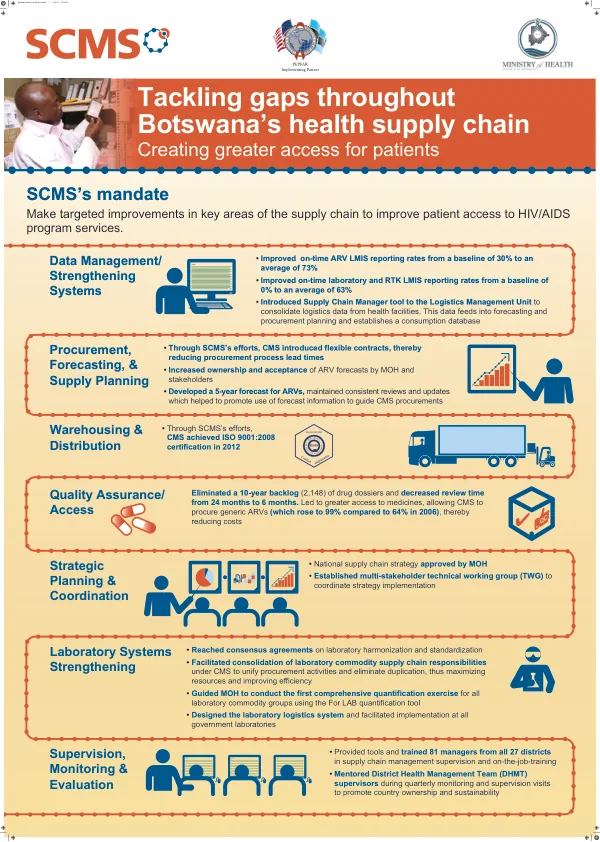
The Botswana National Laboratory Harmonization and Standardization initiative was launched in 2014 with the goal of creating awareness around laboratory harmonization and optimization approaches to assist Botswana in defining an evidence-based approach to achieving harmonization and standardization.
2014 · 19 pages
Sign in to readA free account is required to download.
Abstract
The initiative was implemented by PEPFAR's Implementing Partner, with the aim of creating a standardized approach to ensure consistency in laboratory services. The Maputo Declaration of 2008 called for the standardization of tests, reagents, consumables, and equipment needed at each level of the tiered laboratory system within a country. The declaration also emphasized the importance of harmonization and standardization of laboratory commodities to improve the laboratory supply chain system and equipment maintenance. The declaration highlighted the need for a global perspective and commitment to harmonization, which is a gateway to improving the lab supply chain. Over the last 10 years, progress has been made in the lab supply chain, but challenges remain in ensuring consistent supply. Medical laboratory services have advanced along with the local health system and the medical diagnostics industry, resulting in high instrument density and an increase in the number of products to be procured and instruments to be maintained and serviced. This has made it difficult to ensure continuous and consistent availability of the many diverse laboratory products required for these instruments. The goal of harmonization and standardization is to create awareness around laboratory harmonization and optimization approaches to assist Botswana in defining an evidence-based approach to achieving harmonization and standardization. A standardized approach is necessary to ensure consistency in and adherence to methods, instruments, tiers, and quality services. This approach should be reviewed by lab technicians to ensure that the services are in alignment with stakeholder needs. The harmonization cycle should occur every two years to ensure continuous improvement. Harmonization and standardization positively impact health service delivery by streamlining product and supply lists, improving utilization and availability of laboratory instruments, and ensuring consistent service provision. This leads to improved efficiency of laboratory services through measured improvements in critical process factors, such as product selection, quality assurance, forecasting and supply planning, procurement, and budgeting. Patients benefit from continuous and consistent services through timely prognosis and management. In 2014, SCMS led the Botswana Harmonization and Standardization Exercise, which involved consulting with clinicians, laboratory personnel, health programs, and policy makers to review all current and preferred laboratory tests. The exercise also assessed all instruments placed in Botswana medical laboratories and updated the inventory list, determined instrument distribution, utilization, and diagnostic contribution rates, and reviewed laboratory staffing requirements by service level based on identified tests to be performed by service level and instruments proposed for each service level.