DAI
Synthesis Report on Business Roundtable Meeting
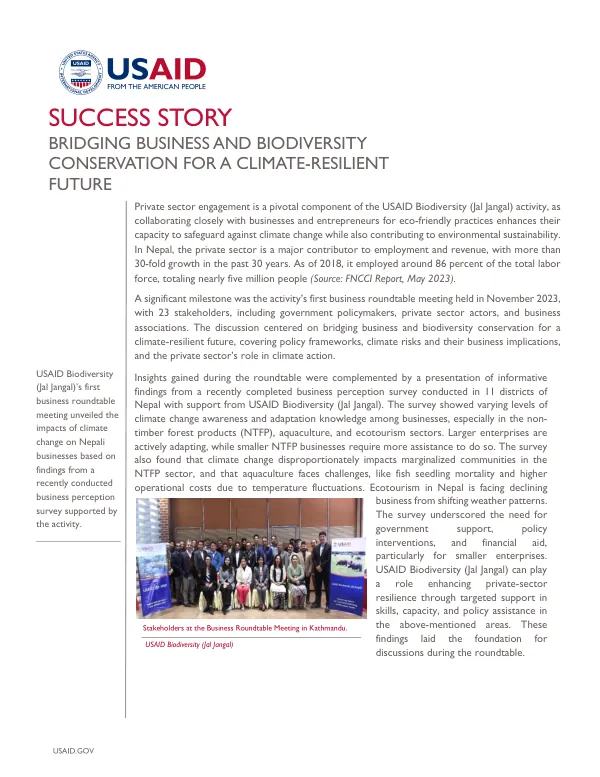
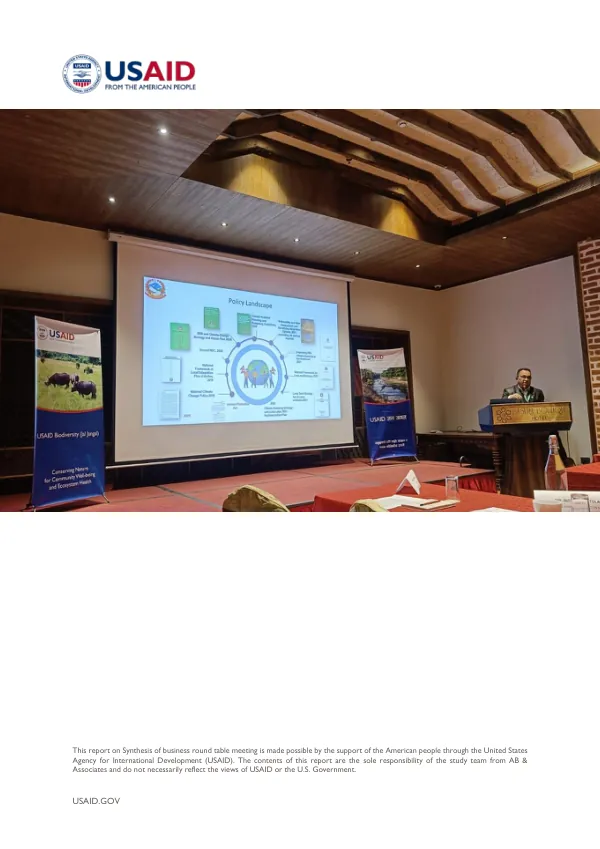
The business roundtable meeting, held on November 24, 2023, in Kathmandu, brought together 23 stakeholders from the private sector, government policymakers, and business associations to discuss the intersection of business and biodiversity in a climate-resilient future.
2024 · 12 pages
Sign in to readA free account is required to download.
Abstract
The meeting was organized by USAID Biodiversity (Jal Jangal) with the aim of addressing diverse threats to Nepal's ecosystems and wildlife, promoting nature conservation, enhancing human well-being, and securing the future. The meeting commenced with a welcome and introductory presentation from the Deputy Chief of Party, USAID Biodiversity (Jal Jangal), highlighting the activity's commitment to building a climate-resilient future through collaboration with various stakeholders, including the private sector. The activity, with a budget of USD 32.9 million over five years, collaborates with the Ministry of Forest and Environment (MoFE) to address challenges such as resource extraction, infrastructure development, pollution, invasive species, and climate change. The Under Secretary from the Climate Change Management Division (CCMD) of MoFE presented on the enabling environment for sustainable and climate-friendly business initiatives. His presentation highlighted the need for private-sector engagement to meet the target of net-zero emissions by 2045. Nepal's key climate change actions encompass national policy initiatives, emphasizing decentralized approaches that are aligned with Nepal's federalist governance system and the country's commitments from the Paris Agreement. The Deputy Director of Nepal Rastra Bank (NRB) shed light on Nepal's regulatory and oversight requirements concerning environmental and social risk management in the financial sector. The NRB's 4th Strategic Plan (2022-2026) focuses on resilience and inclusivity in the financial system, emphasizing global cooperation, collaborating with international networks for knowledge exchange, and charting policy initiatives for inclusive green finance. The findings from USAID Biodiversity (Jal Jangal)'s business perception survey reveal the intricate interplay between climate change and Nepali businesses. The survey explores the impacts of climate change on various sectors, emphasizing ecotourism's vulnerability, cross-sectoral repercussions, and geographical variations. Businesses, particularly in rafting and tourism, cite significant shifts in seasons, affecting operational timelines and client perceptions. The presentation by the Chief Executive Officer from Trekking Agencies' Association of Nepal (TAAN) emphasized the profound impact of climate change on Nepal's trekking industry, particularly in mountain tourism. TAAN presented the interconnectedness between mountain tourism and climate change, highlighting Nepal's position as a global provider of mountain adventure tourism. They emphasized the sector's vulnerability, current challenges, and the need for adaptation strategies. The meeting facilitated a productive dialogue between public and private sector stakeholders committed to biodiversity conservation, encouraging climate-friendly investments and innovative policies. The event aimed to bridge the gap between business and biodiversity, promoting a climate-resilient future for Nepal.