DAI
Livelihood Baseline Study for USAID Biodiversity (Jal Jangal)
The USAID Biodiversity (Jal Jangal) program is a conservation initiative that aims to strengthen biodiversity conservation and adapt to climate change in Nepal.
2024 · 119 pages
Sign in to readA free account is required to download.
Abstract
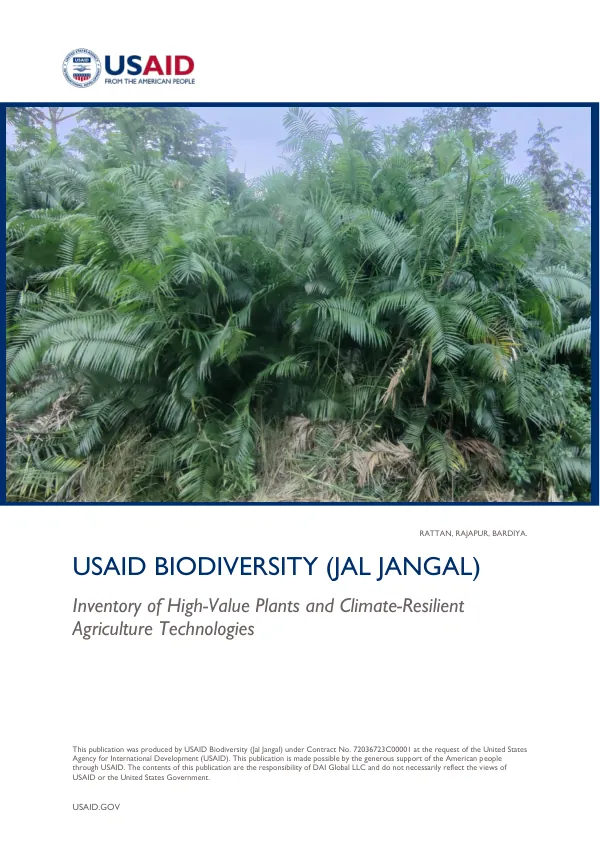
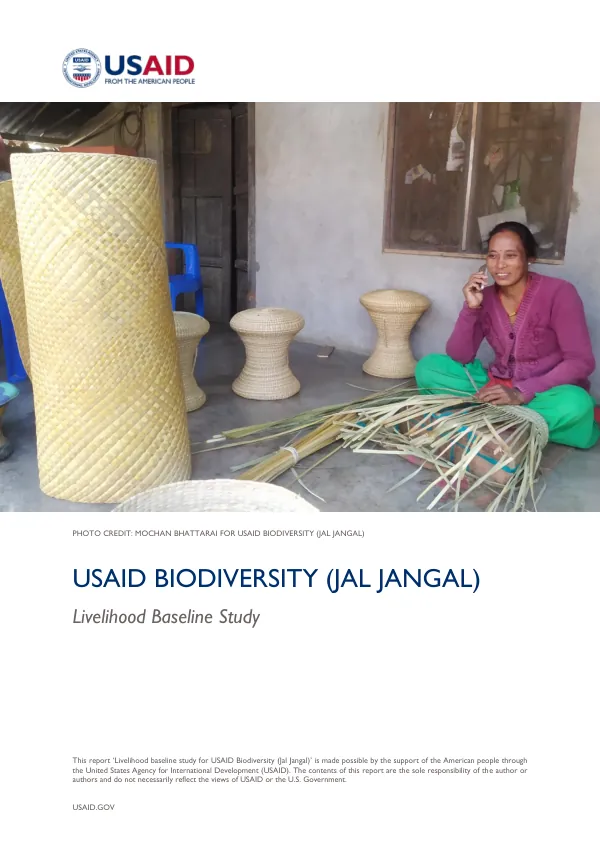
The program is built on past successes in conserving Nepal's forest and freshwater resources to support local communities, governments, and conservation practitioners. The program's primary objective is to protect the country's precious natural resources and support the livelihoods, food security, and incomes of particularly vulnerable groups. The program is implemented in four target landscapes: Chitwan Annapurna Landscape (CHAL), Terai Arc Landscape (TAL), Karnali Conservation Landscape (KCL), and Kailash Sacred Landscape (KSL). The program focuses on promoting value chain activities to improve the livelihoods, food security, and resilience of its target beneficiaries. The value chains examined in the livelihood baseline study include honey, Lesser Bulrush (pater), ginger, aquaculture (pond fishery), rattan, non-timber forest products (NTFPs), medicinal and aromatic plants (MAPs), apples, cardamom, essential oil, and woolen handicrafts. The study was conducted in 13 municipalities of six districts within the program's target landscapes. The study included a rapid field assessment of sample municipalities, the identification and collection of primary and secondary information on potential value chains, and the preparation of site-specific value chain reports. The study findings and recommendations will inform the program's future activities and support the development of value chain activities that improve the livelihoods, food security, and resilience of its target beneficiaries. The study examined the current state of value chain infrastructure and identified key areas of improvement. The study also assessed the risks and vulnerabilities associated with each value chain and identified opportunities for program support and key actions. The study's findings and recommendations will inform the program's future activities and support the development of value chain activities that improve the livelihoods, food security, and resilience of its target beneficiaries. The program's target landscapes are characterized by diverse ecosystems, including forests, grasslands, and wetlands. The landscapes are home to a wide range of biodiversity, including many endangered species. The program's conservation efforts focus on protecting these ecosystems and the biodiversity they support. The program also works to promote sustainable livelihoods and improve the resilience of local communities to climate change. The program's implementation is supported by a range of stakeholders, including local communities, governments, and conservation practitioners. The program's success depends on the effective collaboration and coordination of these stakeholders. The program's future activities will be informed by the study's findings and recommendations, and will focus on promoting value chain activities that improve the livelihoods, food security, and resilience of its target beneficiaries.
Related documents