USAID
Bulletin n° 12, February 2020
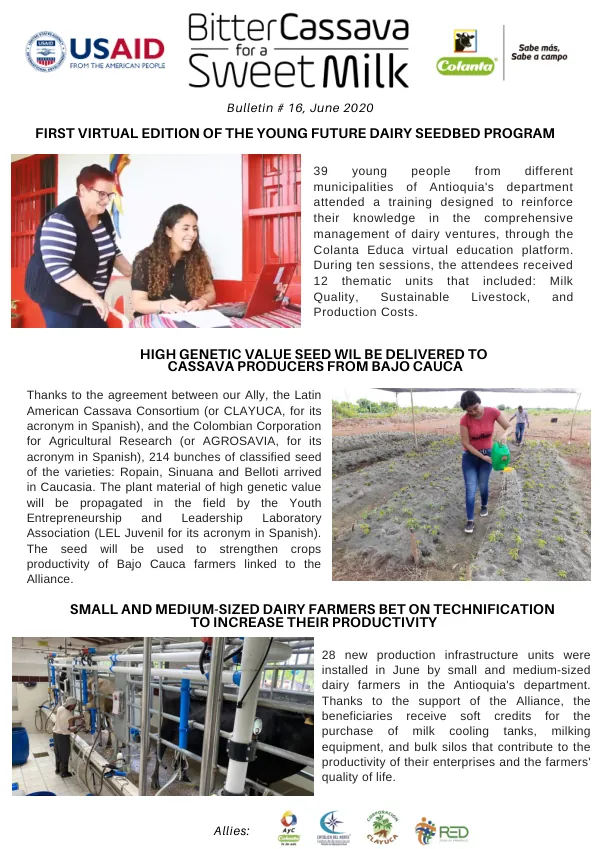
The Alliance's Quality Control Brigades are designed to inspect milk producers in specific municipalities, providing personalized technical advice to improve the hygienic, sanitary, and compositional quality of their milk.
2020 · 1 pages
Sign in to readA free account is required to download.
Abstract
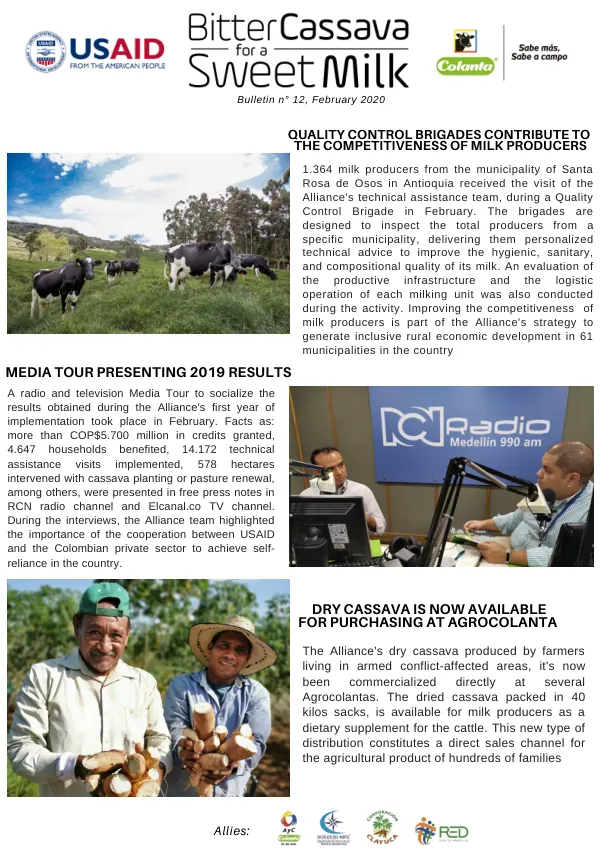
In February 2020, the brigades visited 1,364 milk producers in the municipality of Santa Rosa de Osos in Antioquia. An evaluation of the productive infrastructure and logistic operation of each milking unit was also conducted during the activity. The goal of these brigades is to improve the competitiveness of milk producers, which is part of the Alliance's strategy to generate inclusive rural economic development in 61 municipalities in the country. The Alliance's first year of implementation saw significant results, which were presented during a media tour in February 2020. The tour highlighted the importance of cooperation between USAID and the Colombian private sector in achieving self-reliance in the country. Key statistics from the first year include more than COP$5.7 million in credits granted, 4,647 households benefiting, and 14,172 technical assistance visits implemented. Additionally, 578 hectares were intervened with cassava planting or pasture renewal. The Alliance has also made progress in commercializing dry cassava produced by farmers living in armed conflict-affected areas. The dried cassava, packed in 40-kilo sacks, is now available for purchase at Agrocolantas as a dietary supplement for cattle. This new distribution channel provides a direct sales opportunity for hundreds of families. The availability of dry cassava is expected to benefit milk producers, who can use it to improve the nutritional quality of their cattle. The Quality Control Brigades have contributed to the competitiveness of milk producers in the region. By providing personalized technical advice and evaluating the productive infrastructure and logistic operation of each milking unit, the brigades have helped producers improve the quality of their milk. This, in turn, is expected to increase their competitiveness in the market and contribute to the overall development of the rural economy. The Alliance's strategy of improving the competitiveness of milk producers is expected to have a positive impact on the rural economy in 61 municipalities in the country. By providing technical assistance and promoting the commercialization of agricultural products, the Alliance aims to generate inclusive rural economic development and improve the livelihoods of farmers and their families.
Related documents