USAID FAMINE EARLY WARNING SYSTEMS NETWORK
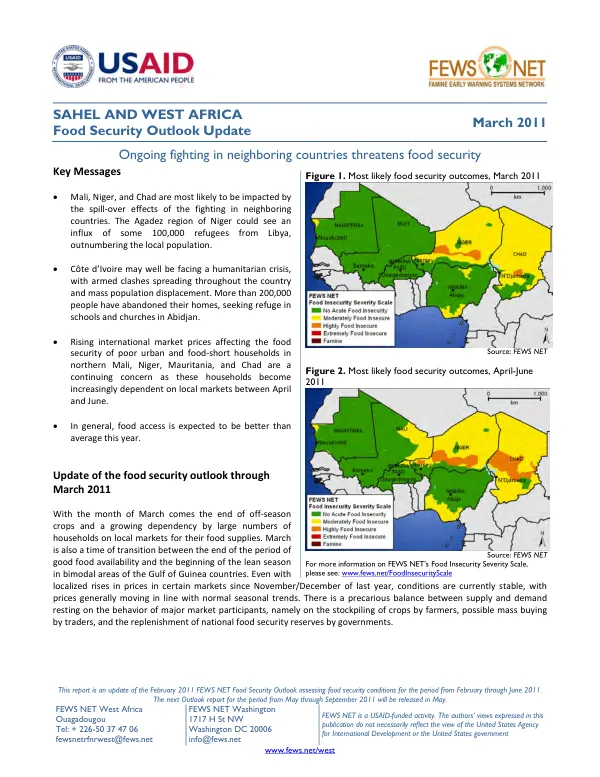
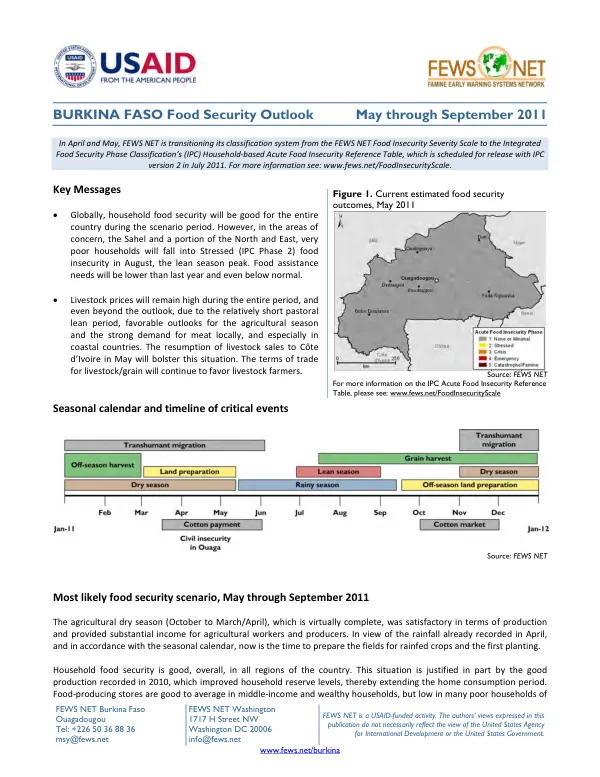
BURKINA FASO Food Security Outlook Update April 2011
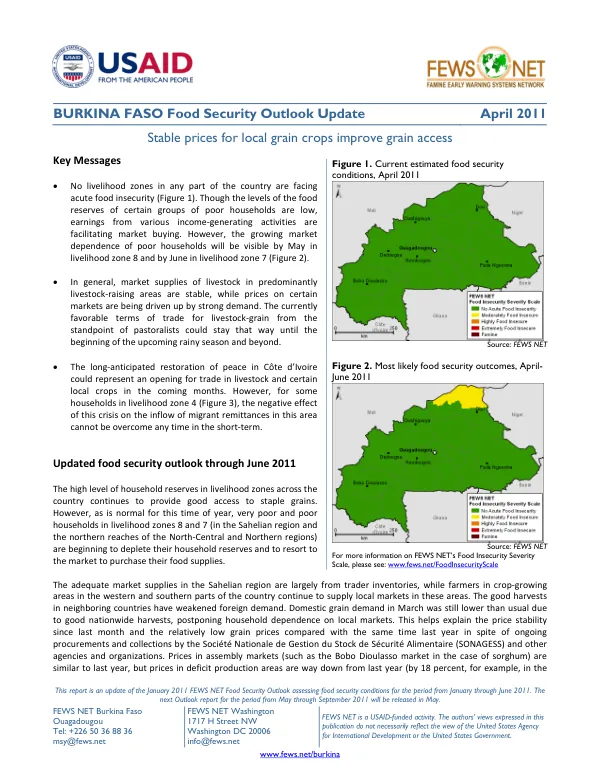
Burkina Faso's food security conditions are stable, with no livelihood zones facing acute food insecurity.
2011 · 3 pages
Sign in to readA free account is required to download.
Abstract
Household reserves are high, providing good access to staple grains. However, poor and very poor households in livelihood zones 8 and 7 are beginning to deplete their reserves and purchase food supplies from the market. Market supplies of local grain crops are adequate, with traders' inventories and farmers' supplies meeting demand. Domestic grain demand is lower than usual due to good harvests, which has contributed to price stability and relatively low grain prices compared to the same time last year. Prices in assembly markets are similar to last year, but prices in deficit production areas are lower. Livestock market supplies are stable, with strong demand driving up prices in certain markets. The favorable terms of trade for livestock-grain from the standpoint of pastoralists are expected to continue until the beginning of the upcoming rainy season and beyond. The restoration of peace in Côte d'Ivoire could revive the livestock trade with that country and increase prices, making the trade more profitable for pastoralists. Poor households in livelihood zone 7 have limited food reserves, but normal market supplies are enabling them to purchase grain with their earnings from various activities. Aid from partners has helped protect local livelihoods and generate income. Pastoral conditions are classified as fair, with dwindling natural pasture and growing scarcity of animal watering holes. However, there should be an average to good food supply for domesticated animals due to crop residues, fodder production, and hay from the last growing season. Livestock are in average to good physical condition, and market supplies of animals have been stable for the past few months. Prices are rising in certain markets, such as Dori, where there is a growing presence of buyers from Ghana and Niger. The usual seasonal decline in livestock prices could begin around the middle of May or June as needed supplies of pasture and water grow extremely tight. However, any drop in prices between now and June will be small compared to the seasonal average.