EUROPEAN UNION
Burmese Land Governance Issues Brief
In Burma, the legal framework relating to land governance is poorly harmonized and often antiquated, with many important pieces of legislation dating back to the colonial period.
2016 · 4 pages
Sign in to readA free account is required to download.
Abstract
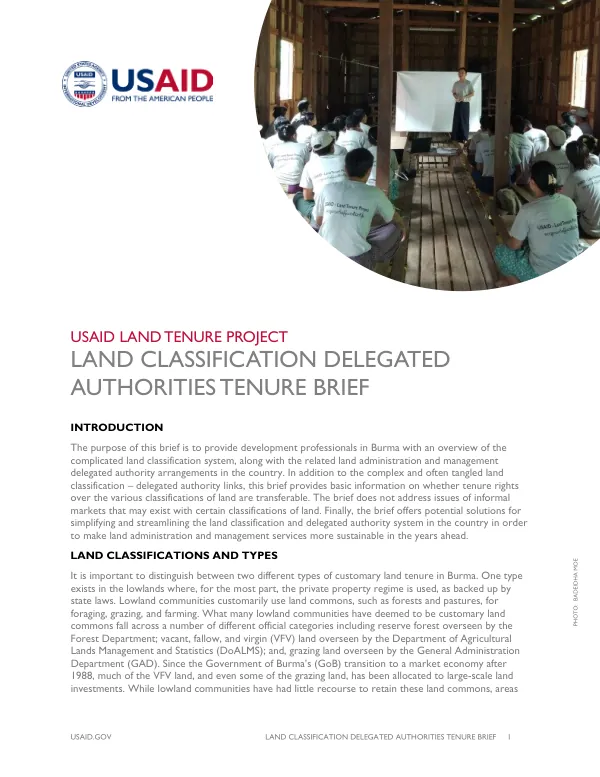
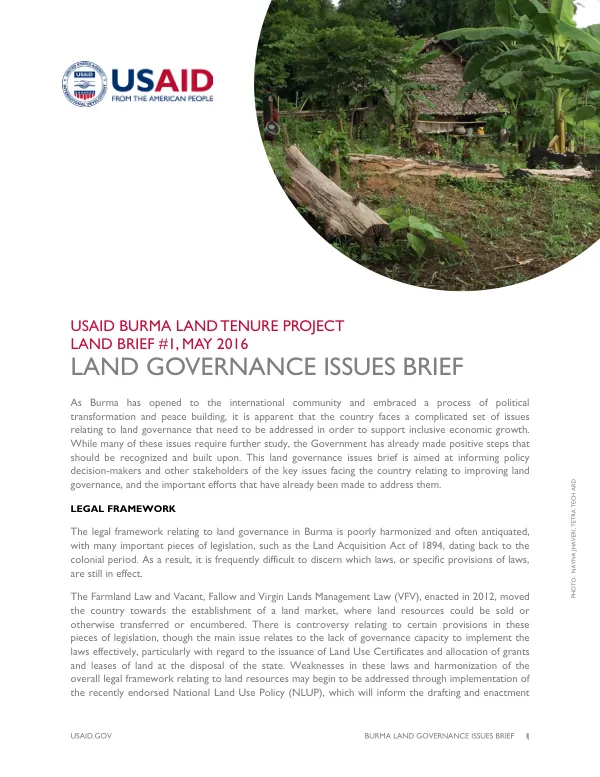
The Farmland Law and Vacant, Fallow and Virgin Lands Management Law (VFV), enacted in 2012, moved the country towards the establishment of a land market, where land resources could be sold or otherwise transferred or encumbered. However, controversy surrounds certain provisions in these laws, particularly with regard to the issuance of Land Use Certificates and allocation of grants and leases of land at the disposal of the state. Registration of land tenure claims in rural areas is a significant challenge in Burma. The system for registration, originally established by the British, has not been properly maintained since at least the early 1960s, resulting in difficulties discerning who has legitimate claims to land resources. This leads to confusion, conflict, and a high level of tenure insecurity, particularly for vulnerable groups such as smallholder farmers, ethnic communities, women, and the poor. The lack of clarity relating to land tenure also has a chilling effect on high-quality responsible investments in the country. In Burma, many areas do not have a system in place for the formal recognition or registration of legitimate land tenure rights. This leaves individuals, households, and communities in these areas with a wide variety of informal customary tenure arrangements that are highly vulnerable to loss of land tenure rights important for local livelihood purposes. The formal recognition, protection, and registration of legitimate land tenure rights of individuals, households, and communities in such areas will be a particularly important element in the ongoing peace process. The governance architecture relating to land resources in Burma is fractured and often unclear, with overlaps of authority being common. Accessing accurate information relating to land resources and tenure is very difficult in the country, with different ministries and departments holding information relative to their delegated authority and being reluctant to share such information freely. This makes informed decision-making processes relating to land resources difficult, often results in conflict over land resources, deters responsible investors, and hinders inclusive economic growth.
Related documents