TNC
Caracterización biológica del predio Corocito, Orocué, Casanare
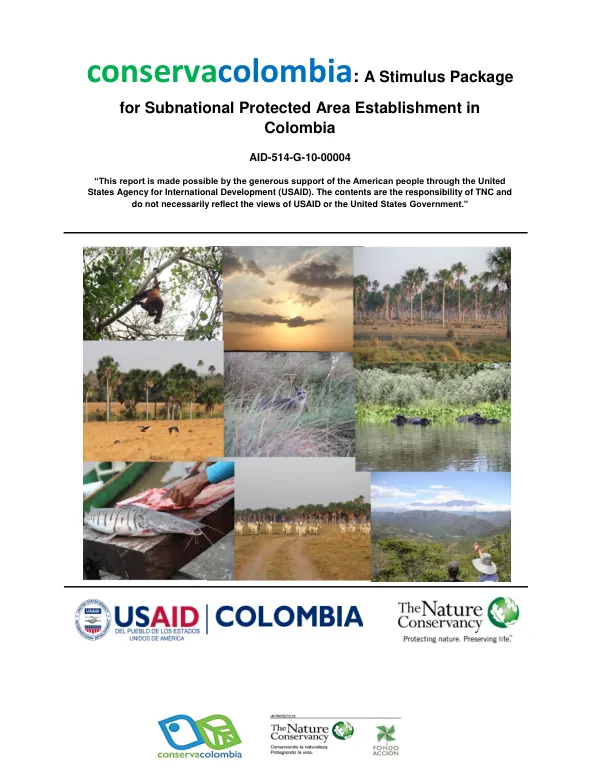
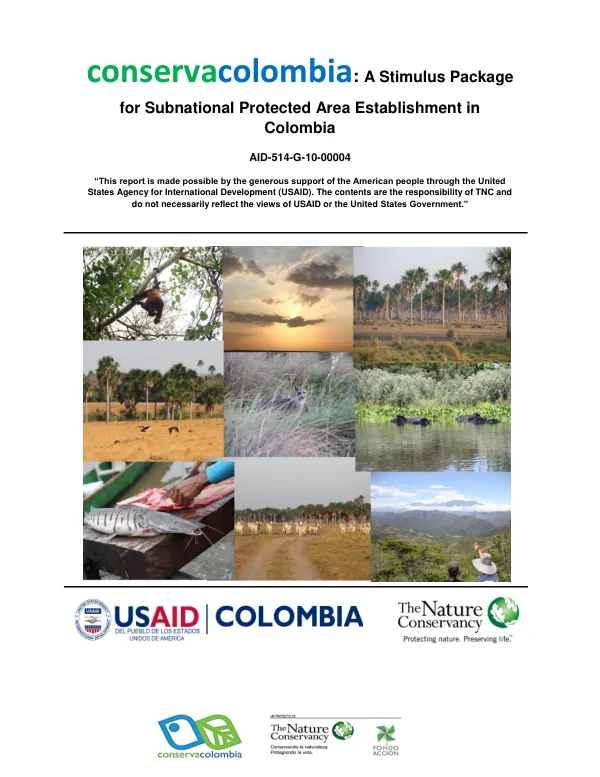
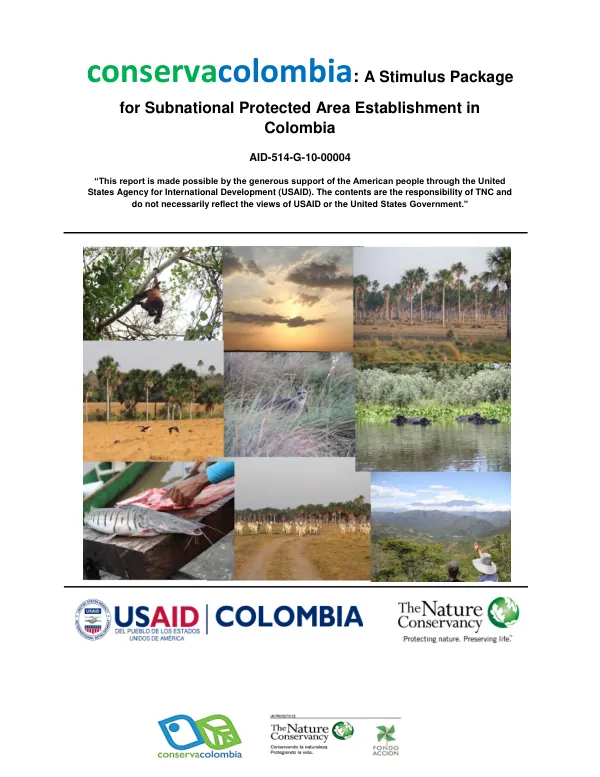
The Caracterización biológica del predio Corocito, Orocué, Casanare is a study conducted in 2013 to inventory the ecosystems, flora, avifauna, and ictiofauna present in the Corocito area.
2014 · 72 pages
Sign in to readA free account is required to download.
Abstract
The study aimed to understand the composition of the floristic associated with the diverse ecosystems and compare it with other sabanas inundables. The Corocito area is located in the Gran Paisaje de Sabanas inundables and specifically in the paisaje de valles aluviales de ríos andinos, in this case, the ríos Meta and Cravo Sur. The study found that the Corocito area encloses four differentiated ecosystems: Bosque alto denso húmedo del valle aluvial del río Cravo Sur, Bosque alto denso húmedo del valle aluvial del río Meta, áreas intervenidas, and playas de río. A total of 424 species of plants were found, distributed in 279 genera and 92 families, with the families Fabaceae, Poaceae, and Rubiaceae standing out. The most diverse ecosystem was the bosque de vega, followed by the zonas intervenidas and the playas. The total number of bird species was 136, with the majority found in the bosques de vega, 44 in the zonas intervenidas, and 31 in the río. Sixty-five species of fish were identified, 33 in the Cravo Sur and its associated water bodies, and 32 in the río Meta and its associated water bodies. The order with the highest number of species was Characiformes (34), followed by Siluriformes (24). The study concluded that Corocito presents a good state of conservation, both at the level of ecosystems of sabana and the present forests. According to the preliminary inventories, it has a considerable diversity, taking into account its surface area, indicating that it is an important site for the conservation of flora and fauna of the region and therefore deserves to be registered as a Reserva Natural de la Sociedad Civil (RNSC). The sabanas of Casanare have been intervened since at least 300 years, initially by the development of livestock and more recently by the expansion of agroindustrial crops and the extraction of hydrocarbons, accompanied by the opening of roads and the increase in human population. To understand the importance of these ecosystems and plan their management, it is necessary to study their floristic composition associated with the diverse ecosystems and compare it with other sabanas inundables. The study highlights the importance of the sabanas inundables, which provide many environmental services, such as the regulation of nutrient cycles, the control of erosion, and the retention of CO2. Additionally, they offer services such as tourism, recreation, and education, and are an essential part of the culture and life of the llanero. Therefore, it is fundamental to study and conserve these ecosystems. The systems ribereños are areas of transition between terrestrial and aquatic environments, influenced by continental waters and frequently extending from the margins of water courses to the limits of terrestrial communities without water influence. Due to their spatial location, these systems establish interactions between aquatic and terrestrial components of the landscape.