USAID DEC
Caracterización y autodiagnóstico productivo de resguardos indígenas Coreguajes, Makaguajes y Uitotos, para la formulación de proyectos productivos
Sign inAMAZON CONSERVATION TEAM
Caracterización y autodiagnóstico productivo de resguardos indígenas Coreguajes, Makaguajes y Uitotos, para la formulación de proyectos productivos
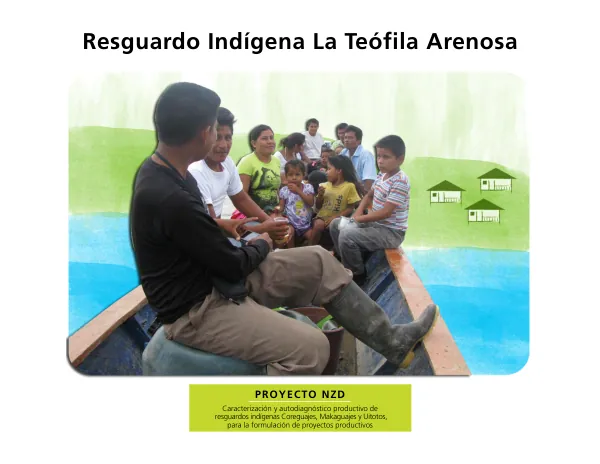
The Resguardo Indígena La Teófila Arenosa is a community located in the municipality of Solano, Caquetá, Colombia.
2014 · 36 pages
Sign in to readA free account is required to download.
Abstract
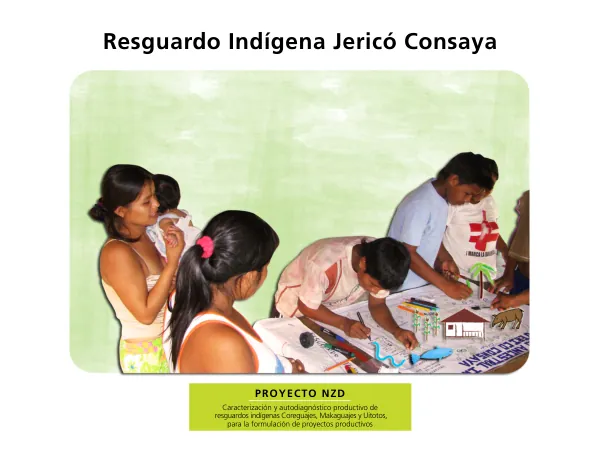
The community is situated on the banks of the Caquetá River, approximately two hours by boat from the municipality of Solano. The community has a total of 14 families, with a population of 57 individuals, including children, young people, adults, and elderly. The community is governed internally by a council, which is headed by the Cacique, Omar Chica. The council is responsible for representing the community's interests to the government, municipality, department, and nation. The community has a school, which is attended by 25 students, ranging in age from 5 to 16 years old. The school is staffed by a single teacher, who provides education and guidance to the community. The community's primary systems of production are agriculture, hunting, and fishing. The main crop is yuca, which is used for various food preparations, including fariña, casabe, and cooked yuca. Other crops include fruits such as pineapple and uva caimarona, which are consumed and sold. The community also engages in cacería (hunting) and pesca (fishing) for food and income. The community has received support from various institutions, including the Alcaldía Municipal, ICBF, Gobernación del Caquetá, ACT, and TNC/ACT. These institutions have provided assistance with projects and activities, including the construction of a school, a gym, and an ethnobiology institute. The community has conducted an autodiagnóstico productivo (productive self-diagnosis) to identify alternative productive activities that can contribute to the reduction of deforestation. This process involved the direct participation of the community members, who identified the different spaces of use and the resources they provide. The community also created maps of the territory, highlighting the areas of use, resources, and relevant sites. The autodiagnóstico productivo allowed the community to identify the different spaces of use and the resources they provide, including the abundance, scarcity, or disappearance of these resources. This information will be used to define alternative recovery and management strategies for the community. The community has also identified the need to recover and manage the different spaces of use, including the chagra (agricultural area), the forest, and the river. The community has proposed alternative productive activities, such as the cultivation of crops, the production of handicrafts, and the development of ecotourism. The Resguardo Indígena La Teófila Arenosa is working to develop a model of integral management, functional, and replicable for reducing and preventing deforestation. This model will be based on strategic alliances, articulating scientific knowledge and ancestral knowledge. The community aims to leave a lasting impact on the territory through the formation of local promoters, who will work together with their communities and with the technical support of ACT and TNC to develop their own diagnoses, identify problems and causes, prioritize solutions, respond to the main impacts of deforestation, and generate economic surpluses that reduce pressure on the forest.
Related documents
Documents in this collection
 2014
2014USAID DEC
Caracterización y autodiagnóstico productivo de resguardos indígenas Coreguajes, Makaguajes y Uitotos, para la formulación de proyectos productivos
Open record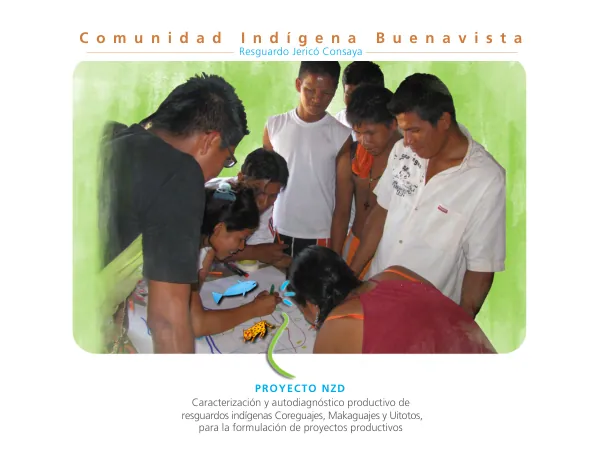 2013
2013USAID DEC