USAID DEC
Caracterización y autodiagnóstico productivo de resguardos indígenas Coreguajes, Makaguajes y Uitotos, para la formulación de proyectos productivos
Sign inAMAZON CONSERVATION TEAM
Caracterización y autodiagnóstico productivo de resguardos indígenas Coreguajes, Makaguajes y Uitotos, para la formulación de proyectos productivos
The Coreguajes, Makaguajes, and Uitotos indigenous communities in Solano, Caquetá, Colombia, are participating in the Net Zero Deforestation (NZD) program.
2013 · 25 pages
Sign in to readA free account is required to download.
Abstract
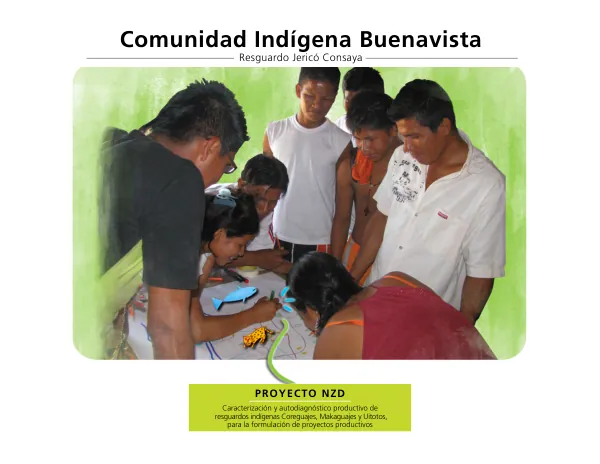
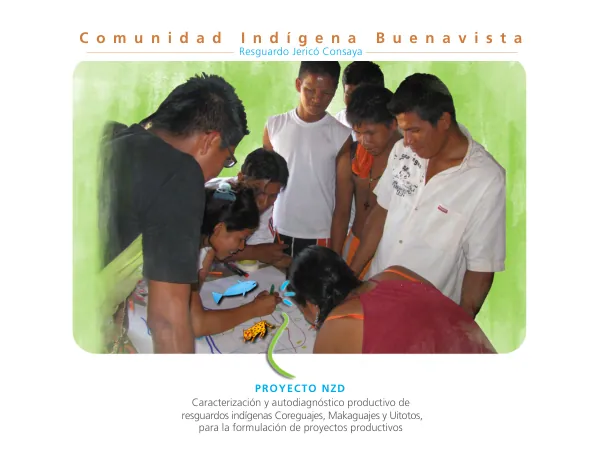
The program aims to reduce and prevent deforestation in the Amazonian Andean region, improving the quality of life of local populations. The NZD program is being implemented in collaboration with the Amazon Conservation Team (ACT) and The Natural Conservancy (TNC). The community of Buenavista is located in the Jericó Consaya indigenous reserve, on the right bank of the Consaya stream, two and a half hours away by river from the municipal capital of Solano. The community has a total of 61 inhabitants, with 41 men and 20 women, and 11 families are participating in the NZD project. The community is organized under the cacicazgo committee, represented by a cacique, a substitute cacique, a leader, a secretary, a fiscal, a commissioner, and a treasurer. The community has a plan of life that includes 10 components, such as health and traditional medicine, education, culture, autonomy, territory, youth, special indigenous jurisdiction, women and gender, agriculture and production, and communication. The community has a school that provides education from grade 0 to ninth grade, and the inhabitants depend on the Jericó Consaya health center for medical attention. The community has a health post without promotion or equipment, and when emergencies arise, they seek medical attention in the municipal capital of Solano. The community's homes are built with zinc roofs, wooden walls, and some with wooden floors and others with earthen floors. The 11 families live in eight houses located on the banks of the Consaya stream and have a recreation area. The community does not have basic sanitation services, and the water used for consumption is taken from the Consaya stream and sometimes from rainwater collected from the roof in plastic containers. The community's waste is buried, and each family has a pit where they deposit their waste, some of which is burned. There are no toilets, and the community's excrement is deposited in pits that are covered to prevent contamination. The community does not have electricity services.
Related documents
Documents in this collection
 2014
2014USAID DEC
Caracterización y autodiagnóstico productivo de resguardos indígenas Coreguajes, Makaguajes y Uitotos, para la formulación de proyectos productivos
Open record 2014
2014USAID DEC