USAID DEC
Caracterización y autodiagnóstico productivo de resguardos indígenas Coreguajes, Makaguajes y Uitotos, para la formulación de proyectos productivos
Sign inAMAZON CONSERVATION TEAM
Caracterización y autodiagnóstico productivo de resguardos indígenas Coreguajes, Makaguajes y Uitotos, para la formulación de proyectos productivos
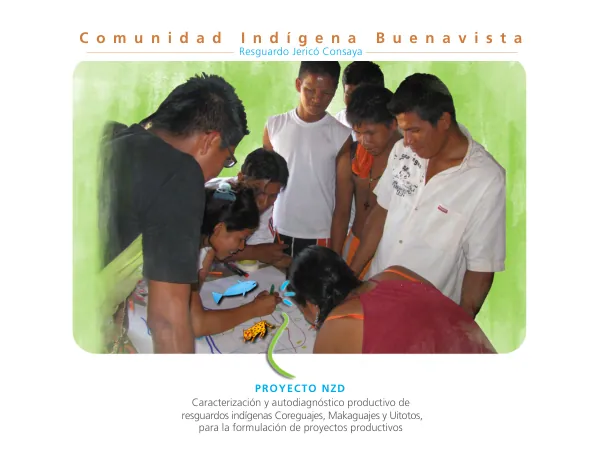
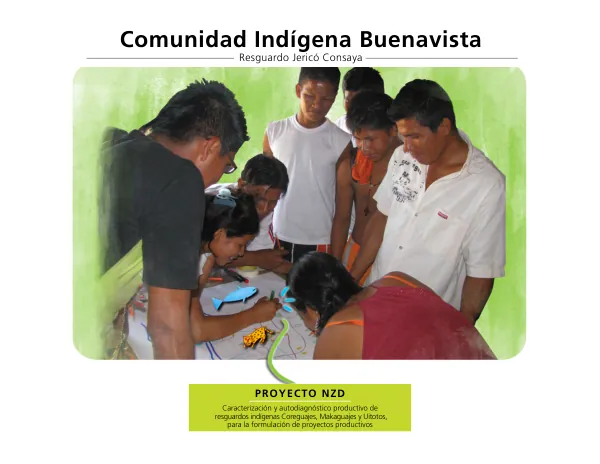
The Resguardo Jericó Consaya is a community located in the municipality of Solano, Caquetá, Colombia.
2014 · 36 pages
Sign in to readA free account is required to download.
Abstract
The community is part of the Coreguajes, Makaguajes, and Uitotos indigenous groups, and is affiliated with the Consejo Regional Indígena Orteguaza Medio Caquetá (CRIOMC) and the Organización Nacional Indígena de Colombia (ONIC). The community has a population of 61 inhabitants, with 41 men and 20 women, and is organized under the comité de cacicazgo, which is represented by a cacique, a cacique suplente, a leader, a secretary, a fiscal, a comisario, and a treasurer. The community has a strong focus on agriculture, with many families participating in the Programa Net Zero Deforestation (NZD), which aims to reduce and prevent deforestation in the Amazonian Andes. The community has a well-organized system of governance, with various committees, including the comité de seguidores y curanderos de medicina tradicional (Yajeceros), the comité de educación, the comité de mujeres, and the comité de deporte. The community's education system is based on the center educativo de Jericó Consaya, where 34 children and adolescents receive classes from grade 0 to ninth grade. However, the community lacks access to basic sanitation services, including water treatment, and relies on the caño Consaya for water consumption. The community also lacks electricity, and families use mecheros de acpm, velas, and linternas for lighting. The community's health is a concern, with common illnesses including diarrhea, gripa, malaria, and vómito. The community has a puesto de salud without a promoter or equipment, and emergencies are referred to the cabecera municipal de Solano. The community's housing is constructed with zinc roofs, wooden walls, and some with wooden floors and others with earth floors. The community's economy is primarily based on agriculture, with many families participating in the NZD program. The community has a strong focus on sustainable development, with a mission to reduce and prevent deforestation in the Amazonian Andes. The community's vision is to create a model of integral management, functional, and replicable for reducing and preventing deforestation, based on strategic alliances, articulating scientific knowledge and ancestral knowledge. The community has a rich cultural heritage, with a strong focus on traditional medicine, education, culture, autonomy, territory, youth, jurisdictional special indigenous, woman and gender, agriculture and production, and communication. The community has a well-organized system of governance, with various committees, including the comité de seguidores y curanderos de medicina tradicional (Yajeceros), the comité de educación, the comité de mujeres, and the comité de deporte. The community's history dates back to the 1990s, when the Resguardo de Jericó Consaya was constituted legally under the resolution 048 of 1995. The community has a strong focus on sustainable development, with a mission to reduce and prevent deforestation in the Amazonian Andes. The community's vision is to create a model of integral management, functional, and replicable for reducing and preventing deforestation, based on strategic alliances, articulating scientific knowledge and ancestral knowledge. The community has a well-organized system of governance, with various committees, including the comité de seguidores y curanderos de medicina tradicional (Yajeceros), the comité de educación, the comité de mujeres, and the comité de deporte. The community has a strong focus on agriculture, with many families participating in the NZD program. The community's economy is primarily based on agriculture, with many families participating in the NZD program. The community's health is a concern, with common illnesses including diarrhea, gripa, malaria, and vómito. The community has a puesto de salud without a promoter or equipment, and emergencies are referred to the cabecera municipal de Solano. The community's housing is constructed with zinc roofs, wooden walls, and some with wooden floors and others with earth floors. The community lacks access to basic sanitation services, including water treatment, and relies on the caño Consaya for water consumption.
Related documents
Documents in this collection
 2014
2014USAID DEC
Caracterización y autodiagnóstico productivo de resguardos indígenas Coreguajes, Makaguajes y Uitotos, para la formulación de proyectos productivos
Open record 2014
2014USAID DEC