USAID DEC
Caracterización y autodiagnóstico productivo de resguardos indígenas Coreguajes, Makaguajes y Uitotos, para la formulación de proyectos productivos
Sign inAMAZON CONSERVATION TEAM
Caracterización y autodiagnóstico productivo de resguardos indígenas Coreguajes, Makaguajes y Uitotos, para la formulación de proyectos productivos
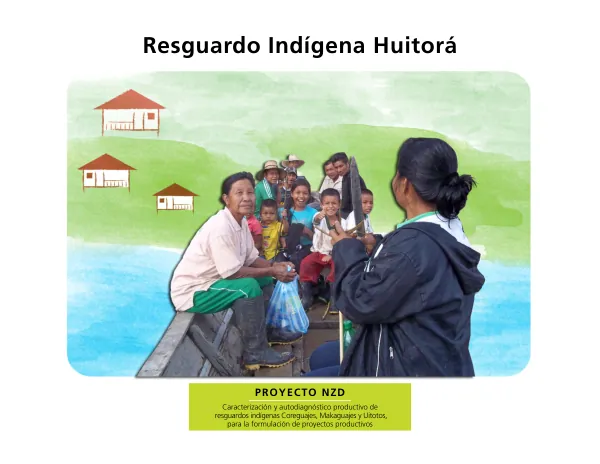
The Resguardo Indígena Huitorá is located in the department of Caquetá, Colombia, in the municipality of Solano.
2014 · 48 pages
Sign in to readA free account is required to download.
Abstract
The resguardo is situated on the left bank of the Río Caquetá, bordering national lands to the east, the Parque Nacional Natural La Paya to the west, the junta de acción comunal Orotuya to the north, and the junta de acción comunal de Tres Troncos to the south. The primary access route to the resguardo is the Río Caquetá, which can be traversed by yates, botes, and canoas, with the fastest journey taking approximately 8 hours from Florencia. The resguardo has a total area of approximately 67,220 hectares and was declared a resguardo on February 3, 1981. The territory has been traditionally used for hunting, fishing, logging, and the collection of medicinal plants. Despite some studies indicating that the land is not suitable for production, each family cultivates chagras with crops such as pancoger, fruit trees, and short-term crops. The first harvests are generally good and abundant. The resguardo is organized under a cabildo, which is composed of a governor, a secretary, a treasurer, and a fiscal. Additionally, it has a cacique, who is the traditional indigenous authority and helps make decisions for the well-being of the community. Education is a significant factor for the community of Huitorá, but there is no school in good condition, and the teacher who attends to 24 children from preschool to the fifth grade of primary school does not have a permanent appointment and is hired on a limited-time basis. The resguardo has a population of 18 indigenous families with a total of 103 people, including women, men, and children. Of these families, 14 participate in the NZD project. The level of education among the population is high, while mortality is low and usually occurs due to old age or diseases. The main health issues affecting the inhabitants of the resguardo are grippe, diarrhea, and malaria. There is a health post in poor condition, and the promoter attends to patients in a family home. The health brigades only visit the resguardo once a year. The community has 12 inhabited houses, some of which are in good condition, while others are not. The houses are located in a caserío and are mostly made of wood and zinc roofs. Some houses are inhabited by up to four families. The families have access to water from the Río Caquetá during the summer months, which is considered unsuitable for human consumption. During the winter months, they use water from canals, wells, and rainwater, which is collected in tanks. The houses have latrines for the elimination of excreta, bad odors, and to prevent contamination. Some waste is burned, while others are deposited in areas away from the houses. The community does not have a communal electricity service, but some families have electric plants. The most frequently used means of communication are the community's fixed phone, mobile phones, letters sent by yates, and information received through the most listened-to radio stations. Within the resguardo, the maguare is used to alert the community through its sound. Agriculture is the primary productive activity in the resguardo. Crops are established in chagras, usually between ½ and 1 hectare. The base of the community's diet is yuca dulce and amarga, complemented with plantains. Maize is a commercial product mainly due to its good production, and the community also relies on hunting and fishing for family sustenance.
Related documents
Documents in this collection
 2014
2014USAID DEC
Caracterización y autodiagnóstico productivo de resguardos indígenas Coreguajes, Makaguajes y Uitotos, para la formulación de proyectos productivos
Open record 2014
2014USAID DEC