USAID DEC
Care of the Low Birth Weight Newborn
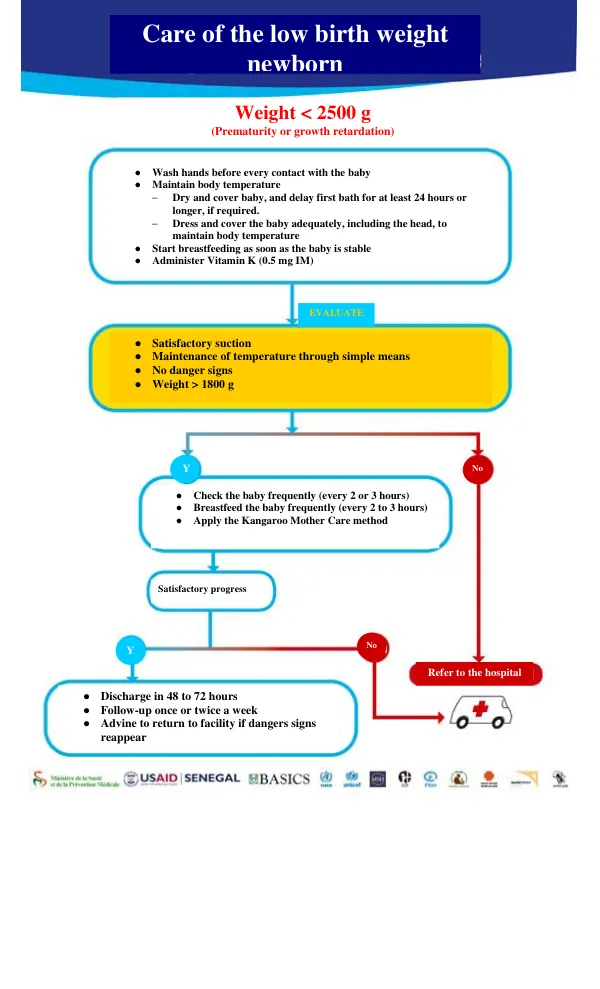
Care of the low birth weight newborn involves several critical steps to ensure the baby's health and well-being.
1 pages
Sign in to readA free account is required to download.
Abstract
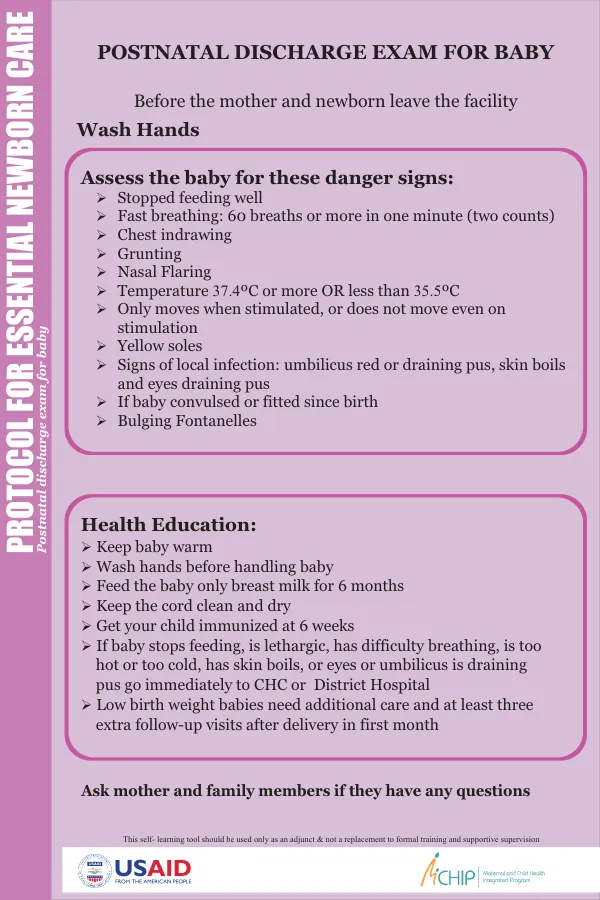
Newborns with a weight of less than 2500 grams are considered low birth weight, often due to prematurity or growth retardation. Initial care includes washing hands before every contact with the baby to prevent infection. Maintaining body temperature is essential, and this can be achieved by drying and covering the baby, delaying the first bath for at least 24 hours or longer if required. The baby should be dressed and covered adequately, including the head, to prevent heat loss. Breastfeeding should be initiated as soon as the baby is stable, providing essential nutrients and promoting bonding. Administration of Vitamin K (0.5 mg intramuscularly) is also crucial to prevent bleeding complications. Evaluation of the baby's condition is ongoing, with satisfactory suction, maintenance of temperature through simple means, and absence of danger signs being key indicators of progress. A weight of more than 1800 grams is also a positive sign. Frequent checks on the baby's condition are necessary, with monitoring every 2 or 3 hours to assess progress. Frequent breastfeeding is also essential, with the baby being fed every 2 to 3 hours. The Kangaroo Mother Care method, which involves skin-to-skin contact between the mother and baby, can also be beneficial in promoting bonding and warmth. As the baby shows satisfactory progress, discharge from the hospital can be considered within 48 to 72 hours. Follow-up visits once or twice a week are necessary to monitor the baby's condition and provide guidance on care. In the event of danger signs reappearing, the baby should be returned to the hospital for further evaluation and treatment.