CORE GROUP
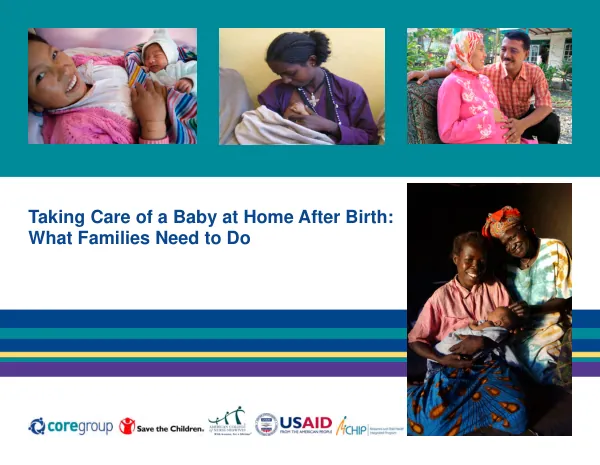
Taking Care of a Baby at Home After Birth: What Families Need to Do
Pregnant women and their families need to plan care of an infant at home right after birth.
2011 · 31 pages
Sign in to readA free account is required to download.
Abstract
Essential actions families can take to prevent newborn death and illness and promote healthy newborn development include having a skilled attendant help at every birth and having access to emergency care at health services. However, nearly 60 million births in developing countries still take place at home without skilled care, contributing heavily to maternal and infant deaths. The highest proportion of deaths of mothers and newborns occurs during delivery or within 24 hours of birth. Yet, in developing countries, only about 13 percent of mothers and infants receive postnatal care within 24 hours of a home birth. The World Health Organization (WHO) and the United Nations Children's Fund (UNICEF) recommend a postnatal visit to a health facility as soon as possible after a home birth. Where this is not possible, they recommend home visits to mother and infant within 24 hours, on the third day, and if possible, before the end of the first week after the birth. The health of the mother and infant is directly connected. Applying proven interventions to improve the mother's health can prevent about 70 percent of newborn deaths. Both the mother and infant need attention before, during, and immediately following birth. Families often do not recognize danger signs at birth and/or signs of severe illness in the first week of the infant's life. They may not know how critical it is to seek appropriate care right away. During pregnancy, the mother should visit a health worker as soon as she learns she is pregnant, visit health worker at least four times during her pregnancy, get plenty of rest and eat a variety of foods, including animal products, fruits, and vegetables. After delivery, a breastfeeding mother should eat two extra meals each day, eat a variety of foods, including animal products, fruits, and vegetables, get plenty of rest, and sleep with the baby under an insecticide-treated bed net if living in an area with mosquitoes. Fathers and grandmothers have an important role in making sure the woman has the support she needs. The family should help the pregnant woman and new mother with her chores so she can rest and care for the baby. The booklet provides basic information on essential actions families can take to keep a newborn alive and healthy. It also provides ways to prepare for emergencies a baby may face at home during birth and in the first week after birth. Programmers should review the content to be sure it meets the local situation and need. They should adapt the material to use local examples and names, use local language and avoid jargon and scientific words, add or change illustrations, and translate into local language(s). The material is meant for outreach to pregnant women and their families with poor access to health services. It is important to test the material with outreach workers and community members to be sure the messages are understood and acceptable.