USAID/RDM/A
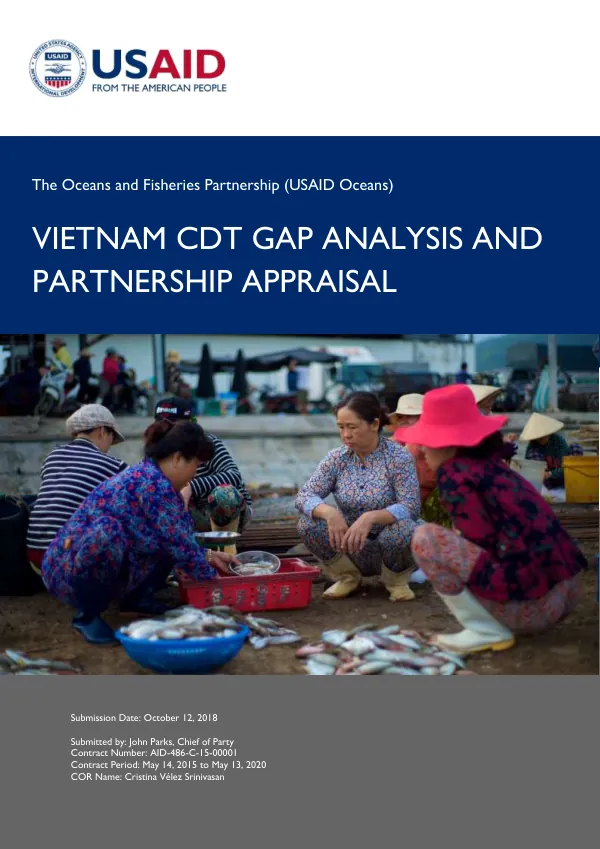
CDT Gap Analysis and Partnership Appraisal for Vietnam
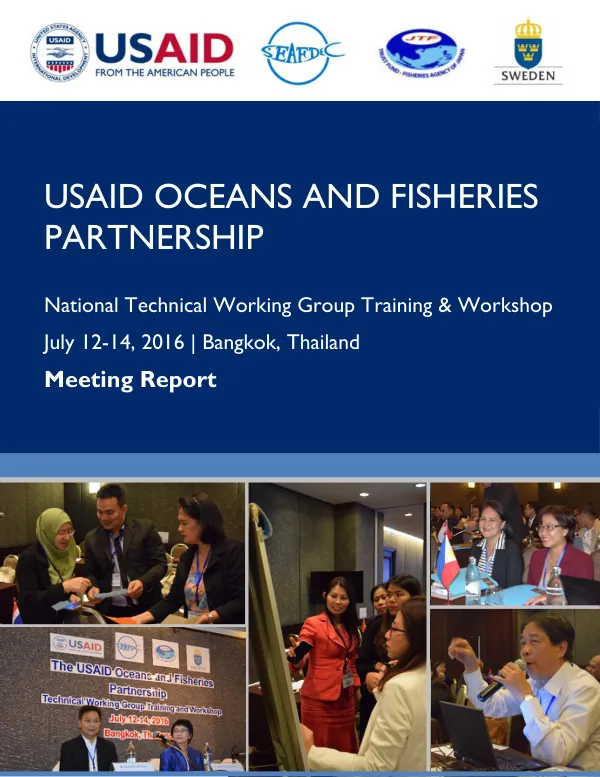
The Oceans and Fisheries Partnership (USAID Oceans) conducted a Catch Documentation and Traceability (CDT) Gap Analysis and Partnership Appraisal for Vietnam.
2018 · 94 pages
Sign in to readA free account is required to download.
Abstract
The analysis aimed to assess the current state of CDT in Vietnam's fisheries sector and identify gaps and opportunities for improvement. Vietnam's fisheries sector is characterized by a complex supply chain, with multiple stakeholders involved in the production, processing, and trade of seafood products. The sector is driven by socio-economic factors, including poverty reduction and economic growth. However, the sector also faces challenges related to institutional arrangements, management structure, and international instruments. The CDT Gap Analysis and Partnership Appraisal for Vietnam identified several key findings. Firstly, the analysis revealed that Vietnam's fisheries sector lacks a comprehensive CDT system, with limited data capture and traceability across the supply chain. Secondly, the analysis highlighted the need for improved institutional arrangements and management structure to support CDT implementation. Thirdly, the analysis identified the importance of international instruments, such as the Convention on International Trade in Endangered Species of Wild Fauna and Flora (CITES), in regulating the trade of seafood products. Industry engagement in CDT is crucial for the success of the initiative. The analysis identified several industry partners, including associations, organizations, and research institutes, that can contribute to CDT implementation. However, the analysis also highlighted the need for improved information and communication technology (ICT) infrastructure to support CDT. The analysis recommended several key actions to address the gaps and opportunities identified. Firstly, the analysis recommended the development of a comprehensive CDT system that captures data on catch, processing, and trade of seafood products. Secondly, the analysis recommended the establishment of a national CDT committee to oversee the implementation of CDT. Thirdly, the analysis recommended the development of a public-private partnership (PPP) to support CDT implementation. The analysis also identified several key stakeholders involved in Vietnam's fisheries sector, including the Directorate of Fisheries (DFISH), the Ministry of Agriculture and Rural Development (MARD), and the Vietnam Association of Seafood Exporters and Producers (VASEP). The analysis highlighted the importance of collaboration and coordination among these stakeholders to support CDT implementation. The CDT Gap Analysis and Partnership Appraisal for Vietnam provided a comprehensive assessment of the current state of CDT in Vietnam's fisheries sector. The analysis identified several key gaps and opportunities for improvement and recommended several key actions to address these gaps. The analysis provided a foundation for the development of a comprehensive CDT system that can support the sustainable development of Vietnam's fisheries sector. The analysis used a gap analysis framework to assess the current state of CDT in Vietnam's fisheries sector. The framework identified several key areas of focus, including data capture, institutional arrangements, management structure, and international instruments. The analysis also used a supply chain analysis to identify the key stakeholders involved in the production, processing, and trade of seafood products. The CDT Gap Analysis and Partnership Appraisal for Vietnam was conducted by the USAID Oceans and Fisheries Partnership, with funding from the United States Agency for International Development (USAID). The analysis was submitted to the USAID/RDMA for review and approval. The contents of the report do not necessarily reflect the views of USAID or the United States Government.