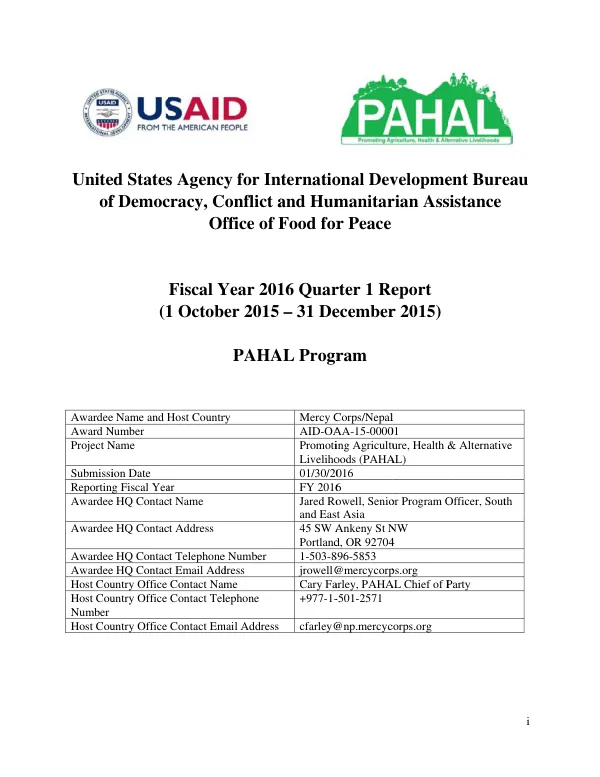
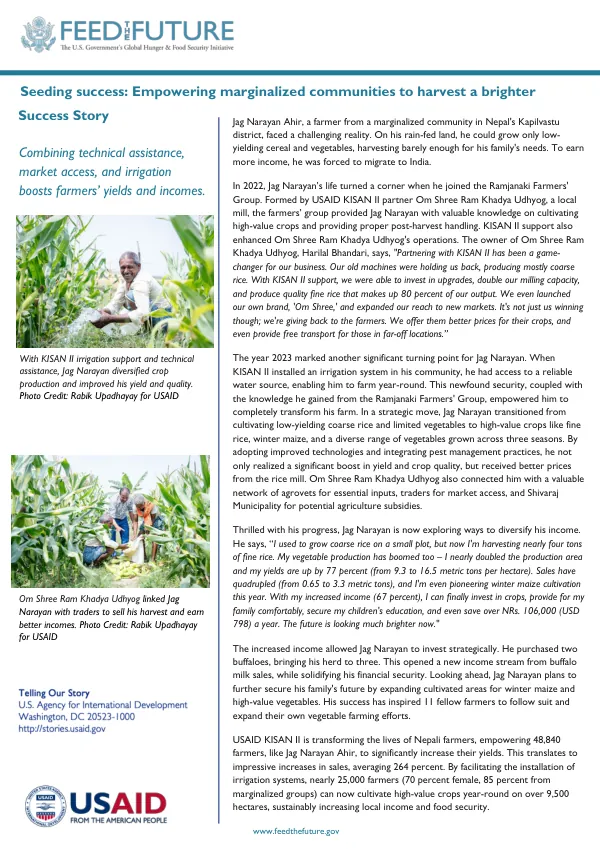
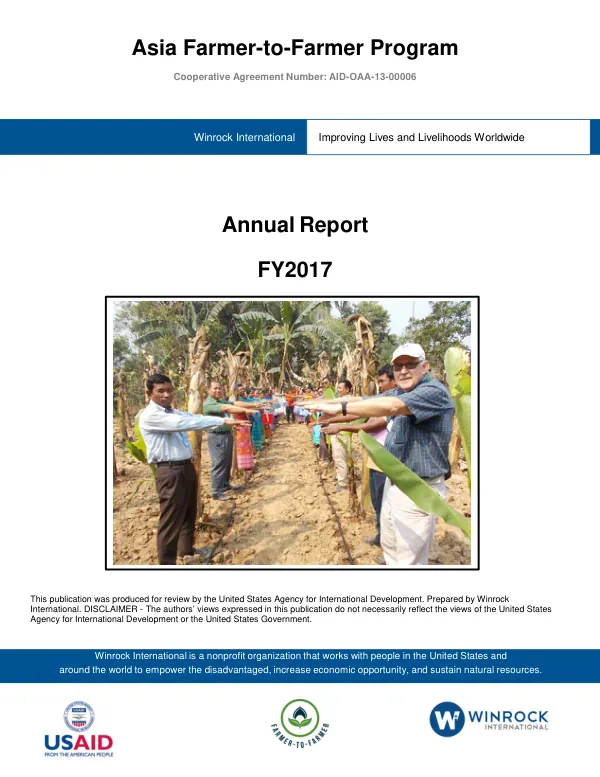
USAID DEC
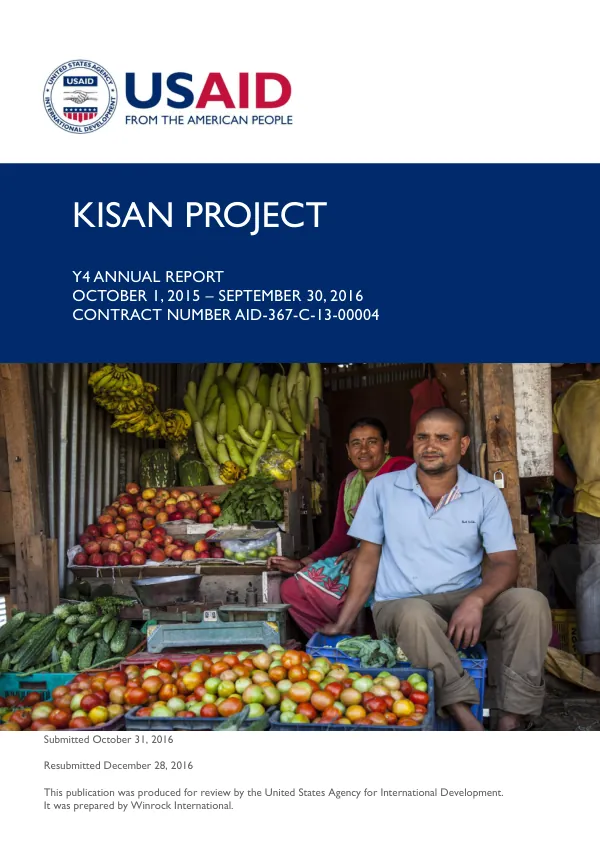
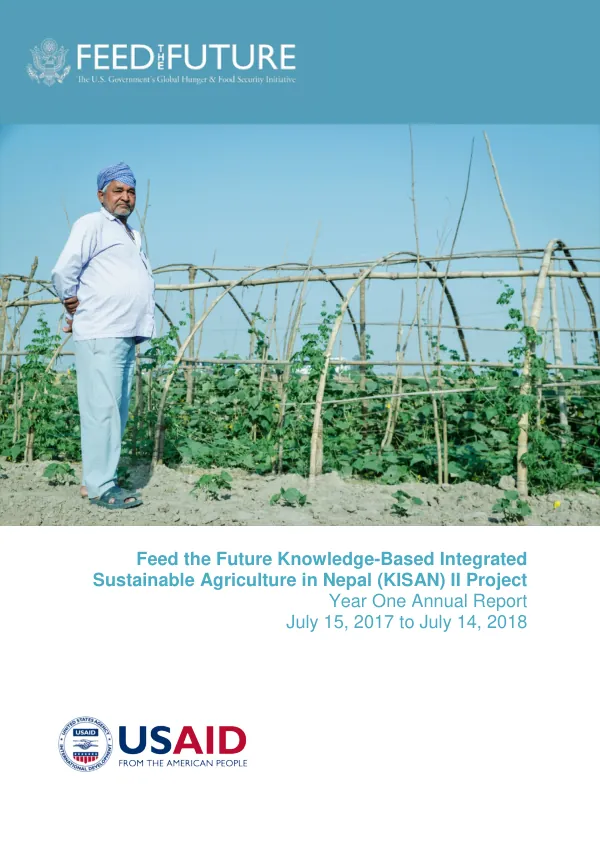
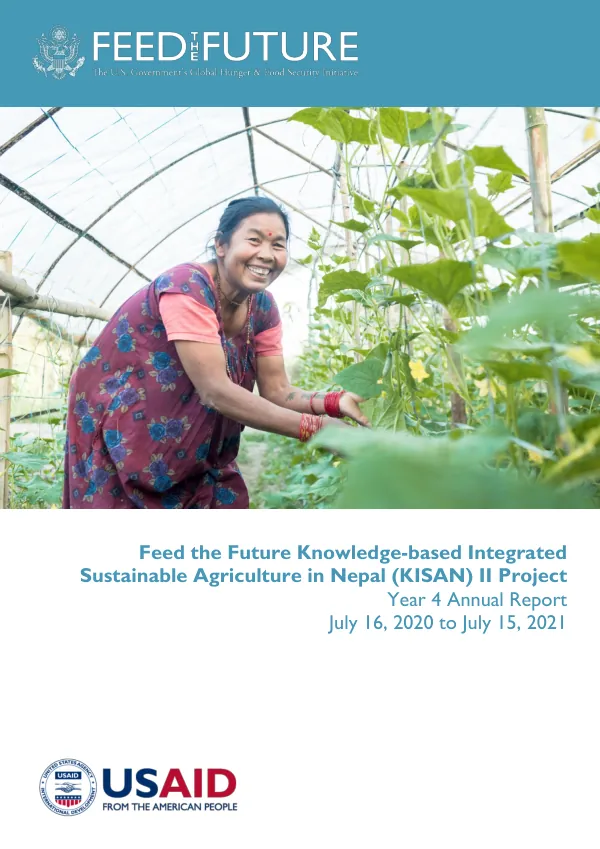
Feed the Future Knowledge-based Integrated Sustainable Agriculture in Nepal (KISAN) II Project Year 4 Annual Report
Sign inUSAID
Feed the Future Knowledge-based Integrated Sustainable Agriculture in Nepal (KISAN) II Project Year 4 Annual Report
The Feed the Future Knowledge-based Integrated Sustainable Agriculture in Nepal (KISAN) II Project is a four-year initiative aimed at improving the productivity and competitiveness of selected agriculture market systems in Nepal.
2021 · 85 pages
Sign in to readA free account is required to download.
Abstract
The project focuses on five components: improving the productivity of selected agriculture market systems, strengthening the competitiveness, resilience, and inclusiveness of selected agriculture market systems, strengthening the enabling environment of selected agriculture market systems, increasing vulnerable communities' ability to act on business opportunities within selected markets systems, and applying collaboration, learning, and adaptation to market systems development. In Year 4, the project reached a total of 1,350 beneficiary households and 150 firms, with a cumulative total of 2,500 households and 250 firms since the project's inception. The project also established partnerships with 15 organizations, including government agencies, private sector companies, and non-governmental organizations. The project's activities focused on improving farm-level yields, increasing farm-level sales, and promoting the adoption of improved management practices and technologies. The project's key output level indicator results showed significant improvements in farm-level yields, with an average increase of 25% in targeted commodities such as rice, maize, and vegetables. The project also reported a 30% increase in farm-level sales, with an average annual sales per smallholder farming household of $1,500. The project's business literacy program (BLP) reached 1,200 participants, with a 75% increase in BLP participants' knowledge of business management practices. The project's collaboration, learning, and adaptation (CLA) activities focused on facilitating systemic change and transformational growth in the rice and maize sub-sectors. The project worked with private sector companies to develop and implement new technologies and practices, and also provided training and capacity-building programs for farmers and other stakeholders. The project's science, technology, innovation, and research (STIR) activities focused on developing and disseminating new technologies and practices to improve agricultural productivity and competitiveness. The project's monitoring, evaluation, and learning (MEL) activities focused on tracking progress towards the project's outcomes and impact. The project used a range of indicators to measure progress, including farm-level yields, farm-level sales, and adoption of improved management practices and technologies. The project also conducted regular surveys and assessments to gather data on the project's impact and to identify areas for improvement. The project's partnerships and collaboration activities focused on working with government agencies, private sector companies, and non-governmental organizations to leverage resources and expertise. The project also worked with local communities to develop and implement projects that addressed their specific needs and priorities. The project's knowledge sharing and dissemination activities focused on sharing lessons learned and best practices with other stakeholders, including government agencies, private sector companies, and non-governmental organizations. The project's response to the COVID-19 pandemic focused on facilitating systemic change and transformational growth in the rice and maize sub-sectors. The project worked with private sector companies to develop and implement new technologies and practices, and also provided training and capacity-building programs for farmers and other stakeholders. The project's opportunity mapping survey of private firms identified key opportunities and challenges in the rice and maize sub-sectors, and provided recommendations for future project activities. Overall, the KISAN II Project has made significant progress in improving the productivity and competitiveness of selected agriculture market systems in Nepal. The project's activities have focused on improving farm-level yields, increasing farm-level sales, and promoting the adoption of improved management practices and technologies. The project's partnerships and collaboration activities have leveraged resources and expertise from government agencies, private sector companies, and non-governmental organizations, and have helped to develop and implement projects that address the specific needs and priorities of local communities.