USAID DEC
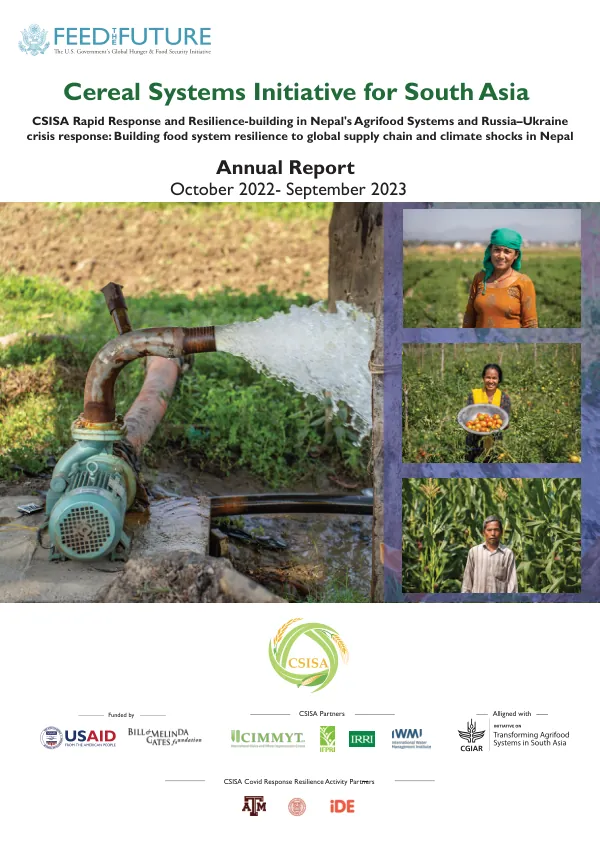
Cereal Systems Initiative for South Asia (CSISA) COVID-19 Response and Resilience in Nepal
Sign inABT. GLOBAL
Cereal Systems Initiative for South Asia (CSISA) COVID-19 Response and Resilience in Nepal
The CSISA Response and Resilience Activity in Nepal was a 18-month initiative that aimed to rapidly and effectively respond to the COVID-19 crisis.
2023 · 112 pages
Sign in to readA free account is required to download.
Abstract
The activity was a buy-in from the USAID/Nepal Mission to the wider CSISA program, with the goal of supporting the recovery and sustained resilience of farmers in the FtF Zone of Influence. The initiative had two initial objectives: Objective I focused on rapid, targeted, and targeted agricultural COVID-19 crisis response through scale-appropriate farm mechanization and rural services expansion. Objective II aimed to break the smallholder irrigation bottleneck and build rural resilience to the COVID-19 crisis. Following the second wave of COVID-19 in Nepal during the second and third calendar quarters of 2021, a third objective was added to the initiative. Objective III: Supporting rapid response and resilience-building from Nepal's second COVID-19 wave, aimed to support the recovery and resilience-building of Nepal's agrifood systems, particularly focusing on marginalized groups in the FtF zone. The objective was to rebuild critical components of Nepal's agrifood systems, with a focus on facilitating access to finance for small- and medium-scale agricultural input and service providers. The primary areas of intervention under Objective III included facilitating access to finance for small- and medium-scale agricultural input and service providers, facilitating recovery and response in the post-harvest chain, and expanding digital banking services to support socially distanced agricultural transactions. Additionally, the initiative aimed to scale out farm mechanization services to new areas not currently covered by CSISA's Objective I activities. The overarching goals of the initiative were to enhance national food security and fortify the economy, particularly during times of crisis. The initiative was funded by USAID/Nepal, with an additional USD 3 million allocated as part of the broader CSISA portfolio to support the response and resilience-building efforts within Nepal's agrifood systems. The activities were designed to be implemented from September 2021 to June 2023, with a focus on rebuilding critical components of Nepal's agrifood systems and enhancing the resilience of key stakeholders. The COVID-19 pandemic and associated lockdowns had a significant impact on Nepal's agrifood systems, leading to a shortage of farm labor, particularly among marginalized and female farmers. The pandemic also exacerbated the existing inequalities in accessing information, hindering women and marginalized groups from accessing critical services. The initiative aimed to address these challenges by providing targeted support to small- and medium-scale enterprises and marginalized groups in the FtF zone. The initiative's focus on facilitating access to finance, recovery, and response in the post-harvest chain, and expanding digital banking services was designed to support the recovery and resilience-building of Nepal's agrifood systems. The initiative's activities were aligned with the overarching goals of enhancing national food security and fortifying the economy, particularly during times of crisis. The initiative's focus on marginalized groups in the FtF zone was critical in addressing the disproportionate impact of the second wave of the COVID-19 crisis on these groups. The initiative's activities aimed to provide targeted support to these groups, enhancing their access to critical services and promoting their resilience to future shocks. The initiative's focus on rebuilding critical components of Nepal's agrifood systems was designed to enhance national food security and fortify the economy. The initiative's activities aimed to provide targeted support to small- and medium-scale enterprises and marginalized groups in the FtF zone, promoting their resilience to future shocks and enhancing their access to critical services. The initiative's focus on expanding digital banking services was designed to support socially distanced agricultural transactions and promote the resilience of key stakeholders. The initiative's activities aimed to provide targeted support to small- and medium-scale enterprises and marginalized groups in the FtF zone, enhancing their access to critical services and promoting their resilience to future shocks. The initiative's focus on scaling out farm mechanization services was designed to enhance the resilience of key stakeholders and promote the recovery and resilience-building of Nepal's agrifood systems. The initiative's activities aimed to provide targeted support to small- and medium-scale enterprises and marginalized groups in the FtF zone, enhancing their access to critical services and promoting their resilience to future shocks.
Related documents