USAID DEC
Change of Shift Reporting
Change of Shift Reporting in Nursing Environments is a critical aspect of patient care, as accurate and complete communication of patient information between nurses at shift change is essential for patient safety.
2013 · 3 pages
Sign in to readA free account is required to download.
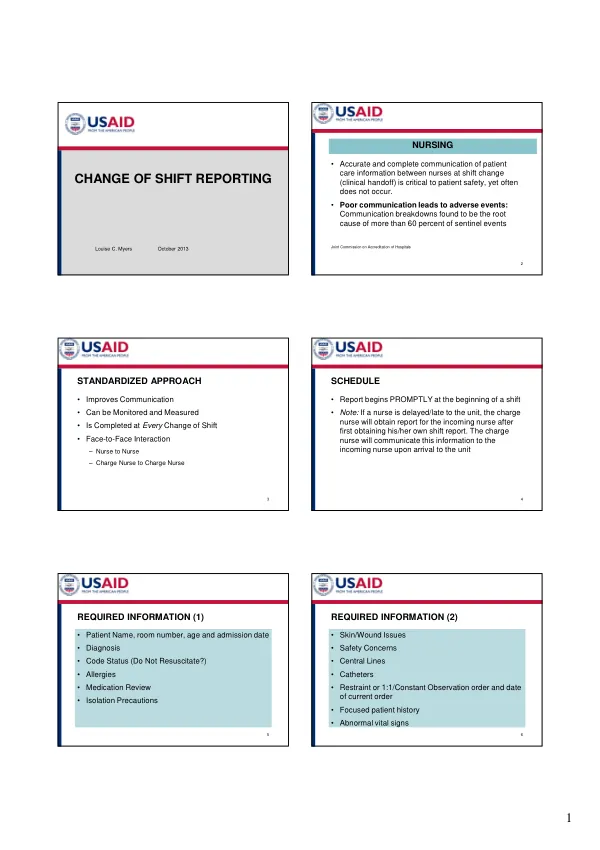
Abstract
However, research has shown that poor communication leads to adverse events, with communication breakdowns identified as the root cause of more than 60 percent of sentinel events. To address this issue, a standardized approach to shift reporting has been implemented, which includes a face-to-face interaction between the outgoing and incoming nurses. This approach improves communication, allows for monitoring and measurement, and is completed at every change of shift. The report begins promptly at the beginning of a shift, with the charge nurse obtaining report for the incoming nurse if the outgoing nurse is delayed or late. The required information for shift reporting includes patient name, room number, age, and admission date, as well as diagnosis, code status, allergies, and medication review. Additionally, information on skin/wound issues, safety concerns, central lines, catheters, and restraint or 1:1/constant observation orders is also included. The report also covers untoward events that occurred during the shift, the plan of care for the on-coming shift, abnormal lab or diagnostic test results, and discharge/transfer information. The purpose of shift reporting is to communicate overall staffing and patient care issues prior to the beginning of a shift, including staffing expectations, acute patient status, potential admissions, discharges, and transfers, as well as significant untoward events during the shift. Charge nurses are responsible for conducting shift reports, which involve a comprehensive review of patient information and a discussion of key issues. Bedside shift reporting is an essential aspect of patient-centered care, as it allows patients to participate in their care and share important information with nurses. Patients can invite a family member or friend to stay during nurse bedside shift report, and nurses will only discuss patient health with others when the patient has given clear permission. In-room reports involve a face-to-face interaction between the nurse and patient, while out-of-room reports focus on negotiating undone tasks, discussing psychosocial issues, and identifying additional care or consults needed. Despite the importance of shift reporting, challenges persist, including nurses being late for shift and starting report late, uncomfortable waking patients, and multiple-bed rooms not providing enough privacy and confidentiality. Determining key data points for review and taking too much time are also common issues. Addressing these challenges requires education, vigilance, and encouragement, as well as a culture change that prioritizes patient-centered care. Environmental services also play a critical role in shift reporting, with supervisors conducting a supervisor-to-supervisor report at each shift change to discuss areas that were missed, emergency clean-ups, and quality concerns. This report helps to ensure that all areas of the hospital are addressed and that patient care is not compromised.