INTERNATIONAL RICE RESEARCH INSTITUTE (IRRI)
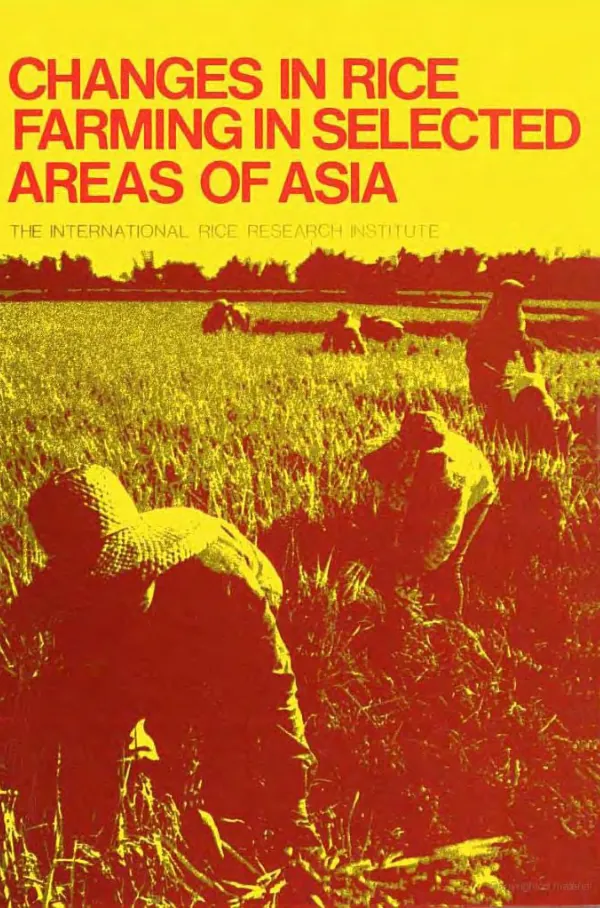
Changes in rice farming in selected areas of Asia
The primary objective of this research was to provide information on farm changes associated with the introduction of the new rice technology.
1970
Sign in to readA free account is required to download.
Abstract
From 150 to 200 farms were sampled from the one to three villages chosen in each of the 14 study areas. In at least one of these villages, most of the farmers interviewed had realistic reasons for adopting the new rice technology. They are: 1) a supply and control over water that would permit the farmers to plan on producing two or more crops each year, 2) ready physical access to the inputs required in the new technology, and 3) reasonably good access to markets for produce. In conclusion, physical environmental factors such as irrigation, flood control, pests and diseases, and soil quality appear to be as important as the institutional factors of farm size, tenure, credit, and price policy, in determining the nature, magnitude, direction, and beneficiaries of the new rice technology. Poor environmental and institutional conditions tend to go hand in hand with occasional mitigating circumstances which cushion the extremes of consequences. Therefore, policies designed to modify, improve, or control the institutional factors will have far-reaching implications as to who benefits. The influence of the second set of factors is very dependent on the nature of the physical environment. An area with good irrigation also may have good roads, extension services, credit, a research station, more available inputs, and better prices for products. In a swampy, remote area, very few, if any, of these facilities or services can be found. The interlocking chain of "positives" or "negatives" has to be broken somewhere in order to improve the lot of the disadvantaged.