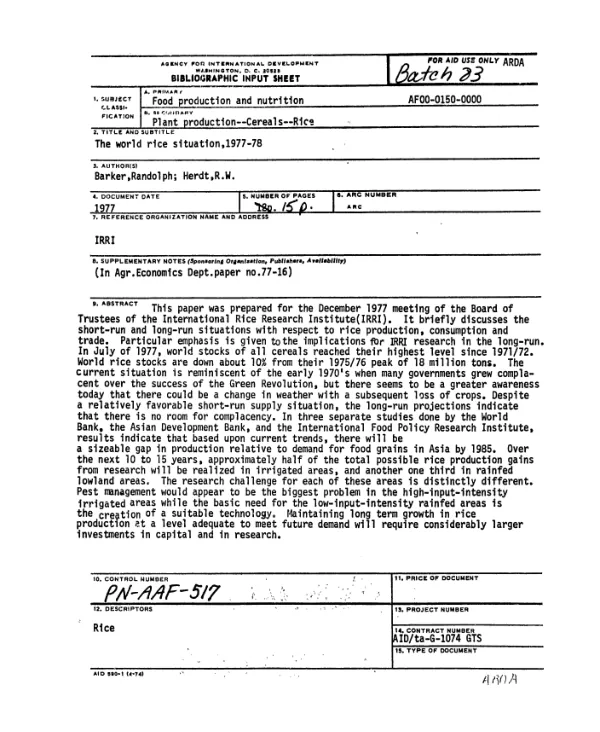
INTERNATIONAL RICE RESEARCH INSTITUTE (IRRI)
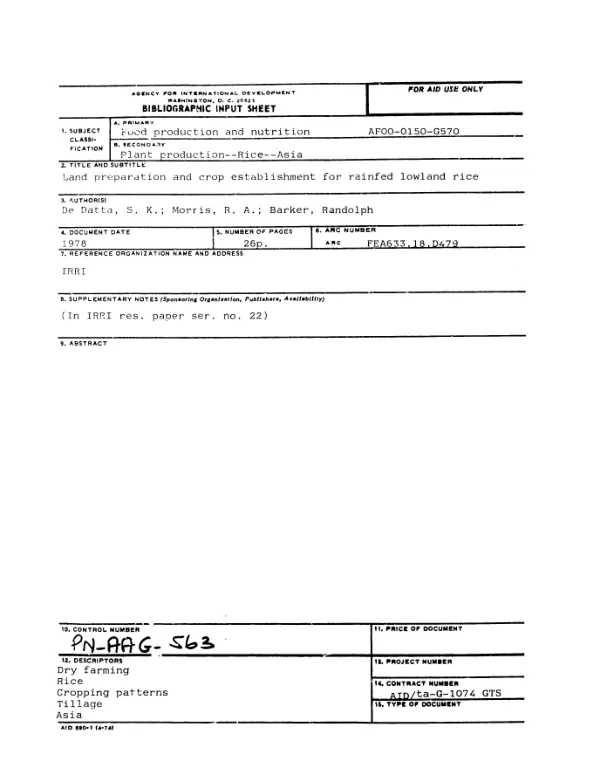
Land preparation and crop establishment for rainfed lowland rice
Reviews traditional rainfed rice land preparation transplanting system and alternative new systems of land preparation and crop establishment.
De Datta, Surajit K.; Morris, R. A. +1 more · 1970
Sign in to readA free account is required to download.
Abstract
These latter systems may become economically feasible as a consequence of new rice technology including short duration varieties, herbicides, powerful tillage machinery. Cites major advantages of wet land tillage in the reduction of draft requirements, weed control, ease of transplanting, lessened soil fertility, and reduced percolation losses. Disadvantages of soil tillage discussed in study include increased late-season drought risk, high transplanting labor requirements, and power unit size limitations. Reviews forms of dryland tillage, citing major advantages of early crop growth, elimination of labor for seedbed preparation and transplanting, adequate traffic ability for larger power units, maintenance of soil structure for upland crops following rice, and the reduction of many insect and disease pressures. In contrast, disadvantages of dryland tillage include high draft requirements, exacting early-weed control requirements, comparatively high fertilizer losses, and exposure to soil-inhabiting insects and blast disease. Studies show changes in land preparation and crop establishment methods. Includes list of references.
Connected topics