WORLD HEALTH ORGANIZATION
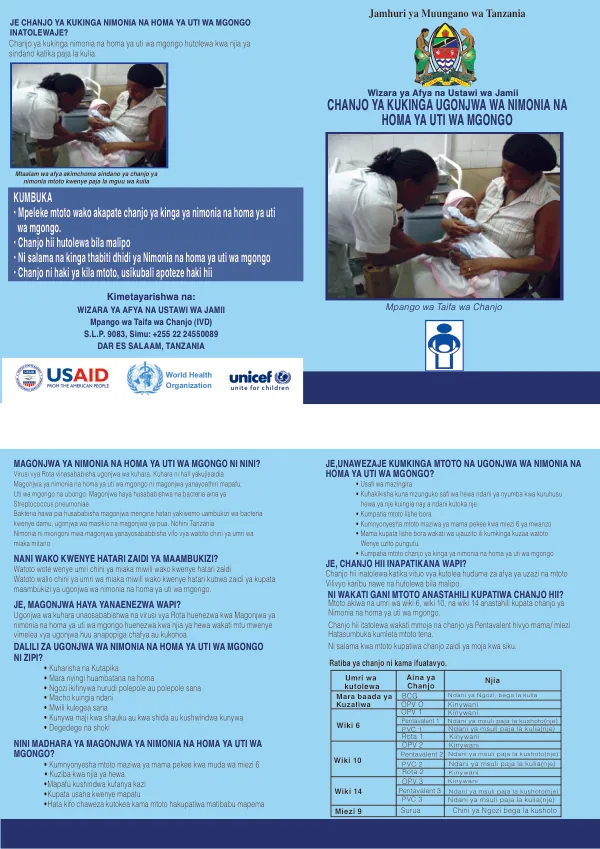
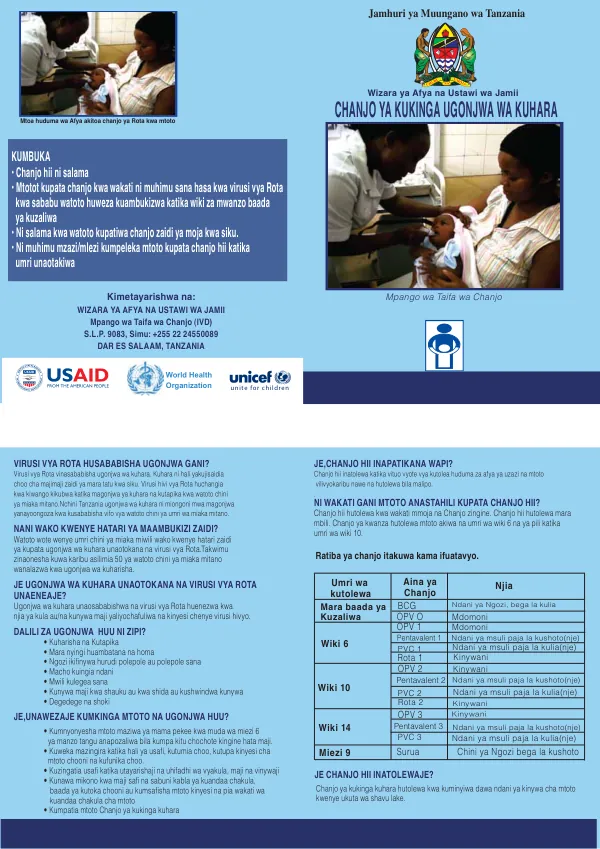
Chanjo ya Kukinga Ugonjwa wa Kuhara
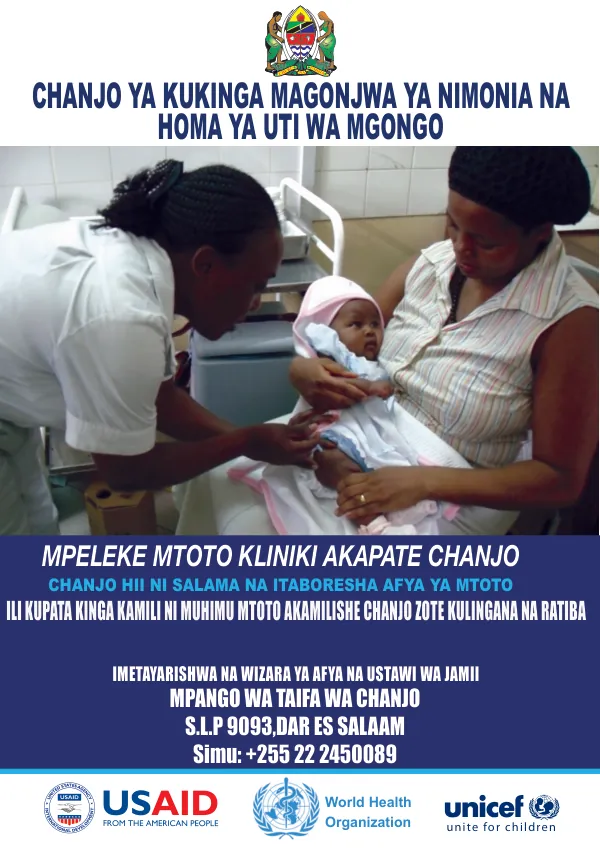
The Ministry of Health and Social Welfare of the United Republic of Tanzania has implemented a national immunization program to protect children against Rotavirus disease.
2012 · 1 pages
Sign in to readA free account is required to download.
Abstract
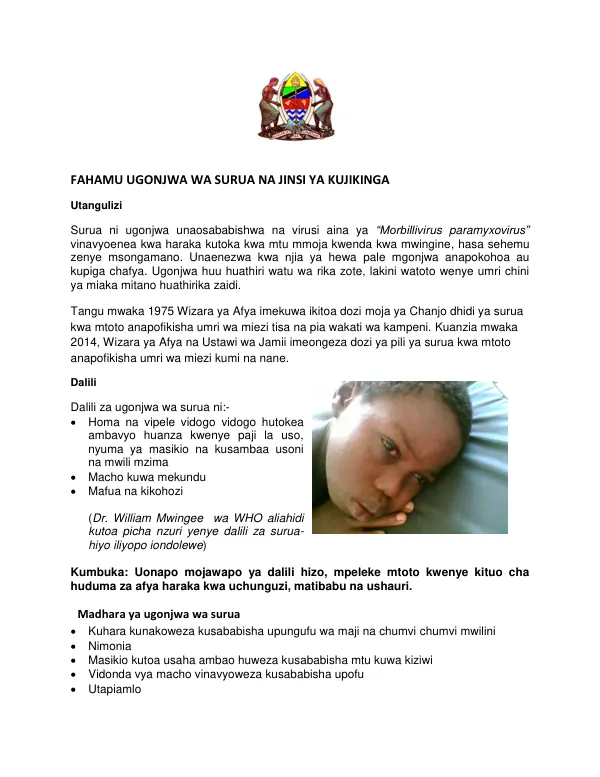
The program aims to provide Rotavirus vaccine to all children in Tanzania, with a focus on those under the age of two, who are at a higher risk of contracting the disease. Rotavirus disease is a leading cause of diarrhea and dehydration in children under the age of five in Tanzania. According to statistics, approximately 50% of children under the age of five are hospitalized due to Rotavirus disease. The disease is highly contagious and can be spread through contaminated food and water, as well as through close contact with an infected person. The symptoms of Rotavirus disease include diarrhea, vomiting, and dehydration. In severe cases, the disease can lead to life-threatening complications, such as electrolyte imbalance and shock. To prevent the spread of the disease, it is essential to maintain good hygiene practices, such as washing hands frequently, especially before handling food and after using the toilet. The Rotavirus vaccine is a safe and effective way to protect children against the disease. The vaccine is administered orally, through a dropper, and is given to children at the age of six weeks and again at the age of ten weeks. The vaccine is provided free of charge at all health facilities, including maternity and child health centers. To prevent Rotavirus disease, parents and caregivers are advised to follow certain guidelines, including breastfeeding their children exclusively for the first six months, maintaining a clean and safe environment, and washing their hands frequently. The vaccine is also an essential part of the prevention strategy, and all children should receive the recommended doses to ensure maximum protection against the disease. The national immunization program has made significant progress in increasing access to the Rotavirus vaccine, with the goal of achieving high coverage rates across the country. The program has also implemented strategies to improve vaccine delivery, including training healthcare workers and establishing a robust supply chain system.