ELIZABETH GLASER PEDIATRIC AIDS FOUNDATION
A smartphone-enhanced cancer screening APP changing the tide
A smartphone-enhanced cancer screening APP has been implemented in Tanzania to improve cervical cancer diagnosis.
2023 · 3 pages
Sign in to readA free account is required to download.
Abstract
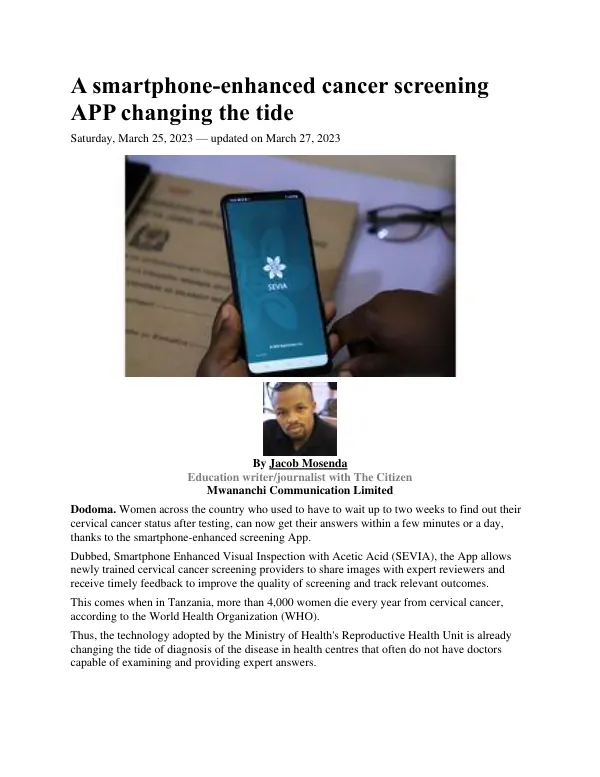
The APP, known as Smartphone Enhanced Visual Inspection with Acetic Acid (SEVIA), enables newly trained cervical cancer screening providers to share images with expert reviewers and receive timely feedback to improve the quality of screening and track relevant outcomes. This technology has been adopted by the Ministry of Health's Reproductive Health Unit to address the high incidence of cervical cancer in the country, with over 4,000 women dying annually from the disease, according to the World Health Organization (WHO). The APP allows health workers in remote areas to take pictures of the cervix using a smartphone and send them to medical specialists for review. The specialists then provide feedback and treatment recommendations to the health workers through the APP, enabling women to receive their test results within a few minutes or a day. This is a significant improvement from the previous wait time of up to two weeks. The APP has been rolled out in over 40 health centers in various regions, with more than 2,500 women already benefiting from the service. The SEVIA APP has been praised by health workers for its ease of use and effectiveness in improving communication with medical specialists. Ms. Neema Msemo, a nursing officer at the Makole health center, notes that the APP has made it easier for her to communicate directly with professionals when conducting examinations for clients. Similarly, Ms. Felista Msambili, a nurse at Kongwa hospital, highlights the APP's ability to reduce the risk and time of physically sending test results to reviewers. The APP has also been credited with improving cervical cancer diagnosis and treatment outcomes. Ms. Agnes Robert, a resident of Kongwa, shares her experience of receiving a diagnosis of cervical cancer within an hour of being examined using the SEVIA APP. She has since been receiving treatment and is now doing well. Experts note that the APP enables secure sharing of cervical images for remote supportive supervision, data monitoring, and evaluation. The implementation of the SEVIA APP is part of a broader effort to eliminate cervical cancer as a public health problem. In February 2020, the 146th WHO Executive Board recommended a draft resolution on the elimination of cervical cancer, which was adopted by the 73rd World Health Assembly. The APP is seen as a key tool in achieving this goal, enabling health workers to provide high-quality screening and treatment services to women in remote areas.