DEPARTMENT FOR INTERNATIONAL DEVELOPMENT
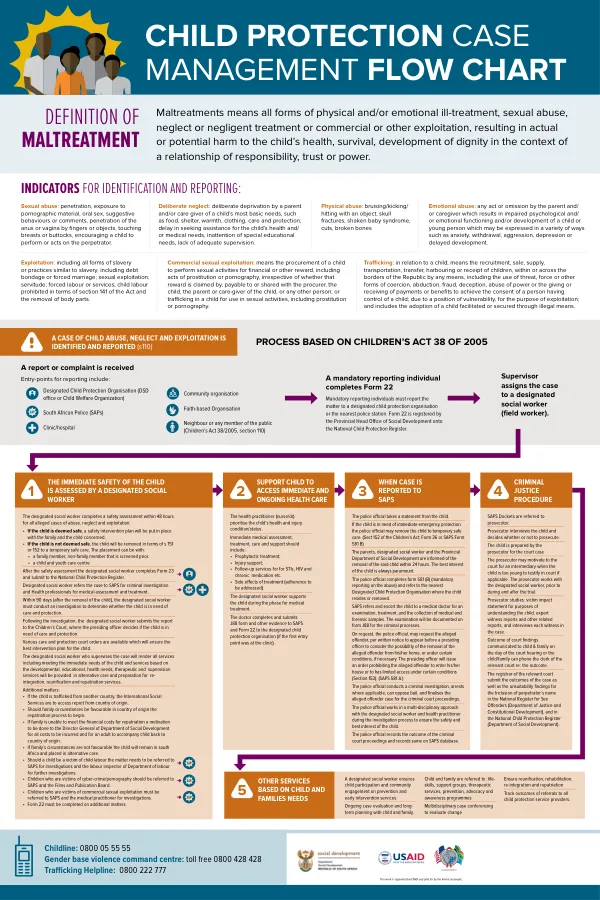
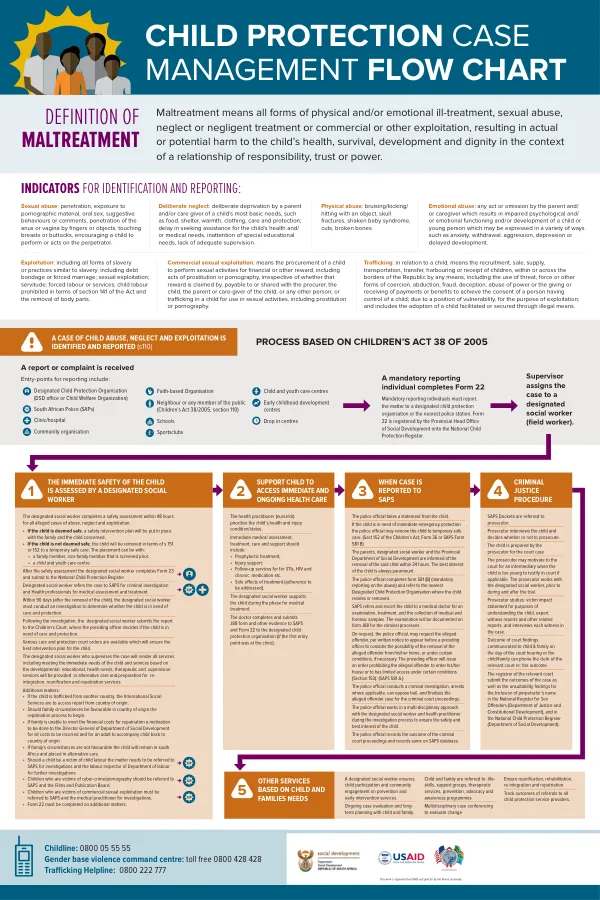
CHILD PROTECTION CASE MANAGEMENT FLOW CHART
Child protection case management involves a comprehensive process to ensure the safety and well-being of children who have been subjected to maltreatment, neglect, or exploitation.
2018 · 1 pages
Sign in to readA free account is required to download.
Abstract
Maltreatment is defined as all forms of physical and/or emotional ill-treatment, sexual abuse, neglect, or negligent treatment that results in actual or potential harm to a child's health, survival, development, and dignity. The immediate safety of the child is assessed by a designated social worker within 48 hours of an alleged case of abuse, neglect, and exploitation. If the child is deemed safe, a safety intervention plan is put in place with the family and the child concerned. However, if the child is not deemed safe, the child will be removed to a temporary safe care, which can be with a family member, non-family member, or a child and youth care centre. The designated social worker completes Form 23 and submits it to the National Child Protection Register. The worker also refers the case to the South African Police Service (SAPS) for a criminal investigation and to health professionals for a medical assessment and treatment. Within 90 days of the child's removal, the designated social worker must conduct an investigation to determine whether the child is in need of care and protection. Following the investigation, the designated social worker submits a report to the Children's Court, where the presiding officer decides if the child is in need of care and protection. Various care and protection court orders are available to ensure the best intervention plan for the child. The designated social worker who supervises the case will render all services, including meeting the immediate needs of the child and providing services based on the child's developmental, educational, health, therapeutic, and supervision needs. In cases where a child is trafficked from another country, the International Social Services are accessed to report from the country of origin. If family circumstances are favourable in the country of origin, the repatriation process begins. However, if family circumstances are not favourable, the child will remain in South Africa and be placed in alternative care. The health practitioner prioritizes the child's health and injury condition/status, providing immediate medical assessment, treatment, care, and support. This includes prophylactic treatment, injury support, follow-up services for STIs, HIV, and chronic medication, and addressing side effects of treatment. The designated social worker supports the child during the medical treatment phase. The police official takes a statement from the child and may remove the child to temporary safe care if necessary. The parents, designated social worker, and the Provincial Department of Social Development are informed of the removal within 24 hours. The best interest of the child is always paramount. The police official completes Form 581 (B) and refers the case to the nearest Designated Child Protection Organisation. SAPS refers and escorts the child to a medical doctor for an examination, treatment, and the collection of medical and forensic samples. The examination is documented on Form J88 for criminal processes. A designated social worker ensures child participation and community engagement on prevention and early intervention services. Ongoing case evaluation and long-term planning with the child and family are also conducted. The child and family are referred to life-skills, support groups, therapeutic services, prevention, advocacy, and awareness programmes. Multidisciplinary case conferencing is conducted to evaluate change, ensure reunification, rehabilitation, re-integration, and repatriation. Track outcomes of referrals to all child protection service providers. SAPS dockets are referred to the prosecutor, who interviews the child and decides whether or not to prosecute. The child is prepared by the prosecutor for the court case, and the prosecutor may motivate for an intermediary when the child is too young to testify in court. The outcome of court findings is communicated to the child and family on the day of the court hearing or the child/family can phone the clerk of the relevant court for the outcome. The registrar of the relevant court submits the outcomes of the case and unsuitability findings for the inclusion of the perpetrator's name in the National Register for Sex Offenders and the National Child Protection Register. A case of child abuse, neglect, and exploitation is identified and reported through various entry-points, including the Designated Child Protection Organisation, SAPS, clinic/hospital, community organisation, and mandatory reporting individuals. Mandatory reporting individuals must report the matter to a designated child protection organisation or SAPS, completing Form 22 in the process.