DEPARTMENT FOR INTERNATIONAL DEVELOPMENT
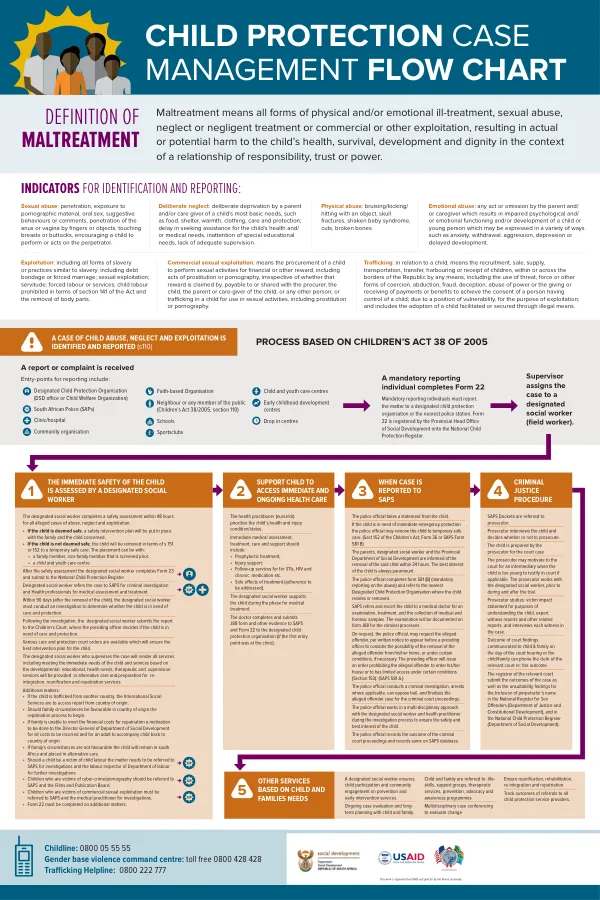
CHILD PROTECTION CASE MANAGEMENT FLOW CHART
Child protection case management involves a comprehensive process to identify, report, and address cases of child maltreatment.
2018 · 1 pages
Sign in to readA free account is required to download.
Abstract
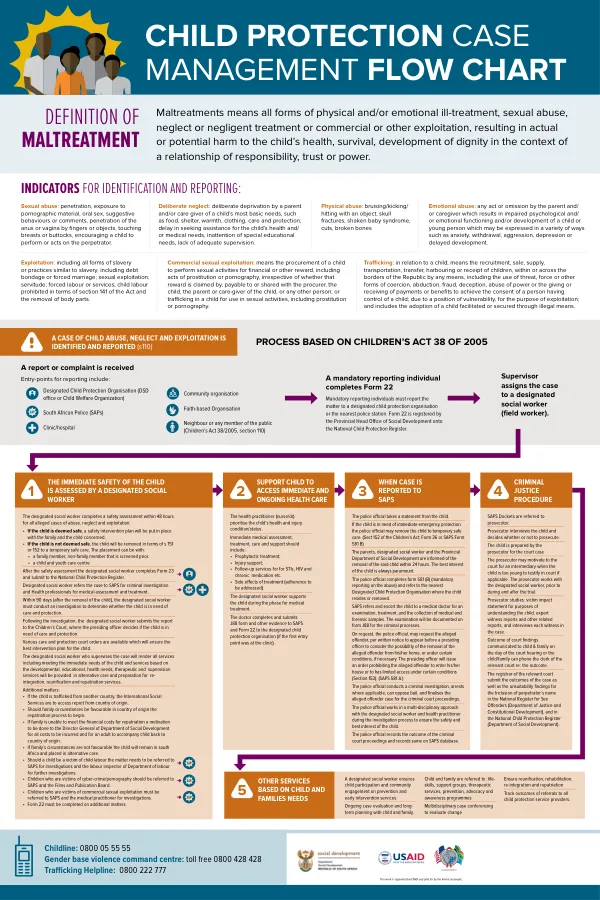
Maltreatment is defined as all forms of physical and/or emotional ill-treatment, sexual abuse, neglect, or negligent treatment, resulting in actual or potential harm to a child's health, survival, development, or dignity. Maltreatment indicators include physical abuse, such as bruising, kicking, or hitting with an object, as well as emotional abuse, which can manifest as anxiety, withdrawal, aggression, depression, or delayed development. Neglect involves deliberate deprivation of a child's basic needs, such as food, shelter, warmth, clothing, care, and protection. Commercial sexual exploitation includes the procurement of a child to perform sexual activities for financial or other reward. The immediate safety of the child is assessed by a designated social worker within 48 hours of an alleged case of abuse, neglect, or exploitation. If the child is deemed safe, a safety intervention plan is put in place with the family and the child concerned. However, if the child is not deemed safe, they may be removed to temporary safe care, which can be with a family member, non-family member, or a child and youth care centre. Following the safety assessment, the designated social worker completes Form 23 and submits it to the National Child Protection Register. The case is then referred to SAPS for a criminal investigation and to health professionals for medical assessment and treatment. Within 90 days, the designated social worker must conduct an investigation to determine whether the child is in need of care and protection. The designated social worker submits the report to the Children's Court, where the presiding officer decides if the child is in need of care and protection. Various care and protection court orders are available to ensure the best intervention plan for the child. The designated social worker supervises the case and provides services, including meeting the immediate needs of the child and services based on the child's developmental, educational, health, therapeutic, and supervision needs. In cases of child trafficking, the International Social Services are accessed to report from the country of origin. If family circumstances are favourable, the repatriation process begins. However, if family circumstances are not favourable, the child remains in South Africa and is placed in alternative care. Children who are victims of child labour are referred to SAPS for investigations and the labour inspector of the Department of Labour for further investigations. The health practitioner prioritizes the child's health and injury condition/status, providing immediate medical assessment, treatment, care, and support. The designated social worker supports the child during the medical treatment phase. The doctor completes and submits Form J88 and other evidence to SAPS and Form 22 to the designated child protection organisation. In cases of child abuse, neglect, and exploitation, a report or complaint is received, and entry-points for reporting include the designated child protection organisation, SAPS, or a clinic/hospital. Mandatory reporting individuals must report the matter to a designated child protection organisation or the nearest police station. The police official conducts a criminal investigation, arrests where applicable, and finalises the alleged offender case for criminal court proceedings. The police official works in a multi-disciplinary approach with the designated social worker and health practitioner to ensure the safety and best interest of the child. The police official records the outcome of the criminal court proceedings and records same on the SAPS database. A designated social worker ensures child participation and community engagement on prevention and early intervention services, as well as ongoing case evaluation and long-term planning with the child and family. The child and family are referred to life-skills, support groups, therapeutic services, prevention, advocacy, and awareness programmes. Multidisciplinary case conferencing is conducted to evaluate change, and the child and family are ensured reunification, rehabilitation, re-integration, and repatriation. Track outcomes of referrals to all child protection service providers, and SAPS dockets are referred to the prosecutor. The prosecutor interviews the child and decides whether or not to prosecute, preparing the child for the court case and motivating for an intermediary when the child is too young to testify in court if applicable.