PACT
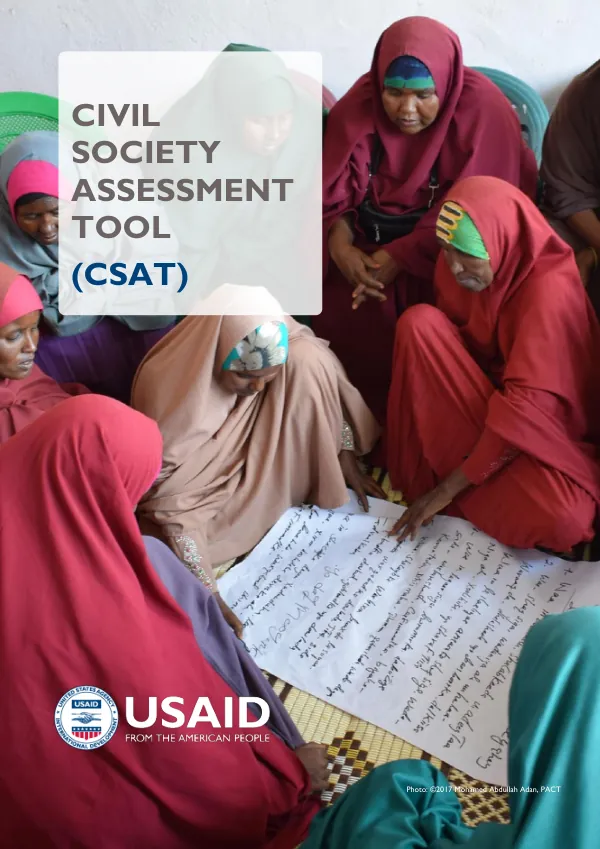
Civil Society Assessment Tool (CSAT)
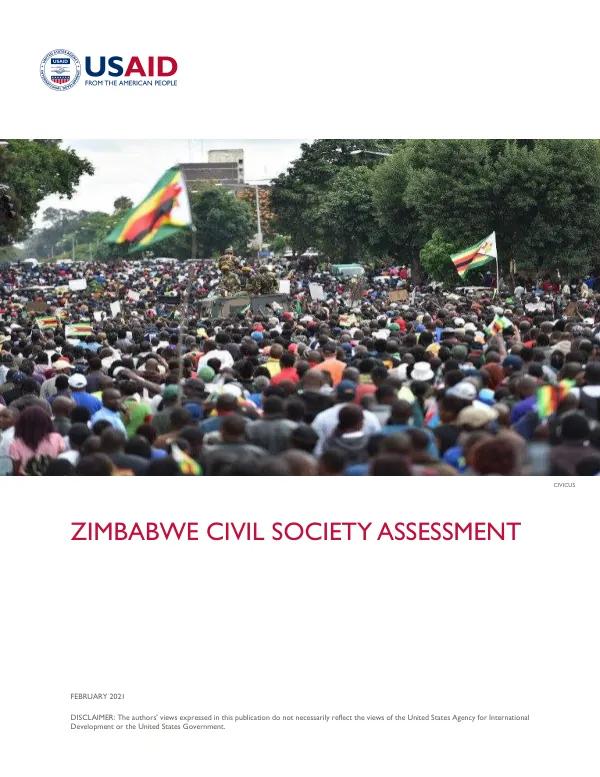
The Civil Society Assessment Tool (CSAT) is designed to help USAID strategic planners and program designers assess the state of local civil society in a particular country or countries.
2021 · 77 pages
Sign in to readA free account is required to download.
Abstract
The primary purpose of the CSAT is to determine whether or how USAID can engage with civil society to promote long-term development objectives. The tool identifies primary gaps, strengths and weaknesses, needs, and opportunities for supporting civil society to achieve USAID development goals. The CSAT includes analysis of a range of civil society actors and entities, including formal and informal, member-serving and public-serving organizations. This assessment is critical in helping USAID determine where investments in civil society will lead to achievable results and have the most impact. The CSAT is a diagnostic tool that serves as a strategic recommendation for USAID Missions. The assessment process involves examining several key elements, including the legal and regulatory environment, organizational and technical capacity, socioeconomic, political, and cultural environment, democratic culture and values, effectiveness and impact, and external influences and emerging trends. This comprehensive approach allows USAID to gain a thorough understanding of the civil society landscape in a particular country or countries. The CSAT is connected to USAID's strategy on democracy, human rights, and governance, which emphasizes the importance of civil society in promoting long-term development objectives. The tool is designed to be flexible and adaptable to different country contexts, allowing USAID to tailor its engagement with civil society to meet the unique needs and challenges of each country. The CSAT includes a range of illustrative questions and approaches to help USAID assess the state of civil society in a particular country or countries. These questions and approaches are designed to be used in conjunction with the CSAT to provide a more comprehensive understanding of the civil society landscape. The CSAT is a critical tool for USAID in promoting long-term development objectives through engagement with civil society. By using the CSAT, USAID can identify areas where investments in civil society will lead to achievable results and have the most impact, ultimately contributing to the achievement of USAID's development goals. The CSAT includes a range of annexes and tables that provide additional information and guidance on the assessment process. These annexes and tables include illustrative questions, approaches, and examples of how to conduct a civil society assessment, as well as information on USAID's policy, program, and assessment goals, objectives, and interests. The CSAT is a critical resource for USAID Missions and other stakeholders seeking to promote long-term development objectives through engagement with civil society. By using the CSAT, USAID can gain a deeper understanding of the civil society landscape in a particular country or countries and make informed decisions about how to engage with civil society to achieve USAID's development goals. The CSAT is connected to several key USAID initiatives, including the Country Development Cooperation Strategy (CDCS) and the Journey to Self-Reliance (J2SR). The CSAT is also aligned with USAID's strategic priorities, including promoting democracy, human rights, and governance, and supporting the development of strong and effective civil society organizations. The CSAT includes a range of performance measures and indicators that can be used to evaluate the effectiveness of USAID's engagement with civil society. These measures and indicators include metrics on organizational performance, effectiveness, efficiency, relevance, and sustainability, as well as indicators on the impact of USAID's engagement with civil society on development outcomes.