WORLD WILDLIFE FUND FOR NATURE - KENYA
Climate Change and Ecosystem Services Partnership (CAP) Project
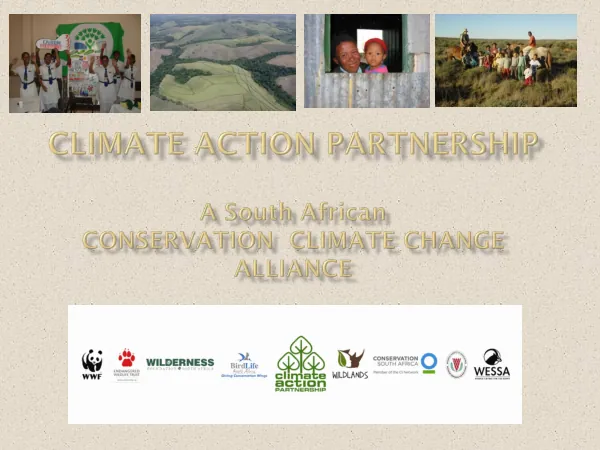
The Partnership of eight of South Africa's larger conservation NGOs aims to promote healthy intact ecosystems and their services, demonstrating how this links to sustaining livelihoods and aiding adaptation and mitigation to climate change.
2011 · 33 pages
Sign in to readA free account is required to download.
Abstract
This partnership focuses on implementation with demonstration projects as well as the enabling environment, encompassing work on policy, research, finance, and communications and networking. Key objectives of the partnership include advising on and supporting ecosystem-based mitigation and adaptation solutions to climate change, promoting the integrity of climate change projects through the adoption of globally accepted standards, raising awareness around climate change and how healthy ecosystems build resilience, and promoting cross-sectoral policy that supports ecosystem approaches to mitigation and adaptation. Additionally, the partnership strives towards a carbon reduction in CAP partner head offices as well as sustainability CAP objectives. The national portfolio of projects includes advising and supporting on action solutions for ecosystem-based mitigation and adaptation. This involves demonstration on the ground through various action, education, research, and monitoring initiatives. For example, reforestation efforts are underway at six sites, including three sites to be initiated by Wildlands Conservation. Wind energy and conservation projects are also being implemented, with a focus on carbon farming in the Eastern Cape. Stewardship corridors are being established in various regions, including the Kamiesberg and KZN, with a focus on biodiversity hotspots and linking protected areas with new areas to be proclaimed. Management plans are being developed for these corridors, including livestock management, fire management, alien mapping and clearing, community management, and mentorship of field rangers. Habitat restoration and maintenance of ecosystem services are also key components of these initiatives. Significant learning has taken place around the viability of CAP stewardship sites as climate adaptation corridors. Key lessons include the importance of becoming creative and flexible in structuring stewardship agreements, which should encourage biodiversity conservation in priority areas while also ensuring continued and sustainable livelihoods benefits and productive economic activity for landowners. Ensuring that landowners benefit from their conservation commitment is also a critical aspect of these agreements. Stewardship corridors are being established in various regions, including the Kamiesberg, with a focus on sustainable land management practices, stewardship agreements, payments for ecosystem services, and practice changes. The partnership is also working on riverine rehabilitation in pilot sites, cultivating endemic species in nurseries, and promoting sustainable land management practices. The importance of using local knowledge and developing adequate systems for monitoring and evaluating restoration work is also being highlighted.