OXFAM INTERNATIONAL
Climate Change Information Fact Sheet: Haiti
Climate change is projected to have significant impacts on Haiti, with rising temperatures, changing precipitation patterns, and increased frequency and intensity of extreme weather events.
2015 · 3 pages
Sign in to readA free account is required to download.
Abstract
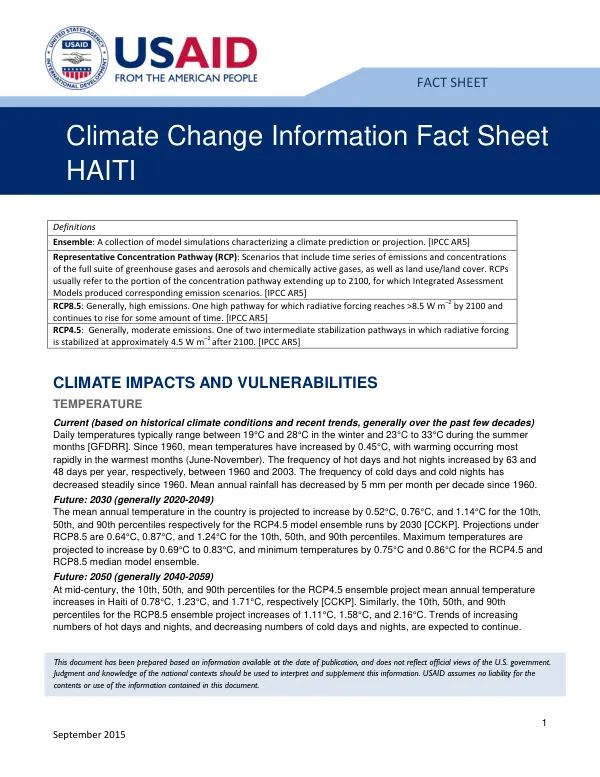
The country's mean annual temperature is expected to increase by 0.52°C to 1.14°C by 2030, depending on the Representative Concentration Pathway (RCP) scenario. Projections under RCP8.5 indicate a higher increase in temperature, with a median ensemble run projecting a 0.64°C to 1.24°C increase by 2030. Rainfall patterns in Haiti vary according to the island's topography, with the center regions receiving more rainfall than the North and West. However, future projections indicate a decrease in rainfall, particularly during the summer months. By 2030, the median ensemble runs for RCP4.5 and 8.5 indicate an average annual rainfall change of -0.1mm/day. By 2050, rainfall projections project decreases in rainfall during June-August, while rainfall projections during the remainder of the year are less certain. Droughts are a recurring issue in Haiti, particularly in the North-West, Artibonite, North-East, and Central departments. Future projections indicate that drought conditions are likely to intensify in the center of the country, with projected increases in temperature and decreases in rainfall during the critical summer months. Rainfall variability is projected to increase through this century, with droughts expected to be more extreme in the dry season while precipitation will be more intense in the wet season. Sea level rise is also a concern for Haiti, with the mean rate of sea level rise in the Caribbean region over the last 60 years similar to the global average of approximately 1.8 mm/yr. By 2030, interpolation of sea level rise estimates for the Caribbean results in a projected increase of between 0.05 and 0.22 m. Global sea level could rise by 0.13 meters under RCP4.5 up to 0.4 meters under RCP8.5 by 2030. By 2050, sea level rise is projected to increase between 0.13 and 0.56 m by 2090 in the Caribbean. Haiti is also vulnerable to increased storm surges, which are expected to exacerbate flooding and erosion problems in coastal departments. The country's South and South-East departments are particularly prone to risk from increased hurricane frequency and intensity, as they are statistically more likely to be in the direct paths of hurricanes and other tropical storms.
Related documents