MERCY CORPS INTERNATIONAL
Climate Change, Risk, and Resilience in WASH and Agriculture Projects
The agricultural sector is highly vulnerable to climate change, which poses significant risks to food security and water availability.
2021 · 17 pages
Sign in to readA free account is required to download.
Abstract
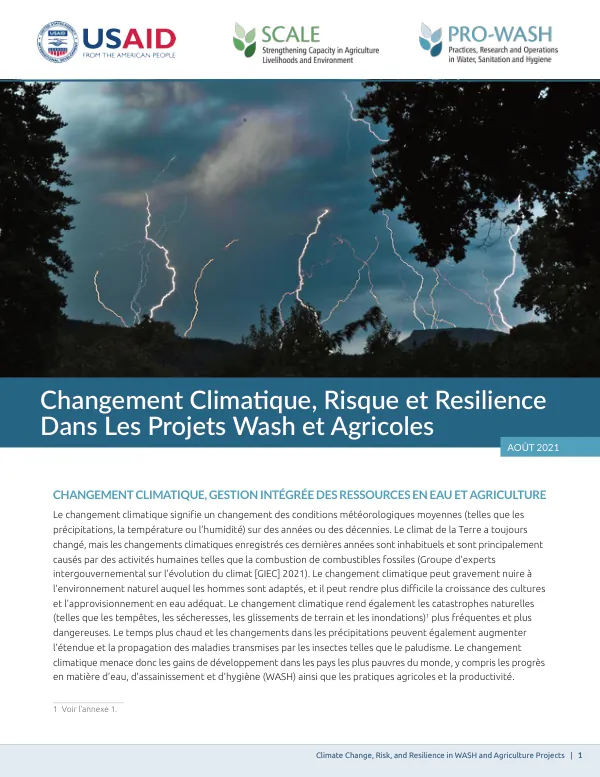
Climate change refers to a change in the average weather conditions over a long period, such as precipitation, temperature, or humidity. The current rate of climate change is primarily caused by human activities, including the burning of fossil fuels, and is expected to have severe impacts on the environment and human societies. Climate change can lead to more frequent and severe natural disasters, such as droughts, floods, and heatwaves, which can have devastating effects on agriculture and water resources. The relationship between climate and water is complex and closely linked through precipitation, evaporation, and other physical processes. Integrated Water Resources Management (IWRM) approaches, which consider the diverse objectives, benefits, and costs of water use, including environmental and agricultural benefits, are essential for managing water resources in a changing climate. Understanding the impacts of climate change on water resources is critical for planning and decision-making, and climate information systems (CIS) can play a crucial role in this process. Climate information systems (CIS) combine scientific instruments for measuring meteorological and climatic conditions with human, financial, and institutional systems that exploit and interpret these data. CIS have improved the understanding and knowledge of climate change impacts in high-income countries and have the potential to reduce risks and improve outcomes in many low- and middle-income countries. CIS are essential for water management and governance, as they can help decision-makers predict future water quantity and quality changes due to climate change, as well as provide information on related issues such as temperature and evaporation potential. The use of CIS can support the planning and implementation of climate-resilient water management and agriculture projects, particularly in areas where climate change is expected to have significant impacts. CIS can provide critical information on climate-related risks and opportunities, enabling project designers and implementers to make informed decisions about project design, location, and management. By integrating CIS into project planning and implementation, it is possible to reduce the risks associated with climate change and improve the resilience of water management and agriculture systems. In Kenya, for example, a community radio station in Wajir County has been using CIS to provide critical climate information to local farmers. The station, which is part of the BRACED program, broadcasts local weather forecasts and climate-related information to help farmers make informed decisions about their agricultural activities. The station has also increased its audience and coverage area through the use of digital technology, making it an essential tool for climate-resilient agriculture in the region.