USAID DEC
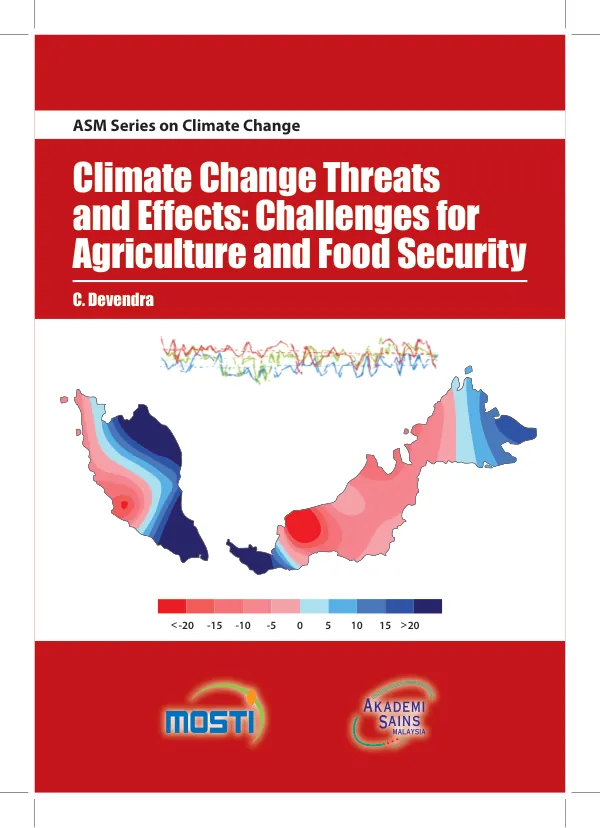
Climate Change Threats and Effects: Challenges for Agriculture and Food Security
Climate change poses significant threats to agriculture and food security in Asia, with far-reaching implications for the livelihoods of millions of people.
2012 · 66 pages
Sign in to readA free account is required to download.
Abstract
The region's agricultural sector is highly vulnerable to climate change, with impacts on crop yields, water availability, and animal productivity. Rising temperatures, changing precipitation patterns, and increased frequency of extreme weather events are expected to exacerbate these challenges. Agriculture's contribution to GDP in Malaysia has been declining in recent years, with the sector's share of the country's GDP decreasing from 24% in 2000 to 18% in 2010. The Asian Development Bank (ADB) has observed that climate change is having a significant impact on agriculture in South East Asia, with rising temperatures and changing precipitation patterns affecting crop yields and food security. Food security is a major concern in the region, with the demand for dietary animal proteins expected to increase significantly in the coming years. The supply of these proteins is threatened by climate change, which is expected to reduce crop yields and affect animal productivity. In Malaysia, food security policy is focused on increasing the country's self-reliance in food production, with a target of achieving 50% self-sufficiency in rice production by 2020. Agro-ecological zones play a critical role in determining the suitability of land for different crops and farming systems. In Asia, there are several agro-ecological zones, including the tropical rainforest, tropical savanna, and subtropical monsoon zones. Each of these zones has its own unique characteristics, including climate, soil, and vegetation, which affect the types of crops that can be grown and the farming systems that can be used. Land use and livelihood systems of the poor are particularly vulnerable to climate change. In many parts of Asia, small-scale farmers and pastoralists rely on rainfed agriculture and livestock production for their livelihoods. Climate change is expected to reduce crop yields and affect animal productivity, making it difficult for these communities to access food and income. Climate change is also expected to have significant impacts on crops and cropping patterns. Rising temperatures and changing precipitation patterns are expected to reduce crop yields and affect the suitability of different crops for different regions. In Asia, crops such as rice, wheat, and maize are particularly vulnerable to climate change, with impacts on yields and quality. Heat stress is a major concern for animal production in Asia, with rising temperatures expected to affect animal productivity and welfare. In addition to heat stress, climate change is also expected to affect the quantity and quality of feed resources available for animals. This is particularly concerning for pastoralists and small-scale farmers, who rely on livestock production for their livelihoods. Plantation crops, such as oil palm and rubber, are also vulnerable to climate change. Rising temperatures and changing precipitation patterns are expected to affect yields and quality, making it difficult for farmers to access income and food. Urbanisation is a major driver of climate change, with the increasing demand for energy and resources contributing to greenhouse gas emissions. In Asia, urbanisation is expected to continue, with significant implications for agriculture and food security. The CGIAR study on mapping hotspots of climate change and food insecurity in the global tropics has identified several regions in Asia that are particularly vulnerable to climate change. These regions include the Indo-Gangetic Plain, the Mekong Delta, and the Amazon Basin. Climate change is expected to exacerbate food insecurity in these regions, with significant implications for human welfare and development. Water availability is a critical constraint for agriculture in Asia, with many regions experiencing water scarcity. Climate change is expected to exacerbate this problem, with rising temperatures and changing precipitation patterns affecting water availability and quality. Carbon sequestration and greenhouse gas emissions are critical issues for agriculture in Asia. Climate change is expected to affect the carbon sequestration potential of different crops and farming systems, with significant implications for greenhouse gas emissions. Strategies to cope with climate change include mitigation and adaptation options. Mitigation options include adjusting cropping calendars and patterns, changing management and farming practices, and using heat-resistant varieties. Adaptation options include diversified farming, intercropping, crop rotation, and utilisation of southern oscillation index designing cropping strategy. A supportive policy framework is essential for coping with the harmful effects of climate change. This includes affirmation of official policy to address waning agriculture, its revitalisation, climate change effects, food security, and increased self-reliance. Concerted R&D of rainfed agriculture and small farm systems, and increased focus on the development of marginal and fragile lands are also critical. Improved water efficiency for cropping systems and land use systems, pro-poor community-based activities that can adapt to climate change, and use of sustainable technologies are also essential.