USAID DEC
Climate Resilience in the Transport Sector
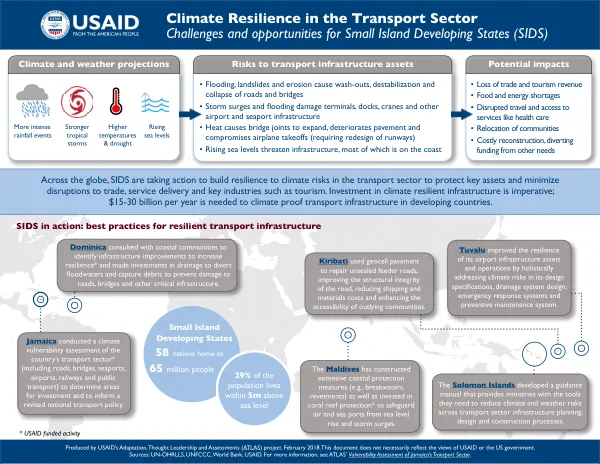
Climate Resilience in the Transport Sector Challenges and Opportunities for Small Island Developing States (SIDS) Climate and weather projections indicate increased risks to transport infrastructure due to rising sea levels, more frequent flooding, landslides, and erosion.
2018 · 1 pages
Sign in to readA free account is required to download.
Abstract
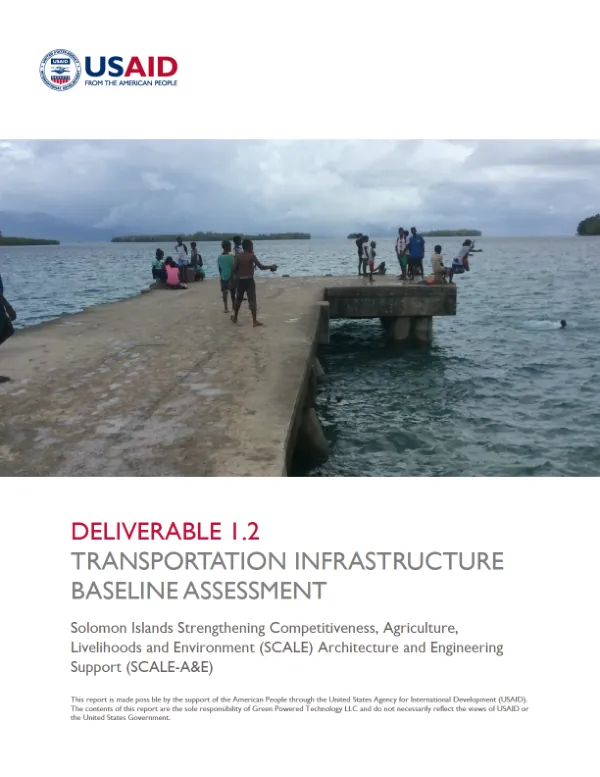
These events can cause wash-outs, destabilization, and collapse of roads and bridges, as well as damage to terminals, docks, airports, and other infrastructure. Flooding, storm surges, and erosion can also lead to costly repairs and costly repairs diverting funds from other needs. Rising sea levels threaten infrastructure, most of which is located on the coast. Loss of trade and tourism revenue, food and energy shortages, and disrupted travel and access to services like healthcare are also potential impacts. Relocation of communities and costly repairs are also possible consequences. More frequent and intense rainfall events, stronger tropical storms, higher temperatures, and droughts are expected to increase the risk of damage to transport infrastructure. Investment in climate-resilient infrastructure is imperative to protect key assets and minimize disruptions to trade, service delivery, and key industries such as tourism. Jamaica conducted a climate vulnerability assessment of its transport sector to determine areas for investment and inform a revised national transport policy. Dominica consulted with coastal communities to identify improvements to increase resilience and made investments in drainage to divert floodwaters and capture debris and prevent damage to roads, bridges, and other critical infrastructure. The Maldives has constructed extensive coastal protection measures, including breakwaters, revetments, and coral reef protection, to safeguard air and sea transport from sea level rise and storm surges. Kiribati used geocell to repair unsealed roads, improving the structural integrity of the road, reducing shipping and materials costs, and enhancing the accessibility of outlying areas. Tuvalu improved the resilience of its airport infrastructure and operations by addressing climate risks in design specifications, drainage system design, emergency response systems, and maintenance systems. The Solomon Islands developed a guidance manual to provide ministries with tools to reduce climate and weather risks in transport sector infrastructure planning, design, and construction processes. Small Island Developing States comprise 29% of the global population living within 5 meters above sea level. These nations are taking action to build resilience to climate risks in the transport sector, investing in climate-resilient infrastructure and implementing measures to minimize disruptions to trade, service delivery, and key industries.
Related documents
Documents in this collection
 2015
2015USAID DEC
Deliverables 1.4.A Develop Infrastructure Plans, Specifications for Approved Projects 1.4.B Develop Activity-Specific Quality Assurance Plans 1.4 D Hold Pre-Tender Subcontractor Information Session for Local Small Construction Companies in Each Country 1.4 E Conduct Tender Process for Fast-Track Infrastructure Activities
Open record 2016
2016USAID DEC