USAID DEC
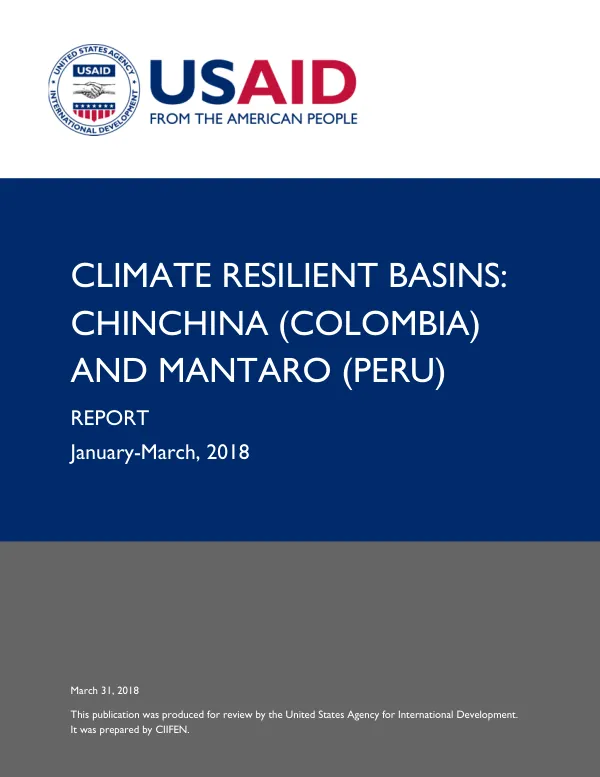
Climate Resilient Basins: Chinchina (Colombia) and Mantaro (Peru) Report
Climate Resilient Basins: Chinchina (Colombia) and Mantaro (Peru) Report The Chinchina basin in Colombia and the Mantaro basin in Peru are two of the most vulnerable regions to climate change in the Andean region.
2018 · 18 pages
Sign in to readA free account is required to download.
Abstract
The basins are characterized by a high level of climate variability, with frequent droughts and floods affecting the livelihoods of local communities. The region's agricultural sector is heavily dependent on rainfall, and the impacts of climate change are expected to exacerbate existing water scarcity and water scarcity-related conflicts. The Chinchina basin is located in the Andean region of Colombia, and its climate is characterized by a high level of variability, with frequent droughts and floods affecting the livelihoods of local communities. The basin is home to a diverse range of ecosystems, including tropical rainforests, cloud forests, and páramos. The region's agricultural sector is heavily dependent on rainfall, and the impacts of climate change are expected to exacerbate existing water scarcity and water scarcity-related conflicts. Implementation of the Climate Resilient Basins project in the Chinchina and Mantaro basins has focused on four key outcomes: (1) evaluation of activity implementation, (2) operational matters, (3) conclusions of the period, and (4) coordination with other institutions or projects in the basin. Outcome 1: Evaluation of Activity Implementation The project has made significant progress in implementing its activities, including the development of training modules for technicians and communities, the design of climate comic strips, and the review of the final thesis delivered by students of the National University of Colombia. The results of the thesis have allowed the identification of areas where extreme hydroclimate events can cause a greater impact, such as due to landslides. Outcome 2: Socialization and Validation of Vulnerability Study Results The project has made significant progress in socializing and validating the vulnerability study results in the basin territories. The vulnerability analyses developed for both basins were adjusted and validated, and the GIS Assistants are developing training modules for technicians and communities. Outcome 3: Strengthening of the Regional Information System (SIAR) The project has made significant progress in strengthening the SIAR, including the training workshop on the use and management of the GEO-SiAR to strengthen the SIAR Ayacucho. The SIAR is a critical tool for visualizing climate, environmental, risk management, water resources, and other information provided by different institutions through a layer of Geo services. Recommendations Based on the progress made in the first quarter, the following recommendations are made: * Continue to strengthen the SIAR and ensure its effective use by local institutions. * Finalize the training modules for technicians and communities and ensure their effective use. * Continue to socialize and validate the vulnerability study results in the basin territories. * Finalize the agreement between CIIFEN and the Risk Management Unit of the Department of Caldas to articulate the project activities with the Unit's action plans. Implementation of these recommendations will ensure the effective implementation of the Climate Resilient Basins project in the Chinchina and Mantaro basins.