THE ASIA FOUNDATION
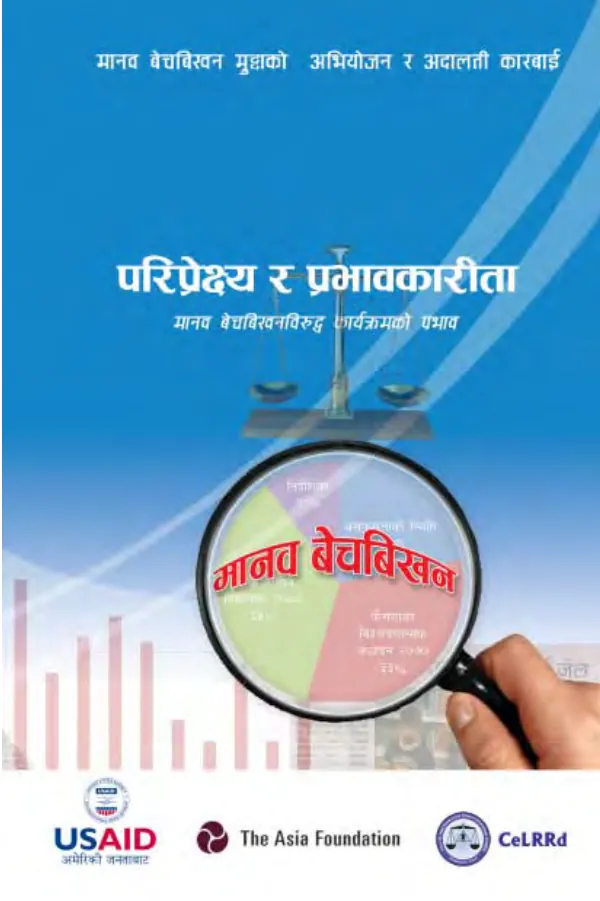
Combating Trafficking in Person (CTIP) Program Annual Report 2012
The Ministry of Women, Children and Social Welfare (MOWCSW) expresses its gratitude to the Combating Trafficking in Person (CTIP) program of the United States Agency for International Development (USAID) Nepal and The Asia Foundation for their technical expertise and financial support in the publication of this document.
2012 · 66 pages
Sign in to readA free account is required to download.
Abstract
The document focuses on the implementation of the CTIP program in Nepal, which aims to combat human trafficking and protect vulnerable populations. The program was launched in 2018 and has been implemented in various districts across the country. The program's objectives include preventing human trafficking, protecting victims, and promoting social justice. The CTIP program has been implemented through a multi-stakeholder approach, involving government agencies, non-governmental organizations, and community-based organizations. The program has established a network of service providers, including shelters, counseling centers, and legal aid services, to support victims of human trafficking. The program has also implemented various interventions to prevent human trafficking, including awareness-raising campaigns, capacity-building training for service providers, and community-based initiatives to promote social justice. The program has also established a monitoring and evaluation system to track progress and identify areas for improvement. The document highlights the importance of addressing the root causes of human trafficking, including poverty, lack of education, and social inequality. It also emphasizes the need for a comprehensive approach to combating human trafficking, involving government agencies, civil society organizations, and community-based initiatives. The CTIP program has made significant progress in combating human trafficking in Nepal, with a notable increase in the number of victims rescued and supported. The program has also established a strong network of service providers and community-based initiatives to promote social justice and prevent human trafficking. The document concludes by emphasizing the need for continued support and commitment to combating human trafficking in Nepal. It highlights the importance of addressing the root causes of human trafficking and promoting social justice to prevent human trafficking and protect vulnerable populations. The document also highlights the importance of international cooperation and collaboration in combating human trafficking. It emphasizes the need for countries to work together to share best practices, coordinate efforts, and provide technical assistance to support the implementation of anti-trafficking programs. The CTIP program has been recognized as a model for combating human trafficking in Nepal, and its success has been attributed to the strong partnership between government agencies, civil society organizations, and community-based initiatives. The program's achievements have been recognized by international organizations, including the United Nations, and have been cited as a best practice in combating human trafficking. The document also highlights the importance of monitoring and evaluation in combating human trafficking. It emphasizes the need for regular monitoring and evaluation to track progress, identify areas for improvement, and make data-driven decisions to support the implementation of anti-trafficking programs. The CTIP program has established a robust monitoring and evaluation system to track progress and identify areas for improvement. The program has also established a data management system to collect and analyze data on human trafficking cases, victims, and service providers. The document also highlights the importance of community-based initiatives in combating human trafficking. It emphasizes the need for community-based initiatives to promote social justice, prevent human trafficking, and protect vulnerable populations. The CTIP program has established a strong network of community-based initiatives to promote social justice and prevent human trafficking. The program has also established a community-based monitoring and evaluation system to track progress and identify areas for improvement.
Related documents