THE ASIA FOUNDATION
Combating Trafficking in Persons (CTIP)
The Combating Trafficking in Persons (CTIP) program in Nepal is a collaborative effort between the U.S.
2016 · 104 pages
Sign in to readA free account is required to download.
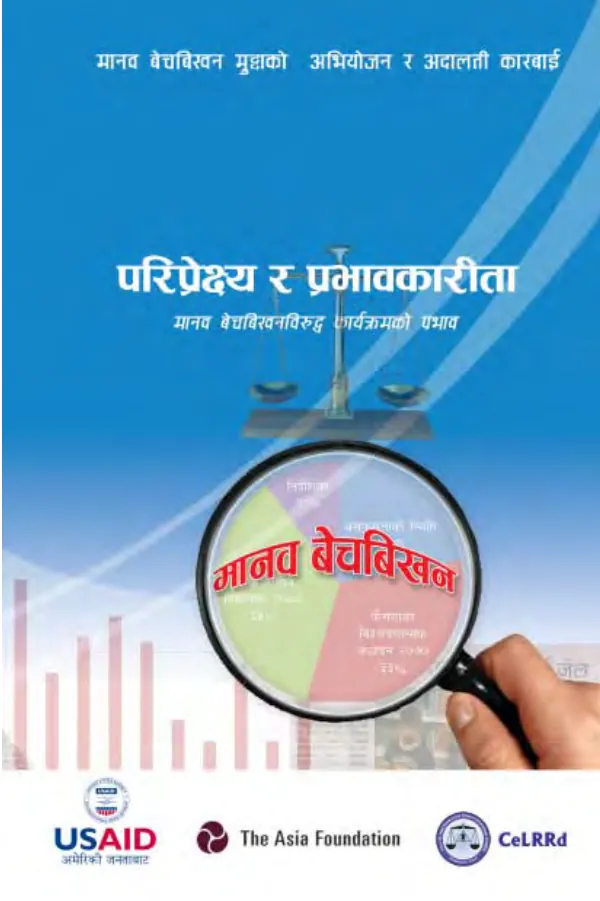
Abstract
Agency for International Development (USAID) and The Asia Foundation. The program aims to combat human trafficking and support survivors of trafficking in Nepal. The CTIP program focuses on three key areas: prevention, protection, and prosecution. Prevention efforts include raising awareness about human trafficking and its consequences, as well as providing training to law enforcement officials and other stakeholders. Protection efforts involve providing support services to survivors of trafficking, including counseling, medical care, and economic empowerment. Prosecution efforts focus on strengthening the capacity of law enforcement agencies to investigate and prosecute human trafficking cases. The program also supports the development of a comprehensive national action plan to combat human trafficking in Nepal. This plan includes strategies for prevention, protection, and prosecution, as well as for addressing the root causes of human trafficking, such as poverty and lack of education. In addition to its focus on human trafficking, the CTIP program also supports the development of a robust and effective justice system in Nepal. This includes strengthening the capacity of the judiciary, improving the quality of investigations and prosecutions, and enhancing the protection of victims' rights. The program has made significant progress in its efforts to combat human trafficking in Nepal. For example, the number of human trafficking cases reported to the authorities has increased, and the number of convictions has also risen. Additionally, the program has supported the establishment of a national hotline for reporting human trafficking cases, which has helped to increase awareness and reporting of trafficking cases. The CTIP program has also supported the development of a comprehensive database on human trafficking cases in Nepal. This database provides valuable information on the scope and nature of human trafficking in the country, which can be used to inform policy and programming decisions. The program has also supported the development of a robust and effective monitoring and evaluation system to track progress and identify areas for improvement. This system includes regular surveys and assessments of the program's impact, as well as regular reviews of the program's implementation. The CTIP program has also supported the development of a comprehensive national strategy to combat human trafficking in Nepal. This strategy includes strategies for prevention, protection, and prosecution, as well as for addressing the root causes of human trafficking, such as poverty and lack of education. The program has also supported the development of a robust and effective justice system in Nepal. This includes strengthening the capacity of the judiciary, improving the quality of investigations and prosecutions, and enhancing the protection of victims' rights. The CTIP program has