FHI 360
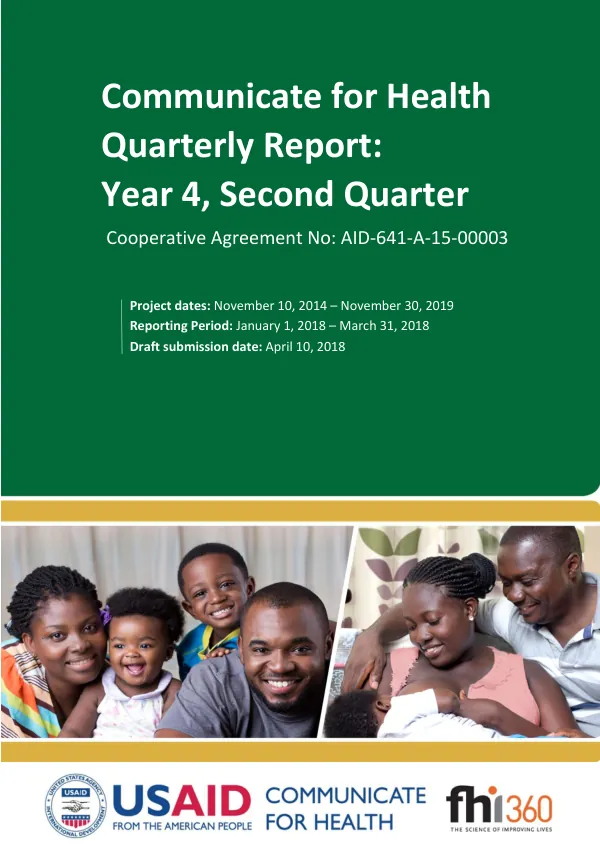
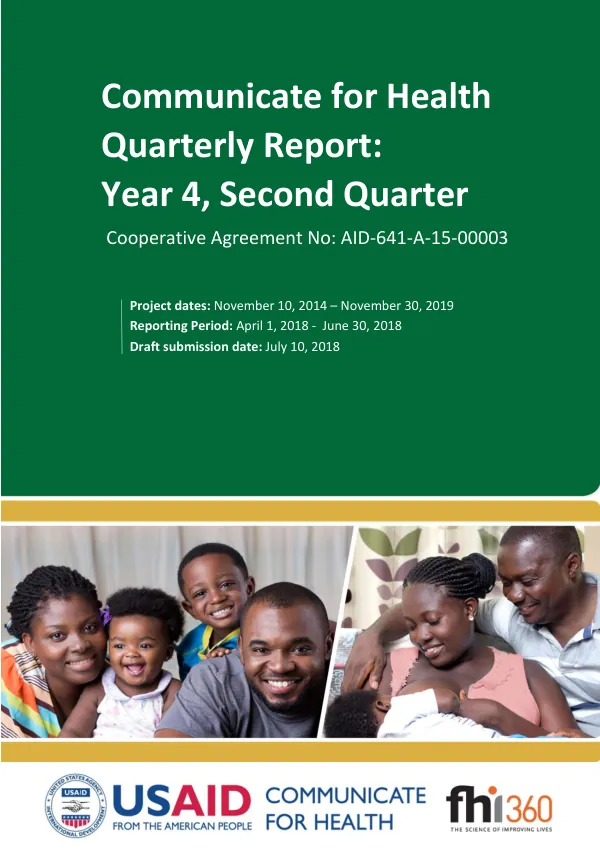
Communicate for Health, Year 4 Quarter 3 Report
The Communicate for Health project in Ghana was awarded to FHI 360 on November 10, 2014, under Cooperative Agreement No: AID-641-A-15-00003.
2018 · 65 pages
Sign in to readA free account is required to download.
Abstract
The project's Expected Results (ERs) include Improved Behaviors that Increase Demand for Key Interventions. During the third quarter of Year 4 (April 1, 2018 to June 30, 2018), progress was made towards all three ERs. The GoodLife Phase II "Slice of Life" campaign was developed with a creative firm, featuring three short personal endorsements for the campaign and GoodLife by the First Lady of Ghana, Mrs. Rebecca Akufo-Addo. The campaign includes four TV and five radio spots on themes such as WASH, family planning, nutrition, and malaria. The campaign is expected to be launched in Q4. The GoodLife Story Series on national TV was broadcast on three national TV stations, featuring 90 spots that address main health themes and related messages through short mini-dramas. Stories broadcast included malaria, family planning, newborn care, and exclusive breastfeeding. Shorter 60-second versions of the stories were also aired on GTV during the Maternal Health Channel Television Series. The radio version of the GoodLife Story on Family Planning was translated, pretested, and recorded in eight local languages, including Gurune, Dagbani, Dagaare, and Hausa for the north, and Ewe, Twi, and Ga for the south. The spots will be aired on national and regional radio during Q4. Strong media support was provided for the 2018 World Malaria Day celebration in Ghana, working closely with the National Malaria Control Program (NMCP). Thirty-minute interactive interview platforms were secured with NMCP and GHS technical experts on five top-ranked TV stations and five national radio stations. Resource persons were also featured in five radio and six television pre-event interviews, generating important interest for the WMD community events. Ghana Community Radio Network (GCRN) is currently working to tackle adolescent sexual and reproductive health and rights through community radio. The GCRN has developed a comprehensive plan to address the needs of adolescents and young people, including the production of radio programs and the establishment of a network of community radio stations. The project's Monitoring and Evaluation (M&E) framework is designed to track progress towards the ERs and identify areas for improvement. The M&E framework includes indicators such as the number of people reached through media campaigns, the number of people who have adopted new behaviors, and the number of people who have accessed key interventions. Capacity Building (ER2) is a key component of the project, focusing on building the capacity of local organizations and institutions to deliver health services. The project has established partnerships with local organizations, including the Ghana Health Service (GHS) and the Ministry of Health (MOH), to build their capacity to deliver health services. Development of one local SBCC organization to be a recipient of USAID funding (ER3) is also a key component of the project. The project has identified a local organization that has the potential to receive USAID funding and has provided technical assistance to help them develop a proposal. The project's Coordination and Partnerships component involves working closely with local organizations, institutions, and stakeholders to ensure that the project's activities are aligned with national priorities and that the project is contributing to the achievement of national health goals. The project has established partnerships with a range of stakeholders, including the GHS, MOH, and local organizations. The project's Challenges and Opportunities component involves identifying challenges and opportunities for the project and developing strategies to address them. The project has identified a range of challenges, including limited resources and capacity constraints, and has developed strategies to address them. The project's Highlights of Key Activities for Quarter 4 component involves highlighting key activities that will be undertaken during the quarter. The project will continue to implement media campaigns, build the capacity of local organizations, and develop a local SBCC organization to receive USAID funding. The project's Annexes component involves providing additional information and resources that are relevant to the project. The annexes include a range of documents, including the project's M&E framework, capacity building plan, and development plan for a local SBCC organization.
Related documents