THE ASIA FOUNDATION
Community-Based Policing Program
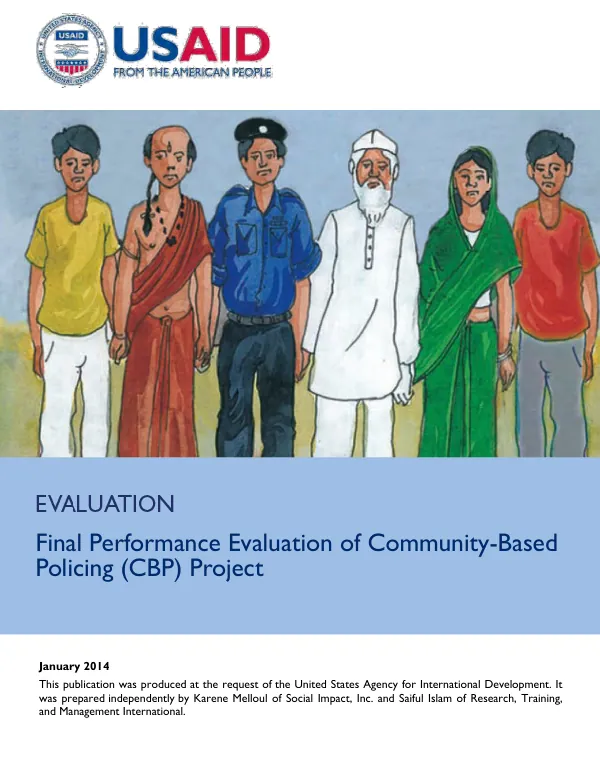
The Community-Based Policing program aims to promote community policing at the divisional, district, and village levels.
2011 · 2 pages
Sign in to readA free account is required to download.
Abstract
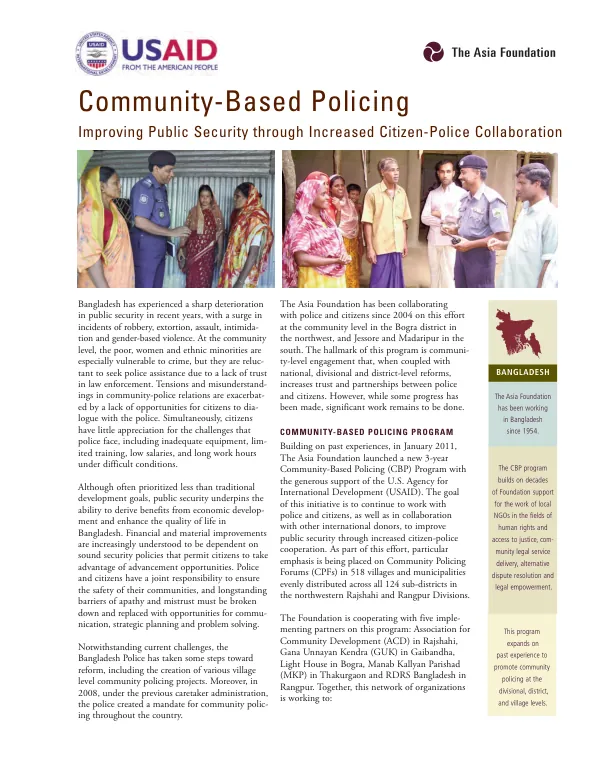
This initiative expands on past experiences to improve public security through increased citizen-police collaboration. The program focuses on building trust and partnerships between police and citizens, with a particular emphasis on Community Policing Forums (CPFs) in 518 villages and 124 sub-districts in the northwestern regions of Bangladesh. The program's goal is to improve public security by fostering a problem-solving approach that is responsive to the needs of the community and sensitive to the challenges faced by police. Community-Based Policing encourages collaborative relationships between citizens and police, allowing them to discuss their views and develop trust, respect, and necessary skills to solve public security challenges. The program's implementing partners include the Association for Community Development (ACD), Gana Unnayan Kendra (GUK), Light House, Manab Kallyan Parishad (MKG), and RDRS Bangladesh. These organizations work together to strengthen police responsiveness to citizen needs, increase citizen engagement and trust in law enforcement, and expand the mandate for community-based policing as a strategic priority. The program's approach involves holistic knowledge, attitudinal, and attitudinal development to foster law enforcement's understanding of community policing and its application in day-to-day operations. Community Policing Forums serve as joint bodies for citizen-police activities, particularly in areas of crime prevention, human rights, and disaster responsiveness. The program's success is measured by its ability to increase citizen engagement and trust in law enforcement, improve public security, and institutionalize community policing as a strategic priority. The program's legitimacy and chances of institutionalization are enhanced through a dialogue among senior police, civil society, and policy makers. The Community-Based Policing program is made possible through the support of the United States Agency for International Development (USAID) and other international donors. The program's impact is expected to have a lasting effect on the lives of citizens in Bangladesh, particularly the poor, women, and minority groups who are most vulnerable to crime. The program's implementation is overseen by the Asia Foundation, a nonprofit organization that has been working in Bangladesh since 1954. The Foundation's programs focus on human rights, access to justice, community legal service delivery, and legal empowerment. The program's success will depend on the ability of citizens and police to work together to address public security challenges and develop trust and respect for each other. The program's long-term goal is to create a culture of community policing that is responsive to the needs of citizens and sensitive to the challenges faced by police. This will require a sustained effort to build trust, respect, and necessary skills among citizens and police. The program's success will have a lasting impact on the lives of citizens in Bangladesh and will contribute to the country's development and growth.