BANK FOR WEST AFRICAN DEVELOPMENT
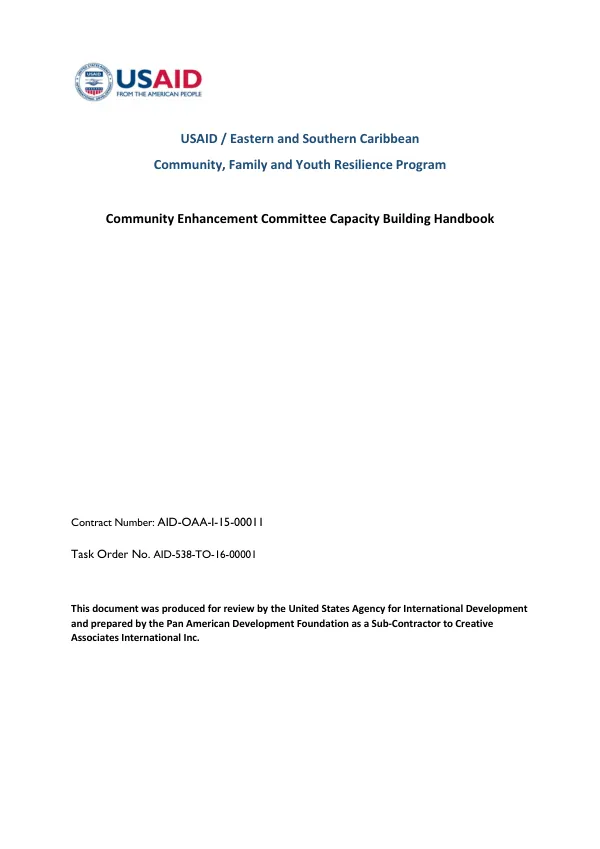
Community Enhancement Committees Handbook
The Community Enhancement Committee Capacity Building Handbook is a comprehensive guide for establishing and running Community Enhancement Committees (CECs) in at-risk communities.
2018 · 53 pages
Sign in to readA free account is required to download.
Abstract
The handbook is designed to support the development and implementation of crime and violence prevention plans, with a focus on engaging youth, community members, and key actors in participatory discussions. Crime and violence prevention is a critical issue in many communities, and CECs play a vital role in addressing this problem. According to the handbook, crime and violence prevention focuses on understanding the underlying factors behind criminal and violent behaviors, including risk and protective factors. Risk factors are characteristics that increase the likelihood of a person becoming a victim or perpetrator of violence, such as substance abuse and family conflicts. Protective factors, on the other hand, are characteristics that decrease the likelihood of a person becoming a victim or perpetrator of violence, such as social activities and well-developed social skills. CECs are multi-stakeholder groups formed by people from different sectors of society, including government, youth leaders, community leaders, local organizations, and local business representatives. The handbook emphasizes the importance of having a clear purpose and the right people on the CEC. CECs should be formed by motivated individuals who have a stake in the issue and are willing to dedicate time to the committee. The handbook provides a step-by-step guide for setting up a CEC, including recruiting members, identifying key stakeholders, and creating a stakeholder directory. The directory should include relevant data on individuals and organizations within the community, such as name, occupation, and contact information. CECs are not legal authorities, but rather facilitators of the process, guiding the identification of needs and the design and implementation of plans in the community. The handbook emphasizes the importance of community participation and engagement in the CEC process. The handbook covers different topics that will help CECs go through the different steps and successfully contribute to solving issues found in their community. These topics include setting up the CEC, learning from the crime and violence situation in the community, creating a strategic crime and violence prevention plan, putting the plan into action, monitoring, and evaluating. In terms of implementation, the handbook provides guidance on how to identify and engage key stakeholders, including community and youth leaders, local authorities, and other organizations and institutions that affect or are affected by crime and violence in the community. The handbook also emphasizes the importance of creating a stakeholder directory and providing information on the purpose and pertinence of CECs to local authorities. Overall, the Community Enhancement Committee Capacity Building Handbook is a valuable resource for CECs and other stakeholders working to prevent crime and violence in at-risk communities. The handbook provides a comprehensive guide for establishing and running CECs, with a focus on community participation, engagement, and empowerment.