INTERNATIONAL ORGANIZATION FOR MIGRATION
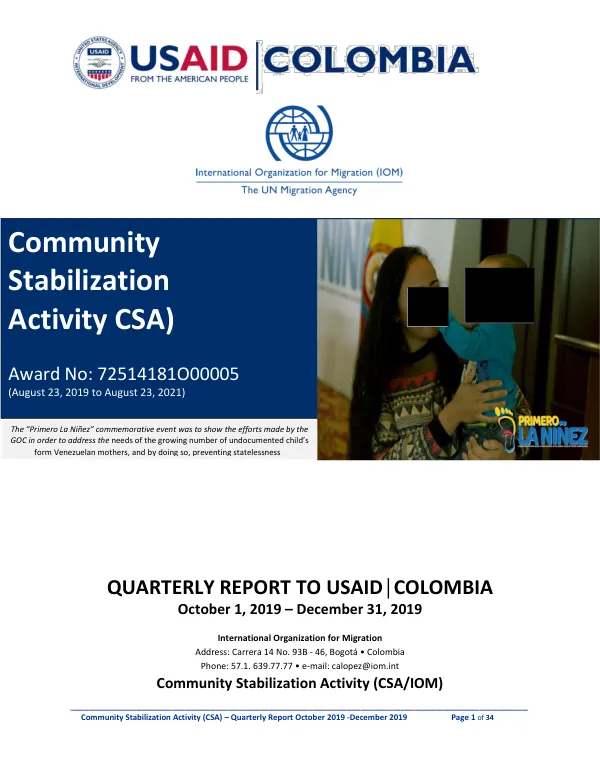
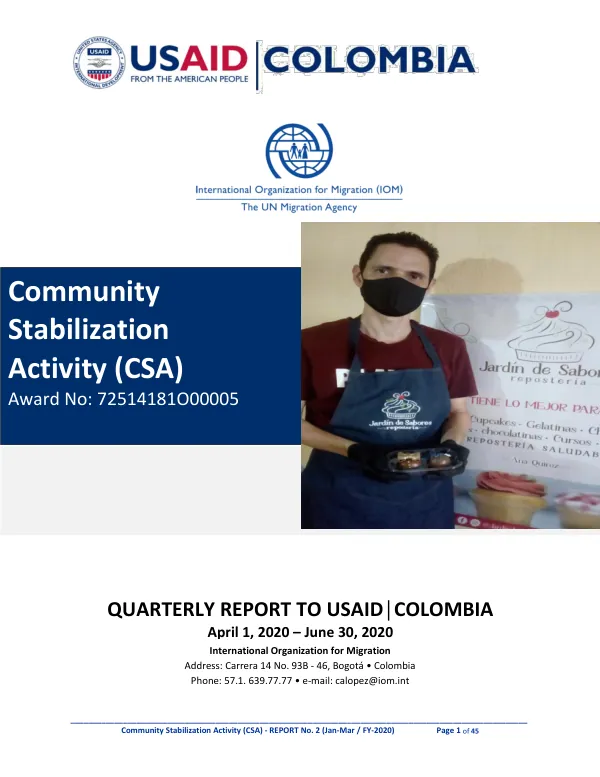
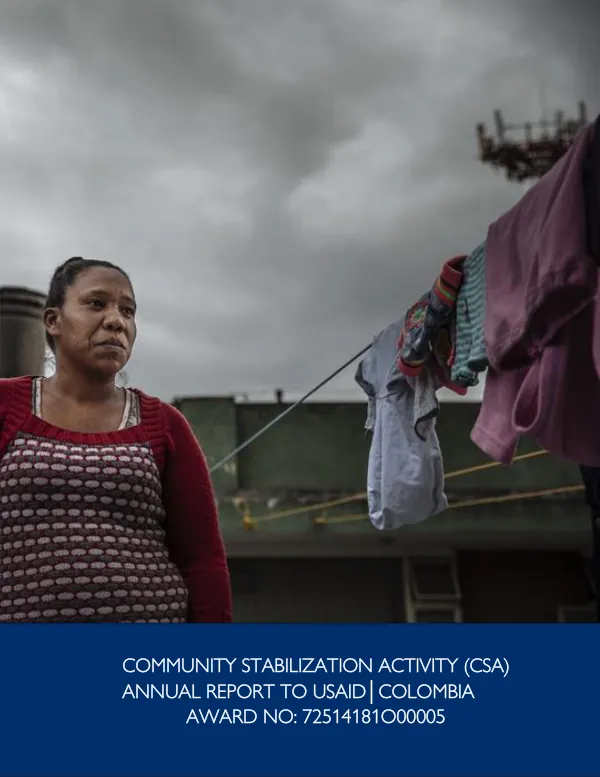
Community Stabilization Activity (CSA) Annual Report to USAID Colombia
The Community Stabilization Activity (CSA) in Colombia was implemented by the International Organization for Migration (IOM) with funding from the United States Agency for International Development (USAID) under Award No: 72514181O00005.
2020 · 45 pages
Sign in to readA free account is required to download.
Abstract
The program aimed to increase community stability and inclusion in Colombia by addressing the humanitarian situation created by the influx of population flows from Venezuela. The program focused on three components: Integral Assistance Strategy, Socio-economic and Cultural Inclusion, and Access to Healthcare Services. Activities were prioritized in 14 departments in Colombia, with progress made during October 2019 - September 2020. The main achievements of the program are outlined in the Activity Implementation Progress section. The humanitarian crisis in Venezuela is driven by ongoing political instability, a deteriorating socioeconomic situation, and growing insecurity and violence. Almost all Venezuelans are affected by extraordinary hyperinflation, a collapse of real salaries, shortages of food and medicines, lack of education and health services, and deterioration of basic infrastructures. By September 2020, more than 5.5 million people had left the country, seeking humanitarian assistance, protection, and access to basic services and job opportunities abroad. The CSA program provided technical assistance and tools to the Government of Colombia (GoC) to address the humanitarian situation. The program also sought to strengthen civil society capacity to articulate with the GoC and respond to humanitarian emergencies related to migration flows on the ground. Progress has been made in implementing the program's activities, with a focus on promoting socio-economic and cultural inclusion opportunities, decreasing xenophobia and discrimination, and facing health challenges derived from population flows from Venezuela. The program's Integral Assistance Strategy component aimed to provide assistance to migrants and host communities, including food, shelter, and medical attention. The Socio-economic and Cultural Inclusion component focused on promoting socio-economic and cultural inclusion opportunities for migrants and host communities, including education and job training programs. The Access to Healthcare Services component aimed to improve healthcare services for migrants and host communities, including the provision of medical attention and health education. The program's activities were implemented in collaboration with the GoC, civil society organizations, and other stakeholders. The program's progress was monitored and evaluated through regular reporting and assessments. The program's achievements and challenges are outlined in the Activity Implementation Progress section. The CSA program has made significant progress in addressing the humanitarian situation created by the influx of population flows from Venezuela. The program's activities have promoted socio-economic and cultural inclusion opportunities, decreased xenophobia and discrimination, and faced health challenges derived from population flows from Venezuela. The program's achievements demonstrate the importance of addressing the humanitarian situation in Colombia and promoting sustainable responses to migration flows. The program's implementation has been challenging, with difficulties in accessing remote areas and providing assistance to migrants and host communities. However, the program's achievements demonstrate the importance of addressing the humanitarian situation in Colombia and promoting sustainable responses to migration flows. The program's progress will continue to be monitored and evaluated through regular reporting and assessments. The program's success has been attributed to the collaboration and coordination between the IOM, the GoC, civil society organizations, and other stakeholders. The program's achievements demonstrate the importance of addressing the humanitarian situation in Colombia and promoting sustainable responses to migration flows. The program's progress will continue to be monitored and evaluated through regular reporting and assessments. The program's activities have promoted socio-economic and cultural inclusion opportunities, decreased xenophobia and discrimination, and faced health challenges derived from population flows from Venezuela. The program's achievements demonstrate the importance of addressing the humanitarian situation in Colombia and promoting sustainable responses to migration flows. The program's progress will continue to be monitored and evaluated through regular reporting and assessments.