USAID DEC
Complications with use of misoprostol for abortion in Madagascar: between ease of access and lack of information
Sign inWORLD HEALTH ORGANIZATION
Complications with use of misoprostol for abortion in Madagascar: between ease of access and lack of information
The maternal mortality ratio in Madagascar in 2015 was 353 maternal deaths per 100,000 live births, down from 778 in 1990.
2018 · 6 pages
Sign in to readA free account is required to download.
Abstract
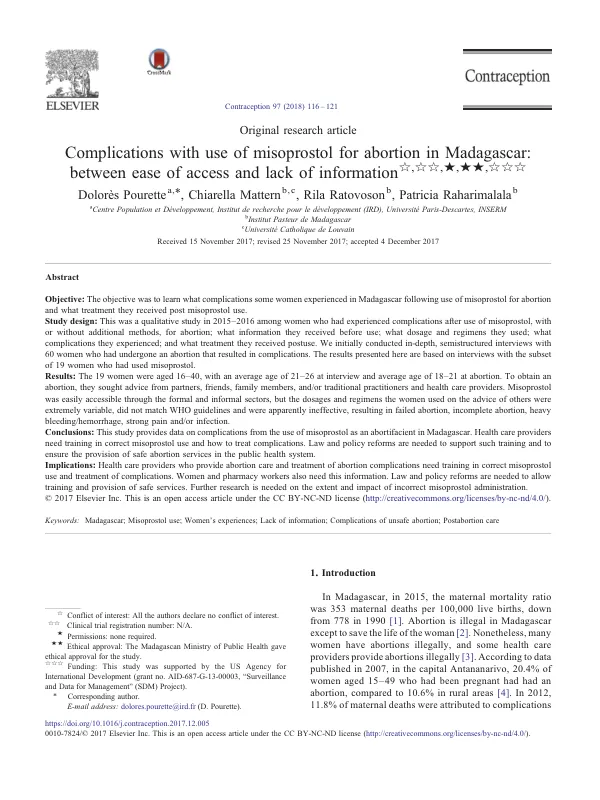
Abortion is illegal in Madagascar except to save the life of the woman. Despite this, many women have abortions illegally, and some health care providers provide abortions illegally. According to data published in 2007, in the capital Antananarivo, 20.4% of women aged 15-49 who had been pregnant had had an abortion, compared to 10.6% in rural areas. In 2012, 11.8% of maternal deaths were attributed to complications of unsafe abortion. Women in Madagascar self-induce abortions, go to a traditional birth attendant, or go to a health care provider. The methods used to induce abortion in Madagascar include traditional methods, medical methods such as misoprostol, and/or intrauterine insertion of probes or plant stems. According to the World Health Organization, the most unsafe abortions can lead to complications such as incomplete abortion, heavy bleeding/hemorrhage, infection, uterine perforation, and damage to the genital tract and internal organs. A study was conducted among 60 women to learn about complications women in Madagascar experience when they seek informal help to have an abortion involving misoprostol and/or other methods from traditional birth attendants and health care providers. The study analyzed a subsample of 19 women who said that they had used misoprostol for abortion and experienced complications. The women were aged 16-40, with an average age of 21-26 at interview and average age of 18-21 at abortion. They sought advice from partners, friends, family members, and/or traditional practitioners and health care providers to obtain an abortion. Misoprostol was easily accessible through the formal and informal sectors, but the dosages and regimens the women used on the advice of others were extremely variable, did not match World Health Organization guidelines, and were apparently ineffective. This resulted in failed abortion, incomplete abortion, heavy bleeding/hemorrhage, strong pain, and/or infection. The symptoms described by the women were mainly hemorrhage, heavy bleeding (in terms of quantity and duration), and/or abdominal pain. The study highlights the need for health care providers to receive training in correct misoprostol use and how to treat complications. Law and policy reforms are also needed to support such training and to ensure the provision of safe abortion services in the public health system. Further research is needed on the extent and impact of incorrect misoprostol administration.
Related documents
Documents in this collection
 2021
2021USAID DEC
Drivers and Impacts of Distant Water Fleets on National Fisheries and Fisherfolk in Priority USAID Geographies
Open record 2021
2021USAID DEC