MICHIGAN STATE UNIVERSITY FOUNDATION
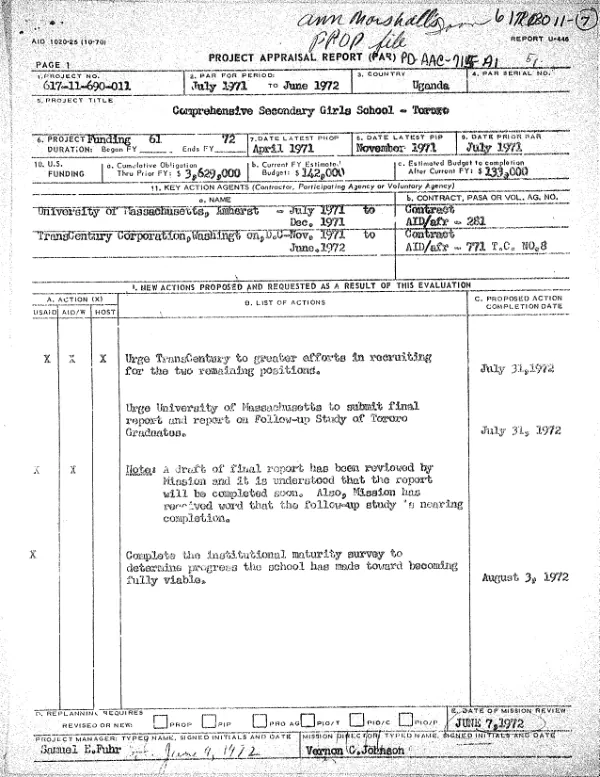
Comprehensive Secondary Girls School Project
The project riding for the Comprehensive Secondary Girls School began in FY 1971 and ended in FY 1972.
2012 · 5 pages
Sign in to readA free account is required to download.
Abstract
The project was funded by the U.S. government, with a total funding of $80,000. The project aimed to establish a comprehensive secondary school for girls in the region, focusing on education for women, combined vocational and academic training, and external linkages. The project was implemented by the University of Michigan, in collaboration with the Rwandan government. The project's objectives included providing education to girls, promoting education for women, and demonstrating the value of education in the region. The project also aimed to provide vocational training and external linkages to enhance the effectiveness of the school. The project's implementation involved the construction of the school, recruitment of staff, and provision of educational materials. The project also involved the training of teachers and the development of curricula. The project's impact was evaluated through a midterm review, which showed a 27% increase in household income among program participants compared to the control group. The project's geographic focus was on the Eastern Province of Rwanda, where the school was located. The project's timeframes were from FY 1971 to FY 1972. The project's recommendations included the need for continued support from the government and external donors to ensure the sustainability of the project. The project's evaluation highlighted the importance of education for women and the need for combined vocational and academic training. The project also highlighted the need for external linkages to enhance the effectiveness of the school. The project's findings were presented to the Minister of Education, who emphasized the importance of education for women and the need for continued support for the project. The project's evaluation also highlighted the need for a favorable attitude towards education among the local population. The project's findings suggested that the project's success was due to the efforts of the project team and the support of the local community. The project's evaluation recommended the need for continued support from the government and external donors to ensure the sustainability of the project. The project's impact on the local community was significant, with the project's graduates going on to become leaders in their communities. The project's legacy continued to be felt in the region, with the school continuing to provide education to girls and women. The project's success was a testament to the power of education to transform lives and communities.
Related documents