USAID DEC
Consequencies of Early Pregnancy
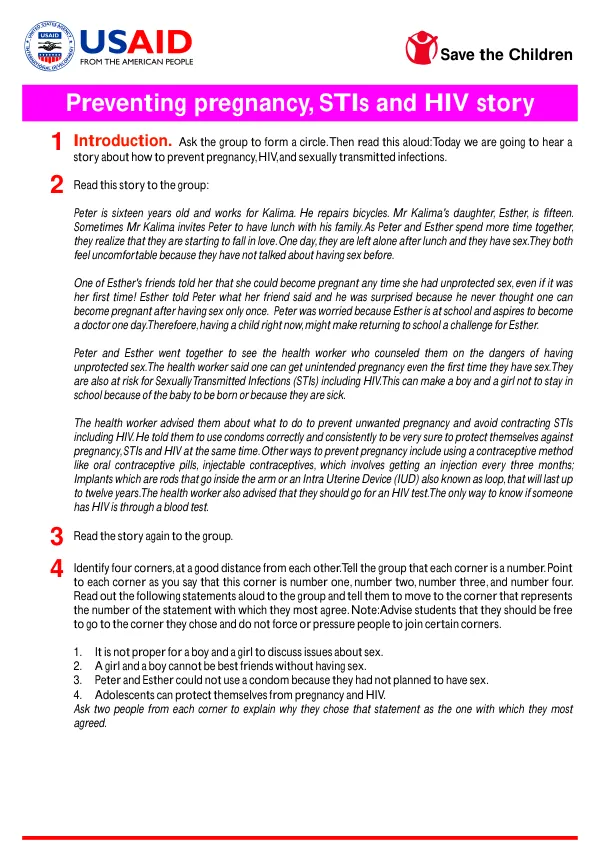
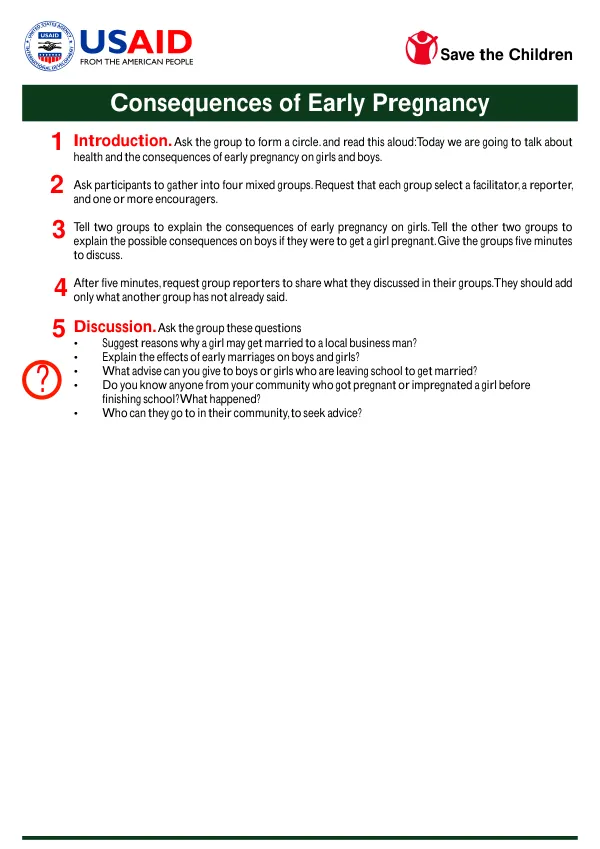
Health and Consequences of Early Pregnancy Girls and boys who become pregnant at a young age face significant health risks.
2 pages
Sign in to readA free account is required to download.
Abstract
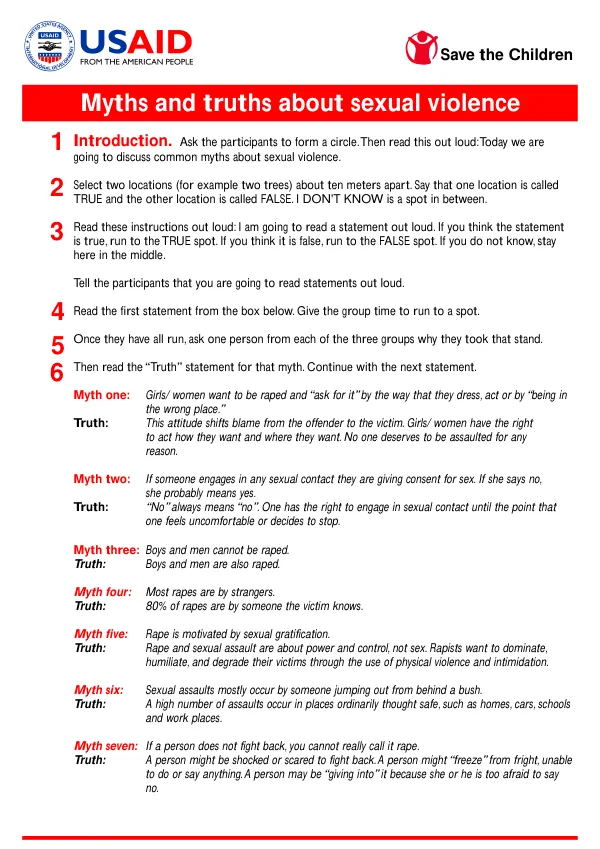
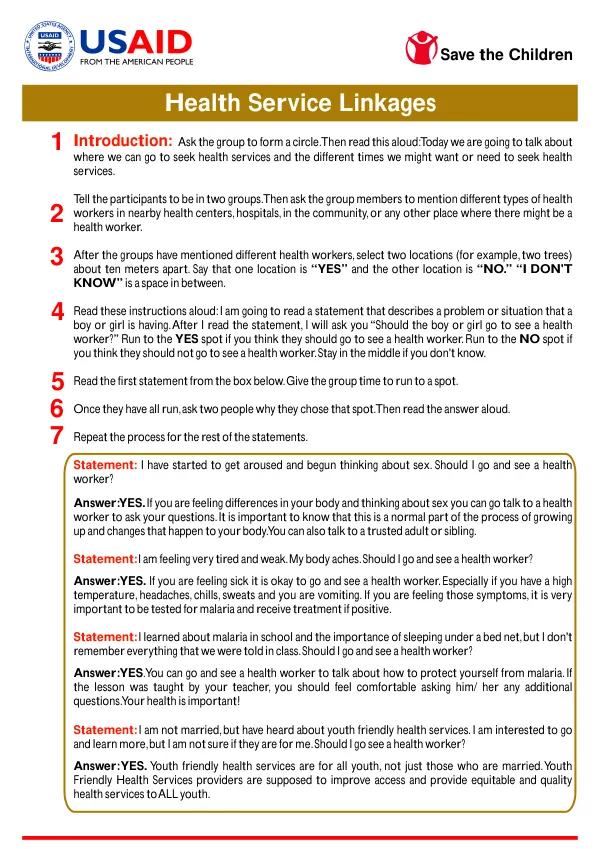
Early pregnancy can lead to serious health problems, including illness, fistula, and even death. Babies born to teenage mothers are more likely to be born prematurely and have low birth weight, which can result in lifelong health problems. Girls who become pregnant early often miss or drop out of school, leading to difficulties in finding employment and increasing their vulnerability to poverty and gender-based violence. Boys who become pregnant at a young age are forced to drop out of school and marry the girl at a tender age, taking on the responsibility of caring for a family prematurely. The consequences of early pregnancy can be severe and long-lasting. Girls who become pregnant early may experience health complications, including illness and fistula, while their babies are at risk of being born prematurely and having low birth weight. Boys who become pregnant at a young age are forced to take on significant responsibilities, including caring for a family, at a tender age. Early pregnancy can have a lasting impact on a person's education, employment, and overall well-being. Girls who become pregnant early may struggle to find employment and may be more vulnerable to poverty and gender-based violence. Boys who become pregnant at a young age may be forced to drop out of school and may struggle to find employment and achieve their goals. The consequences of early pregnancy can be mitigated by delaying pregnancy until after completing education. Girls and boys who delay pregnancy can avoid the health risks associated with early pregnancy and can focus on achieving their goals and improving their socio-economic status. By delaying pregnancy, girls and boys can also avoid the risks of poverty, unemployment, and gender-based violence. In communities where early pregnancy is common, it is essential to provide education and support to adolescents about the consequences of early pregnancy. This can include providing information on the health risks associated with early pregnancy, as well as the socio-economic consequences. By providing education and support, communities can help adolescents make informed decisions about their reproductive health and can reduce the incidence of early pregnancy. Adolescents who become pregnant at a young age can face significant challenges, including health complications, poverty, and unemployment. However, with the right support and education, adolescents can avoid these challenges and achieve their goals. By delaying pregnancy until after completing education, girls and boys can improve their socio-economic status, reduce their vulnerability to poverty and gender-based violence, and achieve their full potential.
Related documents