USAID DEC
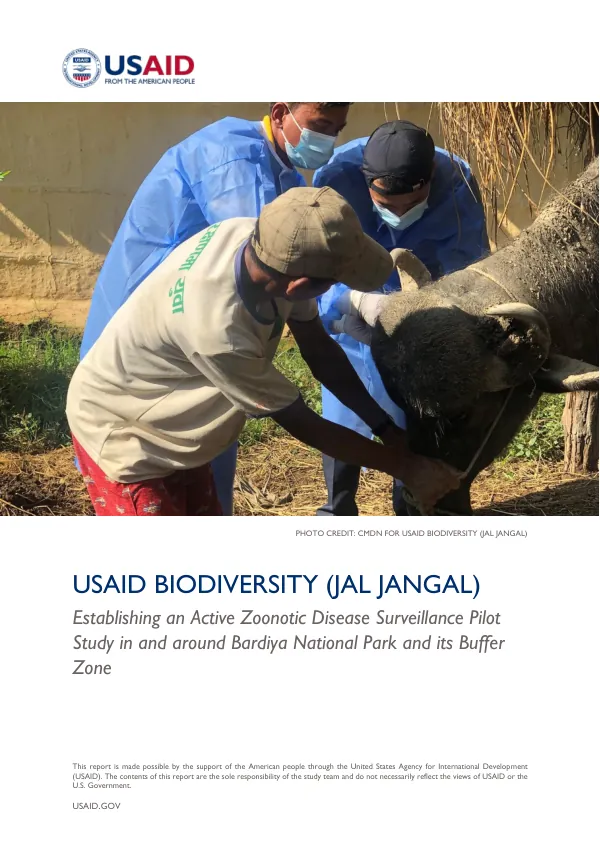
Establishing an Active Zoonotic Disease Surveillance Pilot Study in and around Bardiya National Park and its Buffer Zone
Sign inUSAID/NEPAL
Establishing an Active Zoonotic Disease Surveillance Pilot Study in and around Bardiya National Park and its Buffer Zone
The USAID Biodiversity (Jal Jangal) program aims to conserve nature, enhance human well-being, and safeguard Nepal's biodiversity to improve the health of ecosystems, fight environmental crime, and improve the ability of communities to prepare for and adapt to impacts caused by climate change and natural disasters.
2024 · 65 pages
Sign in to readA free account is required to download.
Abstract
One of the main objectives of the program is to strengthen environmental crime control and natural resource safeguards. A significant effort will be made to establish active zoonotic disease surveillance response and mitigation programs. The Center for Molecular Dynamics Nepal (CMDN) completed a One Health proactive zoonotic disease surveillance assessment in and around Bardiya National Park (BNP) in Year 1 (September 2023). The assessment served as the basis for the implementation of a functional surveillance system at Bardiya and other sites. The pilot activities under the Zoonotic disease surveillance component of the project focused on proactive pathogen detection and disease risk transmission dynamics assessment. The piloting effort at BNP yielded important information on the current disease surveillance status in the area. While a national early warning system for disease outbreaks is in place, its connection and reach are yet to be felt at a local level. The zoonotic surveillance effort uncovered public health issues such as inadequate and improper toilet facilities in the community. Increased interaction between humans and animals was observed due to the proximity of animal shelters to dwellings, and interactions with wildlife were also common. Pathogen screening of samples collected from the site revealed the presence of bacteria like Campylobacter in human and animal samples. Campylobacter is often transmitted through contaminated water and certain species, and Campylobacter jejuni causes Campylobacteriosis, which carries symptoms of diarrhea, vomiting, and abdominal pain. Most people recover without treatment. The assessment highlights the need for an effective risk communication and community engagement (RCCE) program to reduce/prevent bacterial infection outbreaks and the potential for antibiotic misuse or overconsumption. The program should focus on improving toilet facilities, promoting proper hygiene practices, and educating the community about the risks associated with Campylobacter and other zoonotic diseases. The pilot activities were implemented according to the focus areas specified in Chapter 1. The report describes the initial lessons learned based on the pilot activities conducted so far, the recommendations to support the Bardiya Program and scale the program to an additional site in Year 2, and the Zoonotic Disease Surveillance Guidelines. The Bardiya National Park and its Buffer Zone are critical areas for zoonotic disease surveillance due to the presence of wildlife and the potential for disease transmission between humans, animals, and wildlife. The park's proximity to human settlements and the lack of proper toilet facilities and hygiene practices increase the risk of disease transmission. The report highlights the importance of establishing a functional surveillance system at Bardiya and other sites to detect and respond to zoonotic disease outbreaks. The system should include proactive pathogen detection, disease risk transmission dynamics assessment, and effective risk communication and community engagement. The program should also focus on improving toilet facilities, promoting proper hygiene practices, and educating the community about the risks associated with zoonotic diseases. The implementation of the zoonotic disease surveillance program will require collaboration between various stakeholders, including the government, local communities, and international organizations. The program should be designed to be sustainable and scalable, with a focus on building capacity and promoting community ownership. The report provides a comprehensive overview of the zoonotic disease surveillance program and its implementation in the Bardiya National Park and its Buffer Zone. The program has the potential to improve the health of ecosystems, fight environmental crime, and improve the ability of communities to prepare for and adapt to impacts caused by climate change and natural disasters.