THE MORGANTIE GROUP, INC.
Construction Monthly Progress Report 14 – June 2016
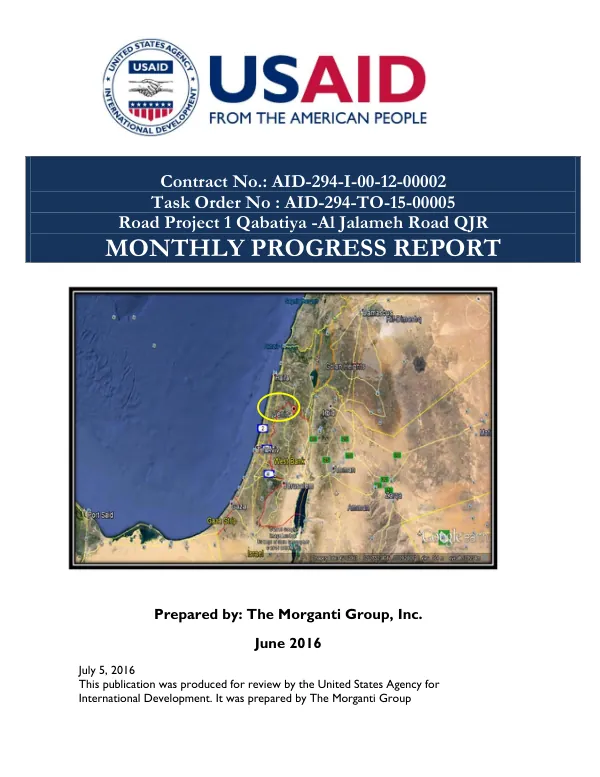
The Road Project 1 Qabatiya-Al Jalameh Road is a rehabilitation project aimed at improving infrastructure in the West Bank.
2016 · 90 pages
Sign in to readA free account is required to download.
Abstract
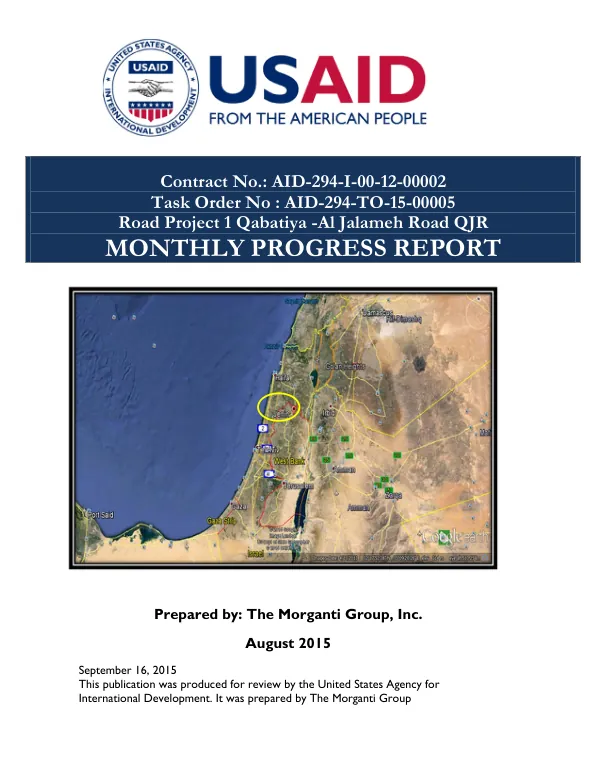
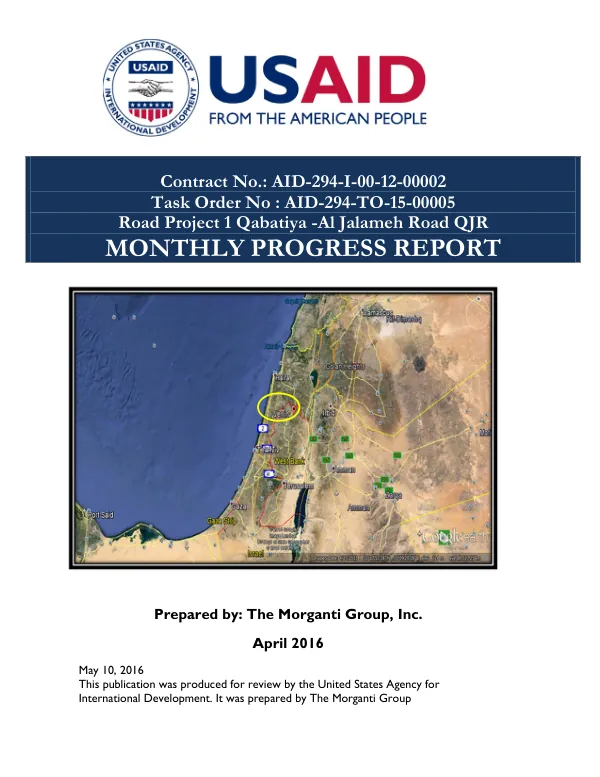
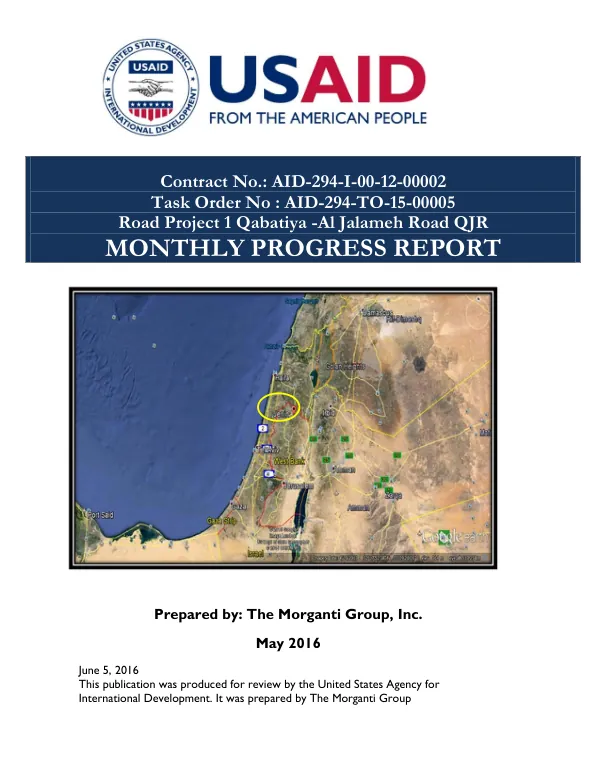
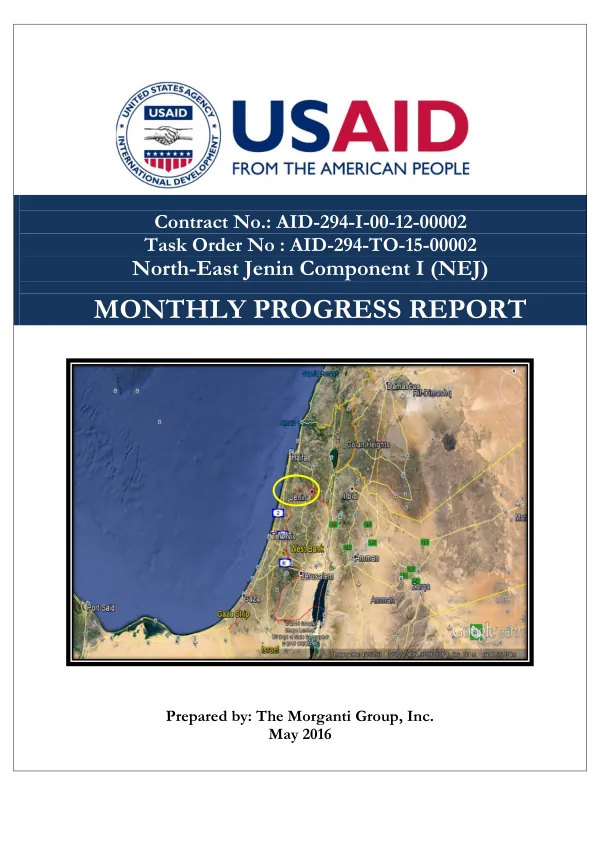
The project is co-funded by the United States Agency for International Development (USAID) and the Canadian Department of Foreign Affairs, Trade and Development (DFATD). The objective of this Task Order is to rehabilitate the existing road that connects Al Jalameh crossing checkpoint to the Qabatiya-Tubas Road, thereby reducing traffic congestion within the Jenin Municipality and improving access to Arab American University. The project is located in Jenin Governorate in Area C, and its general information includes a project name, Road Project 1, Qabatiya-Al Jalameh Road, with an indefinite quantity contract number AID-294-I-00-12-00002 and a task order number AID-294-TO-15-00005. The contract value is USD 14,688,396.00, with a BOQ line item amount of USD 14,188,396.00 and a modified BOQ line item amount of USD 14,539,942.00. The day work amount is USD 500,000.00, with a revised day work amount of USD 148,454.00. The project's contractual period of performance is 360 calendar days, with a modified period of performance of 396 calendar days. The contractual end date is May 11, 2016, and the modified end date is June 16, 2016. The project's start date of construction activity is July 22, 2015. The project's key map is a critical component of the project's planning and execution. The map provides a visual representation of the project's location, scope, and boundaries. It is essential for stakeholders, including contractors, engineers, and project managers, to understand the project's layout and requirements. The project's safety record is a critical aspect of its overall success. The project's safety plan outlines the procedures and protocols for ensuring a safe working environment for all personnel involved in the project. The plan includes measures for preventing accidents, responding to emergencies, and reporting incidents. Quality control and testing are essential components of the project's execution. The project's quality control plan outlines the procedures and protocols for ensuring that all work meets the required standards and specifications. The plan includes measures for testing and inspecting materials, equipment, and workmanship. Environmental compliance is a critical aspect of the project's execution. The project's environmental plan outlines the procedures and protocols for minimizing the project's impact on the environment. The plan includes measures for protecting natural resources, preventing pollution, and ensuring compliance with relevant regulations and laws. Traffic control measures are essential for ensuring the safety of all road users during the project's execution. The project's traffic control plan outlines the procedures and protocols for managing traffic flow, preventing congestion, and ensuring the safety of all road users. Community outreach and engagement are critical components of the project's success. The project's community outreach plan outlines the procedures and protocols for engaging with local communities, stakeholders, and other interested parties. The plan includes measures for providing information, addressing concerns, and ensuring that the project meets the needs and expectations of all stakeholders. The project's gender action plan outlines the procedures and protocols for ensuring that the project meets the needs and expectations of all stakeholders, including women and other marginalized groups. The plan includes measures for promoting gender equality, preventing discrimination, and ensuring that the project's benefits are equitably distributed. Security coordination meetings are essential for ensuring the project's safety and security. The project's security plan outlines the procedures and protocols for coordinating with security agencies, stakeholders, and other interested parties. The plan includes measures for preventing security breaches, responding to emergencies, and ensuring the safety of all personnel involved in the project. Meetings, site visitors, material and equipment delivery, indicators, working and non-working days, site memos, inspection requests, testing, submittals, request for information, transmittals, payments, variation orders, and obstacles and challenges are all critical components of the project's execution. The project's progress and project handing over are also essential aspects of its overall success.
Related documents