FHI 360
Consultation Report: ARV-Based HIV Prevention in Kenya
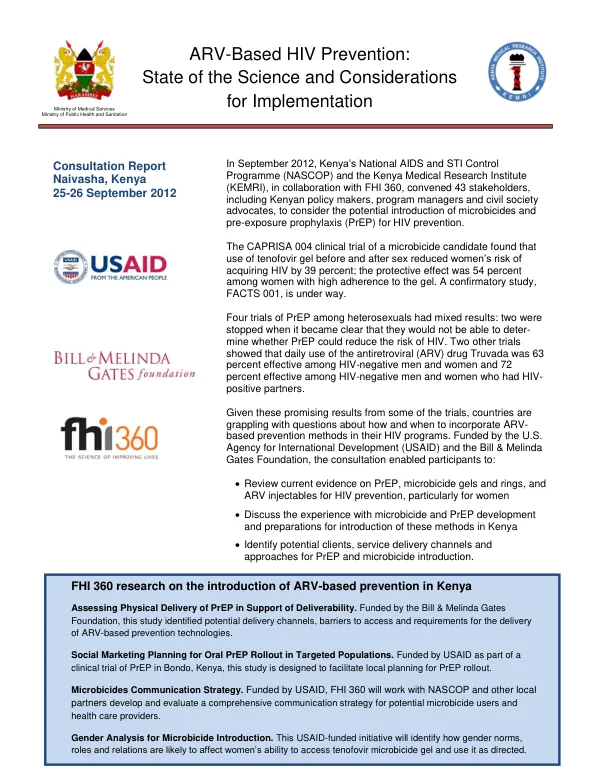
The National AIDS and STI Control Programme (NASCOP) and the Kenya Medical Research Institute (KEMRI), in collaboration with FHI 360, convened a consultation in September 2012 to discuss the potential introduction of microbicides and pre-exposure prophylaxis (PrEP) for HIV prevention in Kenya.
2012 · 2 pages
Sign in to readA free account is required to download.
Abstract
The meeting brought together 43 stakeholders, including Kenyan policy makers, program managers, and civil society advocates. The consultation reviewed current evidence on PrEP, microbicide gels and rings, and ARV injectables for HIV prevention, particularly for women. Participants discussed the experience with microbicide and PrEP development and preparations for introduction of these methods in Kenya. The meeting also identified potential clients, service delivery channels, and approaches for PrEP and microbicide introduction. FHI 360 research on the introduction of ARV-based prevention in Kenya included several studies. The Assessing Physical Delivery of PrEP in Support of Deliverability study, funded by the Bill & Melinda Gates Foundation, identified potential delivery channels, barriers to access, and requirements for the delivery of ARV-based prevention technologies. The Social Marketing Planning for Oral PrEP Rollout in Targeted Populations study, funded by USAID, facilitated local planning for PrEP rollout. The Microbicides Communication Strategy, funded by USAID, aimed to develop and evaluate a comprehensive communication strategy for potential microbicide users and healthcare providers. The consultation emphasized the importance of leadership and support from the Kenyan government in introducing ARV-based HIV prevention methods. Participants agreed that civil society should work closely with the government to develop appropriate procedures and regulations. Program planners must consider social norms and potential stigma when identifying focus populations and service delivery channels. The meeting identified potential focus populations, including women in stable relationships, discordant couples, female sex workers, and adolescents. Participants agreed that groups considered at high risk of HIV should be the first priority for PrEP implementation, while microbicides could be offered to all women and perhaps to adolescents. They noted that more than half of new HIV infections occur in young women and called for a rollout strategy that addresses this group's heightened vulnerability to the virus. Results from the Physical Delivery of PrEP Study revealed that the greatest challenges to effective delivery of PrEP and microbicides are concerns about access and cost, the stigma associated with HIV/AIDS, and knowledge and attitudes of clinic staff. Stigma and the ability of potential users to adhere to a PrEP regimen were also identified as barriers to the use of these methods. Consultation participants emphasized the need for sustainable funding and cost-effective programs. They agreed that a concerted, focused effort is needed to identify sustainable funding and develop effective combinations of prevention and treatment options that maximize the impact of limited resources. The use of various methods and approaches at different times in a person's life should be considered in cost analyses.