USAID
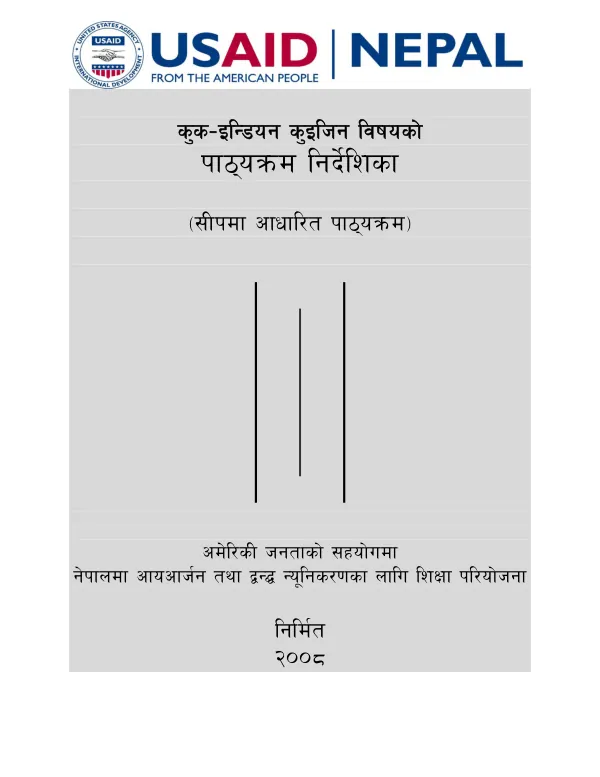
Cook-Indian Cuisine Curriculum
Cook-Indian Cuisine Curriculum is a comprehensive educational program focused on teaching traditional Indian cooking techniques and recipes.
136 pages
Sign in to readA free account is required to download.
Abstract
The curriculum is designed to provide students with a deep understanding of Indian cuisine, its history, and its cultural significance. The curriculum is divided into several modules, each covering a specific aspect of Indian cooking. The modules include Gravies, Soups, Appetizers, and Main Course dishes. Each module is further divided into sub-modules, which cover specific cooking techniques, ingredients, and recipes. The curriculum emphasizes the importance of using fresh and locally sourced ingredients, as well as traditional cooking methods and techniques. Students are taught how to prepare a variety of Indian dishes, including vegetarian and non-vegetarian options. The curriculum also places a strong emphasis on the cultural and historical context of Indian cuisine. Students learn about the different regions and communities that have contributed to the development of Indian cuisine, as well as the role of food in Indian culture and society. Throughout the curriculum, students are encouraged to experiment with different ingredients and cooking techniques, and to develop their own unique cooking style. The curriculum is designed to be flexible and adaptable, allowing students to learn at their own pace and to focus on the areas that interest them the most. The curriculum is supported by a range of teaching materials, including cookbooks, videos, and online resources. Students are also encouraged to participate in cooking competitions and events, and to share their own recipes and cooking experiences with others. Overall, the Cook-Indian Cuisine Curriculum is a comprehensive and engaging educational program that provides students with a deep understanding of Indian cuisine and its cultural significance. The curriculum is designed to inspire students to explore the world of Indian cooking and to develop their own unique cooking style. The curriculum is part of the EIGCM-Education for Income Generation and Conflict Mitigation in Nepal Project, which is funded by USAID. The project aims to promote economic development and conflict mitigation in Nepal through education and training programs. The curriculum is designed to be implemented in a variety of settings, including cooking schools, community centers, and online platforms. The curriculum is flexible and adaptable, allowing students to learn at their own pace and to focus on the areas that interest them the most. The curriculum covers a range of topics, including cooking techniques, ingredients, and recipes. Students learn about the different regions and communities that have contributed to the development of Indian cuisine, as well as the role of food in Indian culture and society. The curriculum is designed to promote economic development and conflict mitigation in Nepal by providing students with the skills and knowledge they need to succeed in the culinary industry. The curriculum is also designed to promote cultural understanding and exchange, by providing students with a deep understanding of Indian cuisine and its cultural significance.