SAVE THE CHILDREN FUND
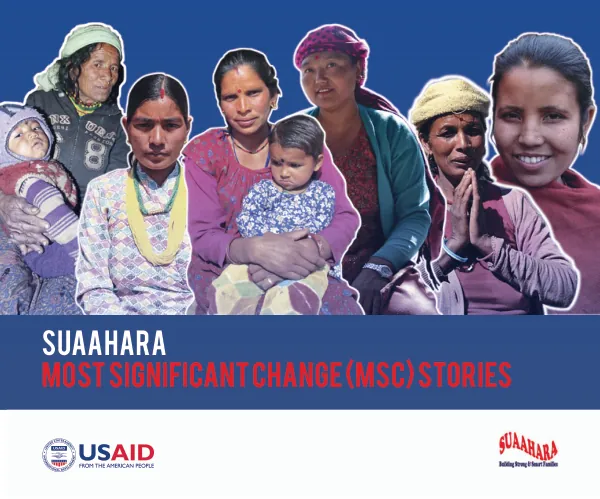
MOST SIGNIFICANT CHANGE (MSC) stories Suaahara
The Suaahara program, a nutrition and food security initiative, was implemented in Nepal to improve the health and well-being of mothers and children under two years old.
2016 · 23 pages
Sign in to readA free account is required to download.
Abstract
The program was launched in 2011 and was supported by the United States Agency for International Development (USAID). The program's primary goal was to improve the nutritional status of mothers and children, particularly in the 1000-day period from conception to the child's second birthday. The Suaahara program employed a participatory monitoring and evaluation methodology known as the Most Significant Change (MSC) technique. This approach involved collecting stories from beneficiaries about the changes they had experienced as a result of the program. The stories were collected through group discussions and individual interviews, and were then verified through interviews with local stakeholders. The stories were sorted according to five domains of change: behavior change, social change, supportive environment, service utilization, and other changes. The MSC technique was piloted in Lamjung and Rasuwa districts and was later conducted in 20 initial districts of the Suaahara program. The stories collected through the MSC technique provided a deeper understanding of the processes and interventions that led to changes in the lives of Suaahara beneficiaries. The stories highlighted the importance of overcoming cultural and food taboos, adopting correct infant and young child feeding practices, and utilizing health services. One of the beneficiaries, Sita Charmakar, shared her story of how the Suaahara program had improved the health and well-being of her two daughters. Sita attributed the good health of her younger daughter, Bipana, to the Suaahara program and its radio program, Bhanchhin Aama. She had learned about antenatal checkups, maternal, infant, and young child feeding, and had taken iron folic tablets and consumed nutritious food during pregnancy. Sita had also breastfed Bipana exclusively for the first six months and had added pulses, porridge, spinach, and eggs to her diet at six months. In contrast, Sita's first daughter, Sapana, had suffered from various health problems, including indigestion, diarrhea, and pneumonia. Sita had not breastfed Sapana immediately after birth and had not consumed nutritious food during pregnancy. She had also delivered Sapana at home and had not taken iron folic tablets during pregnancy. The stories collected through the MSC technique highlighted the importance of the Suaahara program in improving the health and well-being of mothers and children in Nepal. The program's focus on behavior change, social change, supportive environment, service utilization, and other changes had led to significant improvements in the lives of beneficiaries. The MSC technique provided a valuable tool for monitoring and evaluating the program's impact and for identifying areas for improvement. The Suaahara program's MSC stories were selected and translated from Nepali to English for publication. The stories were shared with the public to raise awareness about the importance of nutrition and food security for mothers and children. The stories also served as a testament to the program's success in improving the health and well-being of beneficiaries. The Suaahara program's MSC technique was a valuable tool for monitoring and evaluating the program's impact. The technique provided a deeper understanding of the processes and interventions that led to changes in the lives of beneficiaries. The stories collected through the MSC technique highlighted the importance of the program's focus on behavior change, social change, supportive environment, service utilization, and other changes. The MSC technique will continue to be used by the Suaahara program to monitor and evaluate its impact and to identify areas for improvement. The Suaahara program's MSC stories also highlighted the importance of community mobilization and the role of community members in promoting nutrition and food security. The stories showed how community members had come together to support each other and to promote healthy behaviors. The stories also highlighted the importance of empowering women and promoting their participation in decision-making processes.