USAID
Core Concepts for Clinical Preceptors & Faculty
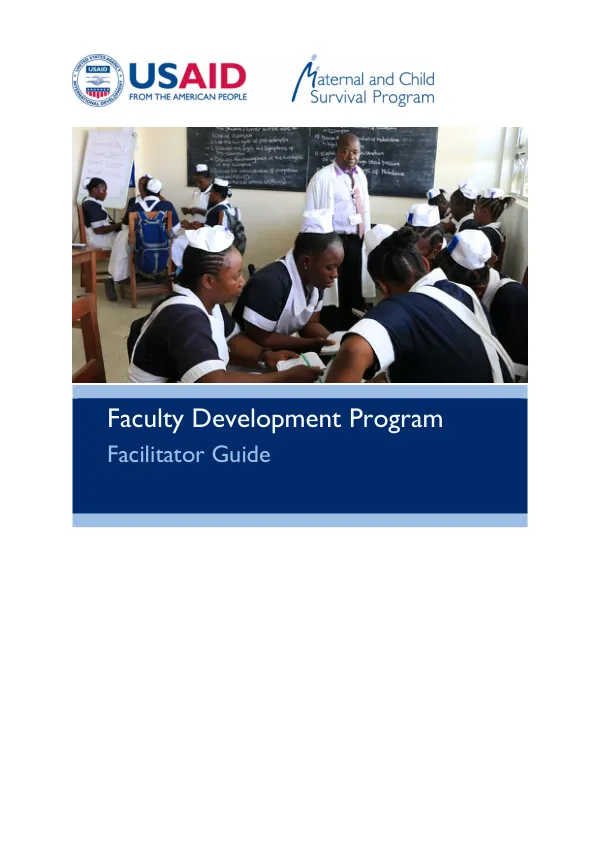
Clinical Precepting and Faculty Development The Johns Hopkins School of Nursing has developed a comprehensive preceptor training program to support clinical precepting and faculty development.
2016 · 44 pages
Sign in to readA free account is required to download.
Abstract
The program emphasizes the importance of creating a safe and supportive learning environment for preceptees. Preceptors play a critical role in facilitating the learning process, and their roles are multifaceted. They serve as role models, demonstrating the skills and behaviors expected of preceptees. Preceptors also provide guidance and support, helping preceptees to develop their knowledge and skills. Effective preceptors establish clear goals and expectations, provide regular feedback, and encourage preceptees to take ownership of their learning. A well-structured precepting plan is essential for successful precepting. This plan should include clear expectations for knowledge and skills, established goals, and a defined role for the preceptor. Preceptors should also identify key questions to facilitate debriefing sessions, such as "What went well with your intervention?" and "What would you do differently?" Effective communication is critical in precepting, and preceptors should use clear and concise language to provide feedback and support. Evaluation is an essential component of the precepting process. Formative evaluation occurs during clinical experiences, while summative evaluation takes place at the end of the experience. Preceptors should evaluate preceptees based on specific goals and objectives outlined in the course syllabus or preceptor program expectations. This evaluation should be ongoing, with regular feedback and assessment to ensure that preceptees are meeting expectations. The precepting process involves creating a safe and supportive learning environment, establishing clear goals and expectations, and providing regular feedback and assessment. Effective preceptors use a variety of communication pathways to engage preceptees and encourage them to take ownership of their learning. By following a well-structured precepting plan, preceptors can help preceptees to develop the knowledge, skills, and behaviors necessary for success in their clinical roles. Preceptors should also be aware of the importance of creating a positive working relationship with preceptees and establishing clear expectations for their role. This includes ensuring that preceptees are practicing within their scope of practice, providing regular feedback and assessment, and encouraging preceptees to take ownership of their learning. By following these principles, preceptors can create a supportive and inclusive learning environment that fosters the development of preceptees. The Johns Hopkins School of Nursing has developed a preceptor training mobile application to support precepting and faculty development. This application provides preceptors with the tools and resources they need to create a safe and supportive learning environment and to develop effective precepting skills. By using this application, preceptors can improve their precepting skills and provide better support to preceptees.