FLORIDA INTERNATIONAL UNIVERSITY
Cost-Effective Mycotoxin Testing Method for Livestock Feeds
The innovation involves a cost-effective and accurate method for quantifying aflatoxin contamination in livestock feed and certain animal-source foods.
2019 · 1 pages
Sign in to readA free account is required to download.
Abstract
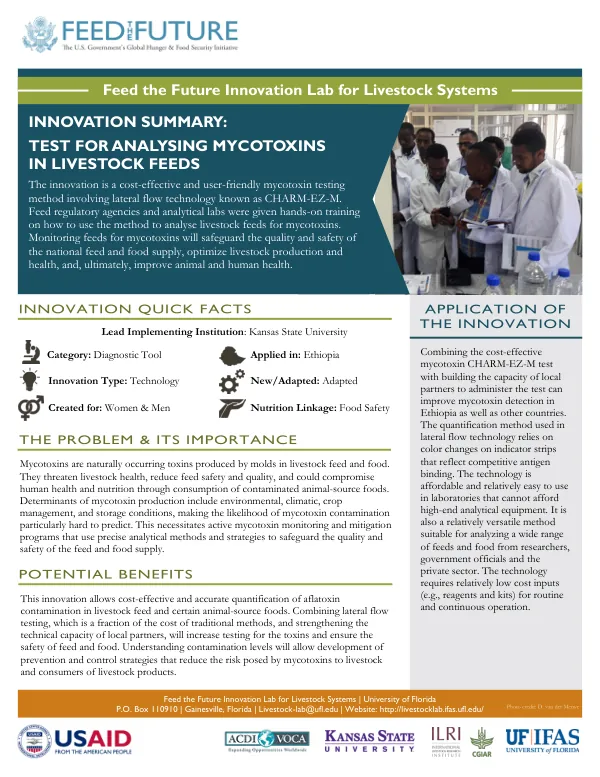
This is achieved through the combination of lateral flow testing and strengthening the technical capacity of local partners. Lateral flow testing is a cost-effective alternative to traditional methods, allowing for increased testing for aflatoxins and ensuring the safety of feed and food. The method relies on the CHARM-EZ-M test, a cost-effective mycotoxin detection tool that combines with building the capacity of local partners to administer the test. This approach can improve mycotoxin detection in Ethiopia and other countries. The quantification method used in lateral flow technology involves color changes on indicator strips that reflect competitive antigen binding. This technology is affordable and relatively easy to use in laboratories with limited resources. Mycotoxins are naturally occurring toxins produced by molds in livestock feed and food. They pose a significant threat to livestock health, reduce feed safety and quality, and compromise human health and nutrition through consumption of contaminated animal-source foods. The determinants of mycotoxin production include environmental, climatic, crop management, and storage conditions, making it challenging to predict the likelihood of mycotoxin contamination. Active mycotoxin monitoring and mitigation programs are necessary to safeguard the quality and safety of the feed and food supply. The innovation involves hands-on training for feed regulatory agencies and analytical labs on the use of the CHARM-EZ-M method to analyze livestock feeds for mycotoxins. This training enables the effective implementation of the method and ensures the quality and safety of the national feed and food supply. The innovation has the potential to optimize livestock production and health, ultimately improving animal and human health. The lead implementing institution for this innovation is Kansas State University, in collaboration with the Feed the Future Innovation Lab for Livestock Systems at the University of Florida.
Related documents