USAID DEC
The Enabling Environment for Animal Source Food Market System Success: Supply-Side Factors
Sign inFINTRAC
The Enabling Environment for Animal Source Food Market System Success: Supply-Side Factors
Animal-source foods (ASF) are a crucial component of a nutritious diet, particularly for children.
2020 · 43 pages
Sign in to readA free account is required to download.
Abstract
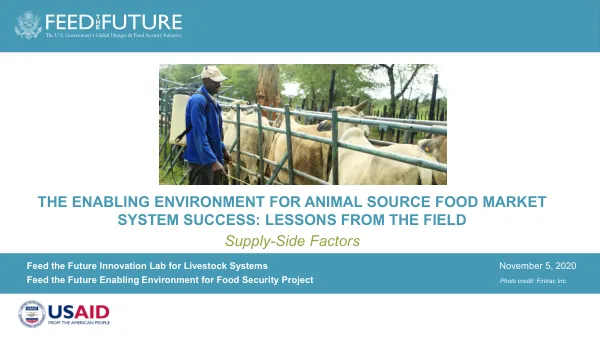
Brain growth is approximately 60% complete by the age of 2 years, and ASFs are essential for optimal brain development. The World Health Organization (WHO) recommends ASFs as the best high-quality, nutrient-rich food for children aged 6-23 months. ASFs are rich in ideal protein and more bioavailable micronutrients than plants, and they can prevent stunting, which is linked to brain development and poverty. The Feed the Future Innovation Lab for Livestock Systems aims to sustainably intensify livestock production to improve the nutrition, health, and livelihoods of the poor. The lab has 45 field-to-farm development projects on various species, with 63 foreign and U.S. partners. The lab's objective is to document a comprehensive set of factors in the enabling environment (EE) that affect ASF market system success, including competitiveness, inclusiveness, and resilience. The EE for ASF is complex and multi-faceted, with various factors influencing the production of ASFs. The lab categorizes findings by supply-side factors, supply-side factors, and financial service factors. Supply-side factors include animal feeds, animal health products, and animal genetics. These factors are critical determinants of farm profitability and system resilience. Animal feeds comprise up to 70% of production costs, and animals are often underfed in developing systems. Improving feed quality, reducing costs, and expanding supply can mitigate these challenges. Livestock diseases increase mortality, reduce productivity, and limit productivity opportunities. Effective and affordable animal health products can mitigate these risks. Genetics impact animal reproduction, and access to genetic characteristics can achieve these goals. The lab's methodology involves a literature review of developed, emerging, and developed countries. The findings will inform investment and resource decisions based on the gaps and opportunities in the EE. The lab's objective is to provide a comprehensive guide for targeted analysis and investment decisions. The lab's work will focus on supply-side factors, including animal feeds, animal health products, and animal genetics.
Related documents