USAID
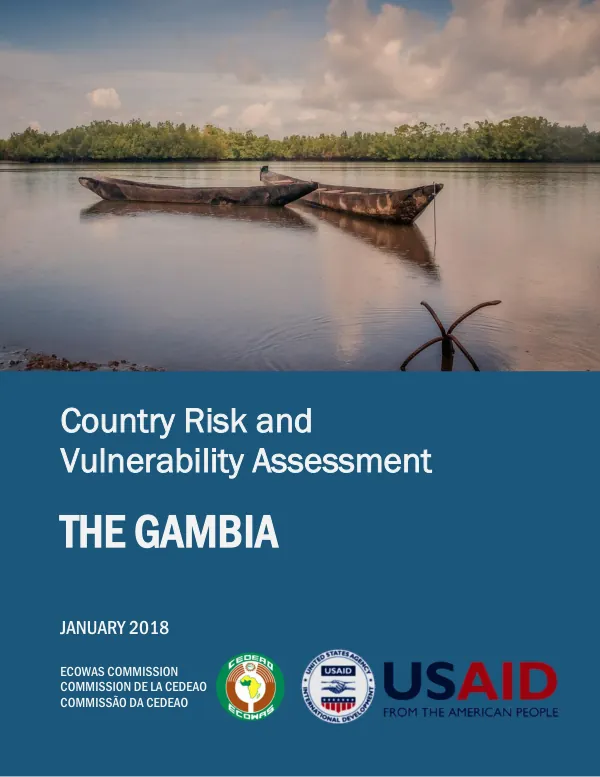
Country Risk and Vulnerability Assessment: The Gambia
The Gambia is a small country located in West Africa, with a population of approximately 2 million people.
2018 · 78 pages
Sign in to readA free account is required to download.
Abstract
The country has a rich cultural heritage and a diverse geography, with a coastline along the Atlantic Ocean and a land border with Senegal. The Gambia has a long history of colonial rule, with the British colonizing the country in the late 19th century. After gaining independence in 1965, the country experienced a period of military rule, which lasted until 1994. The country's economy is primarily based on agriculture, with a focus on crops such as peanuts, rice, and millet. The Gambia is also rich in natural resources, including fish, timber, and minerals. However, the country faces significant challenges, including poverty, unemployment, and a lack of infrastructure. The Gambia is also vulnerable to natural disasters, such as floods and droughts, which can have a significant impact on the country's economy and food security. The country's politics and governance are also a significant concern. The Gambia has a presidential system of government, with a president serving as both head of state and head of government. However, the country has a history of authoritarian rule, with the current president, Yahya Jammeh, having seized power in a military coup in 1994. The country has also been criticized for its human rights record, with reports of torture, arbitrary detention, and other abuses. The country's security situation is also a concern, with the Gambia being a transit point for migrants and refugees fleeing conflict and persecution in other parts of West Africa. The country has also been affected by the presence of extremist groups, including Al-Qaeda in the Islamic Maghreb (AQIM). The Gambia has also been involved in regional conflicts, including the conflict in Mali, where the country has contributed troops to the United Nations peacekeeping mission. The country's economy is heavily dependent on foreign aid, with the Gambia receiving significant support from international donors, including the European Union and the United States. However, the country's economic growth has been slow, with the country experiencing a decline in economic output in recent years. The country's infrastructure is also underdeveloped, with limited access to electricity, water, and other basic services. The Gambia is also vulnerable to external factors, including climate change, which is expected to have a significant impact on the country's agriculture and food security. The country is also vulnerable to global economic trends, including fluctuations in commodity prices and changes in global trade policies. The Gambia is also a member of the Economic Community of West African States (ECOWAS), which provides a framework for regional cooperation and integration. The country's population is also a significant concern, with the Gambia having one of the highest population growth rates in West Africa. The country's population is also young, with over 60% of the population under the age of 25. The country's population is also highly dependent on agriculture, with many people living in rural areas and relying on subsistence farming for their livelihoods. The country's gender dynamics are also a concern, with women facing significant challenges in accessing education, healthcare, and economic opportunities. The country has also been criticized for its human rights record, with reports of gender-based violence and other abuses. The country's government has also been criticized for its lack of commitment to gender equality, with the country ranking low in the United Nations Development Programme's (UNDP) Human Development Index. The country's sub-national level vulnerabilities, risks, and resilience factors are also a concern, with the country's regional and local governments facing significant challenges in providing basic services and addressing the needs of their populations. The country's regional governments are also vulnerable to external factors, including climate change and global economic trends. In conclusion, the Gambia faces significant challenges, including poverty, unemployment, and a lack of infrastructure. The country's politics and governance are also a concern, with the country having a history of authoritarian rule and a lack of commitment to human rights. The country's security situation is also a concern, with the Gambia being a transit point for migrants and refugees and being affected by the presence of extremist groups. The country's economy is heavily dependent on foreign aid, and the country is vulnerable to external factors, including climate change and global economic trends.
Related documents